After CJP protests, India is angry. Why are we still asking the wrong questions?
Source Entity
Vaishnawi Sinha, Swapnil Joglekar
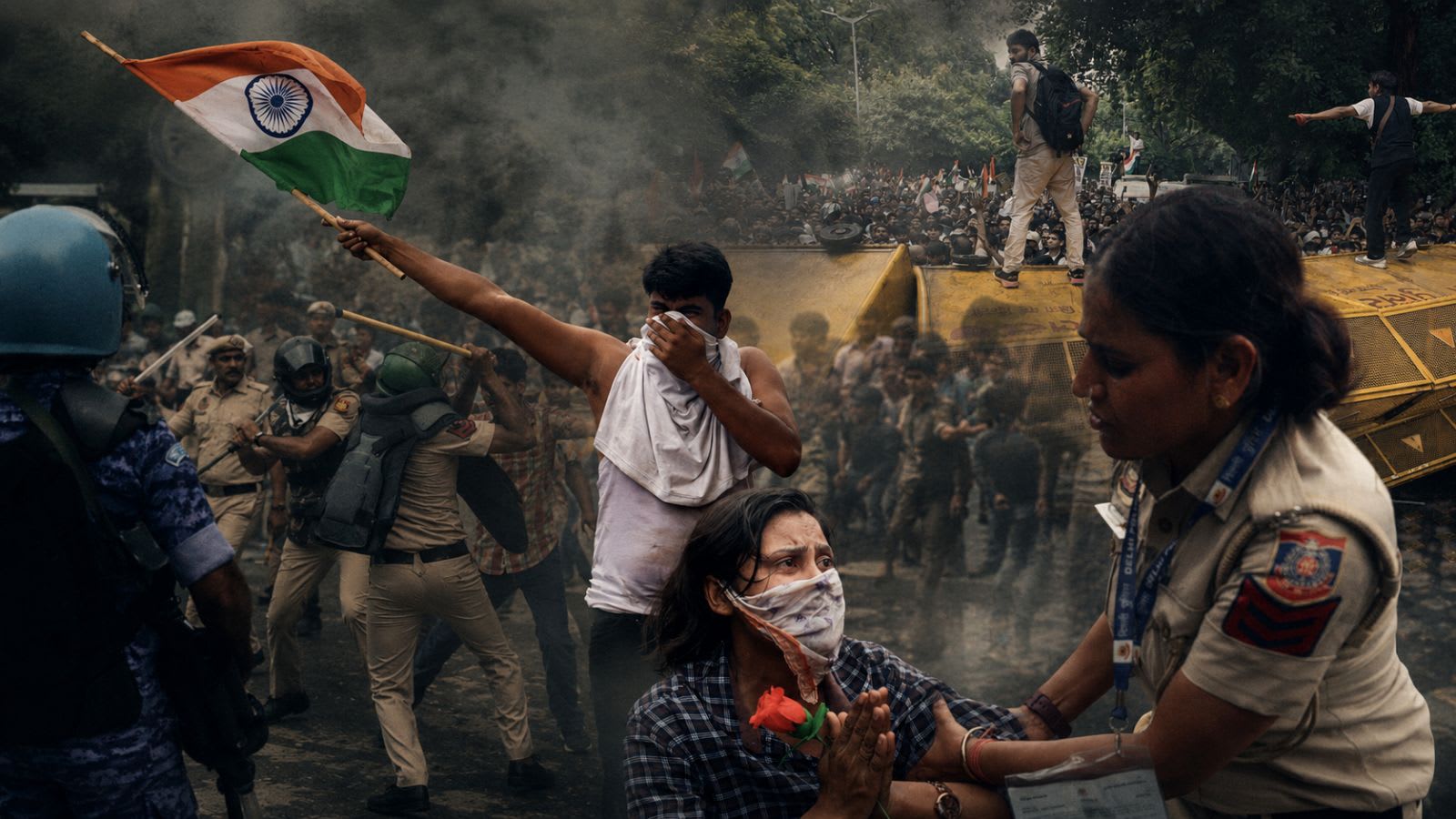
The first day of the Monsoon Session of Parliament was completely disrupted by intense opposition protests over the NEET paper leak and Ayodhya temple donation theft. Meanwhile, mass protests led by the CJP in central Delhi resulted in violent clashes with police as demonstrators demanded the Education Minister's resignation.
Parliament Monsoon Session Paralyzed by Protests
The Monsoon Session of the Indian Parliament commenced on Monday, July 20, 2026, under a cloud of intense political friction. The proceedings in both the Lok Sabha and the Rajya Sabha were marked by immediate and sustained disruptions, as opposition members—including those from the Congress, Samajwadi Party, and Trinamool Congress—converged into the Well of the House. This vocal dissent effectively halted the legislative agenda, reflecting a deepening divide between the government and the opposition regarding transparency and accountability.
The Catalyst: NEET and Temple Controversies
At the core of the parliamentary impasse are two high-profile issues: the alleged NEET paper leak and the reported theft of donations from the Ram Temple in Ayodhya. The opposition has characterized the NEET controversy as a systemic failure, with Leader of the Opposition Mallikarjun Kharge labeling it a scam that jeopardizes the future of millions of students. Simultaneously, the inclusion of the Ayodhya donation theft as a protest point signifies a calculated effort by the opposition to challenge the government on issues of both administrative competence and moral governance.
Street-Level Unrest in Lutyens’ Delhi
Beyond the walls of Parliament, the political temperature reached a boiling point in the streets of New Delhi. A massive demonstration, led by the Cockroach Janta Party (CJP), saw an estimated 50,000 protesters marching toward the heart of the capital. Demanding the resignation of Union Education Minister Dharmendra Pradhan, these demonstrators engaged in direct confrontations with security forces. The police response, involving lathicharges, tear gas, and water cannons across major thoroughfares like Ashoka Road and Raisina Road, highlights the volatile nature of the current unrest.
Legislative Stagnation and Judicial Reform
Despite the chaos, the government managed to transact a singular, albeit significant, piece of business. Union Law Minister Arjun Ram Meghwal introduced a Bill in the Lok Sabha aimed at replacing an existing Ordinance. This legislative move seeks to increase the total sanctioned strength of the Supreme Court of India from 34 to 38 judges, including the Chief Justice. This indicates that while the broader legislative agenda remains frozen, the government is prioritizing judicial expansion as a critical administrative goal.
Strategic Fragmentation Within the Opposition
While the opposition presented a united front in the Well of the House, internal fissures remain visible. The DMK, for instance, chose to focus its protest energy on the Mekedatu issue, distinctly distancing itself from the Congress-led strategy. Furthermore, subtle shifts in the political landscape, such as the reorganized seating arrangements for rebel Trinamool Congress MPs, suggest that the upcoming session will be defined not only by government-opposition conflict but also by complex internal power dynamics within the opposition bloc.
Future Outlook and Policy Implications
As the session progresses, the government faces a precarious balancing act. The combination of sustained parliamentary obstruction and large-scale public protests creates a high-pressure environment that threatens to derail the entire monsoon session. With the government maintaining its stance on policy matters—such as the clarification that no decision has been reached on ethanol blending beyond 20%—it is clear that the administration is attempting to project normalcy. However, the intensity of the current protests suggests that the opposition will continue to leverage these crises to demand significant institutional accountability, potentially leading to a protracted period of legislative deadlock.
Multiple Citing Sources