Why CJI Surya Kant declined to meet Rahul, Kharge amid anti-CEC protests
Source Entity
AYUSH PANDEY
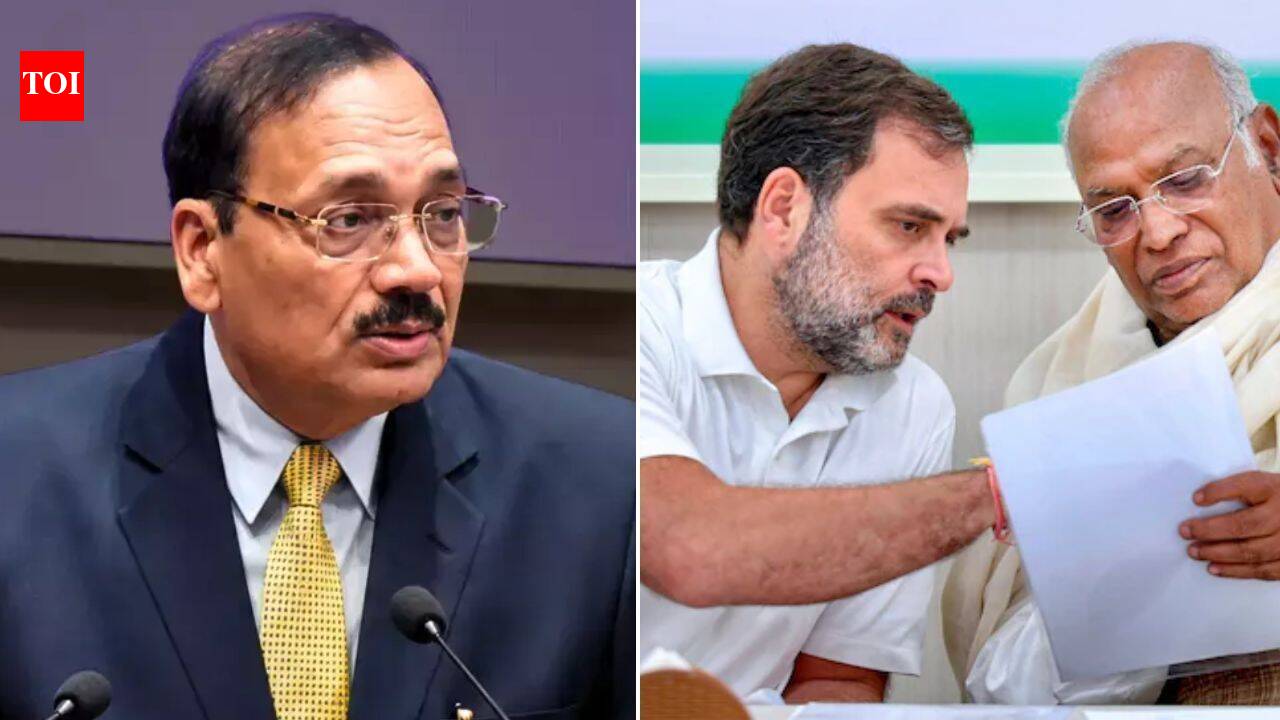
Chief Justice of India Surya Kant declined a scheduled meeting with Congress leaders Rahul Gandhi and Mallikarjun Kharge. The CJI cited the sub judice nature of their concerns and the necessity of maintaining the separation of powers.
The Judicial Boundary: Analyzing the CJI’s Refusal to Meet Opposition Leaders
Contextualizing the Diplomatic Standoff
In a significant development for Indian constitutional discourse, Chief Justice of India (CJI) Surya Kant declined a formal meeting request from Leader of the Opposition Rahul Gandhi and Congress President Mallikarjun Kharge. The meeting, originally slated for October 12, 2026, was intended to address Congress’s grievances regarding the Election Commission of India (ECI), the appointment of Gyanesh Kumar, and broader allegations of electoral malpractice. The refusal marks a rare moment of public friction between the judiciary and the political opposition, highlighting the delicate balance required in maintaining institutional neutrality.
The Constitutional Rationale for Refusal
The CJI’s office provided a clear, albeit brief, explanation for the cancellation: the request was declined with stated reasons sent via official communication. Legal experts point to two primary pillars for this decision. First, the matters raised by the Congress party—specifically those regarding the functioning of the Election Commission and new electoral legislation—are currently sub judice, meaning they are already being actively litigated within the Supreme Court. For the CJI to engage in private discussions on these matters would risk compromising the integrity of ongoing judicial deliberations.
Separation of Powers and Institutional Integrity
A critical factor in the CJI’s decision was the doctrine of separation of powers. By declining the meeting, the CJI emphasized that the judiciary must remain an arbiter rather than a participant in political administration. The Supreme Court is tasked with interpreting the law, not intervening in the day-to-day administrative functions of the state or engaging in lobbying efforts by political entities. This stance protects the judiciary from accusations of bias and ensures that the court remains a forum for legal argument rather than political negotiation.
Escalating Tensions and the 'Undeclared Emergency' Narrative
This refusal comes against the backdrop of intense political rhetoric from the Congress party. Mallikarjun Kharge has characterized the current political climate as an “undeclared Emergency,” accusing the ruling BJP of “vote chori” (stealing votes). By attempting to escalate these concerns directly to the head of the judiciary, the opposition sought to leverage the Supreme Court’s oversight authority to address what they perceive as systemic institutional decay. The rejection of this attempt underscores the judiciary's insistence on adhering to established legal channels rather than responding to political pressure.
Broader Implications for India’s Democracy
The events of October 2026 reflect the ongoing struggle to define the boundaries between political dissent and institutional independence. As the opposition continues to protest against the Election Commission, the judiciary’s refusal to act as a mediator serves as a reminder that the Supreme Court's role is defined by constitutional limits. While this creates immediate political tension, it reinforces the principle that constitutional institutions must operate within their designated spheres to prevent the politicization of the judiciary.
Concluding Summary
The decision by CJI Surya Kant to decline the meeting with Rahul Gandhi and Mallikarjun Kharge is a firm assertion of judicial independence. By citing the sub judice nature of the complaints and the necessity of maintaining the separation of powers, the CJI has signaled that the Supreme Court will not be drawn into political maneuvering. As the nation watches the opposition's ongoing protests, the judiciary remains focused on its formal, legal processes, underscoring the resilience of India's constitutional framework in the face of intense political polarization.