Govt school repairs, teacher vacancies, digital access: CJP poses 6 key questions to education ministers
Source Entity
Latest News: Todays Latest News Headlines from India & World | Hindustan Times | Hindustan Times
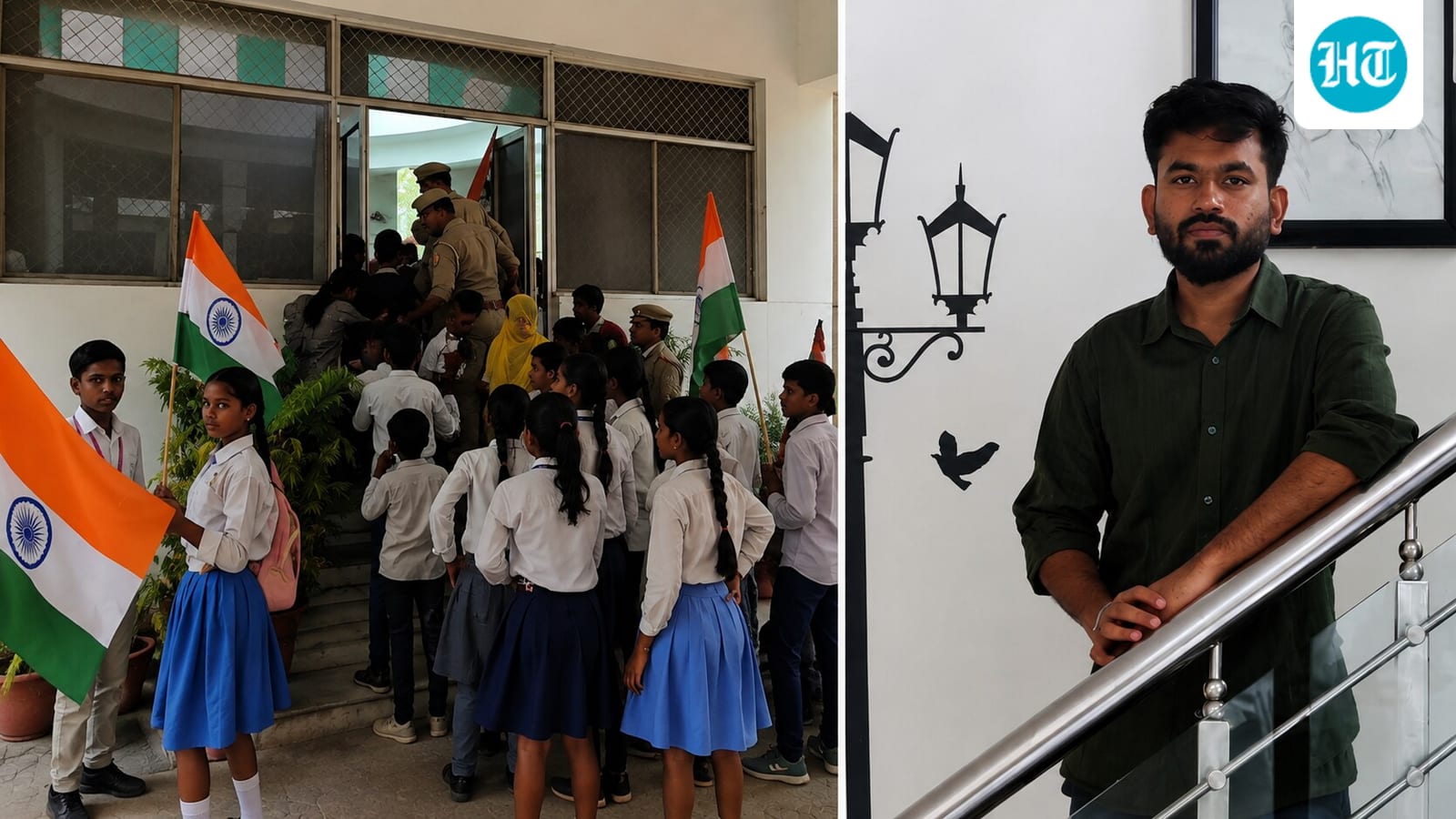
The Cockroach Janta Party (CJP) has launched a campaign demanding transparency regarding the deteriorating state of Indian government schools. Founder Abhijeet Dipke has written to state education ministers, highlighting the lack of basic infrastructure and calling for urgent policy intervention.
The State of Public Education: A Call for Accountability
In a pointed critique of India's public education system, the Cockroach Janta Party (CJP), led by founder Abhijeet Dipke, has initiated a formal inquiry into the state of government schools across the country. On August 24, 2026, the party issued identical letters to education ministers in every state, demanding comprehensive data regarding school infrastructure, teacher vacancies, and fiscal allocations over the preceding five-year period. This move marks a significant escalation in the CJP's ongoing campaign to place educational reform at the forefront of the national political agenda.
The Infrastructure Crisis
The impetus for this campaign stems from circulating social media visuals that depict a grim reality for many students attending government-run institutions. Mr. Dipke’s communication highlights that despite eight decades of independence, a substantial number of schools remain devoid of fundamental necessities. These include access to safe drinking water, functional sanitation facilities, adequate classroom space, and even basic furniture such as benches. The CJP argues that these conditions are not merely administrative oversights but represent a systemic failure to provide an equitable learning environment.
Rhetoric and Political Urgency
Mr. Dipke’s rhetoric has been notably sharp, characterizing the current state of affairs as a scenario where children are being "treated worse than animals." By framing the lack of basic facilities as a moral failing rather than just a logistical challenge, the CJP is attempting to force education ministers to move beyond bureaucratic responses. The demand for transparency regarding teacher vacancies and funding is aimed at identifying whether the issue lies in a lack of resources or a failure in the allocation and management of existing budgets.
Long-term Implications for National Growth
The fundamental question posed by the CJP—how a nation can expect to progress when its youth are denied the most basic educational requirements—touches on the broader socio-economic implications of public schooling. Educational infrastructure is the bedrock of human capital development; without it, the cycle of inequality is perpetuated. The CJP’s focus on the "last five years" of data suggests a strategic intent to hold current administrations accountable for their specific performance and policy priorities.
Future Trends and Policy Expectations
As this campaign gains traction, it is likely to pressure state governments to release previously opaque datasets regarding school conditions. Whether this will lead to immediate policy shifts remains to be seen, but the move sets a precedent for digital-era political activism, where crowdsourced visuals can trigger formal government inquiries. The CJP’s insistence that education be treated as an "urgent priority" suggests that they intend to maintain this pressure, potentially turning school infrastructure into a defining issue for upcoming regional or national discourse.
Conclusion
The Cockroach Janta Party’s intervention serves as a stark reminder of the gap between national development goals and the ground-level reality in many government schools. By demanding accountability through formal channels, the CJP is attempting to bridge the divide between public outcry on social media and the legislative duty of state education ministries. The success of this initiative will ultimately depend on the transparency of the state responses and the subsequent actions taken to address these critical infrastructure deficits.
Multiple Citing Sources
Verification Required?