Bihar bandh: Tej Pratap Yadav detained as NEET protests intensify
Source Entity
TOI CITY DESK
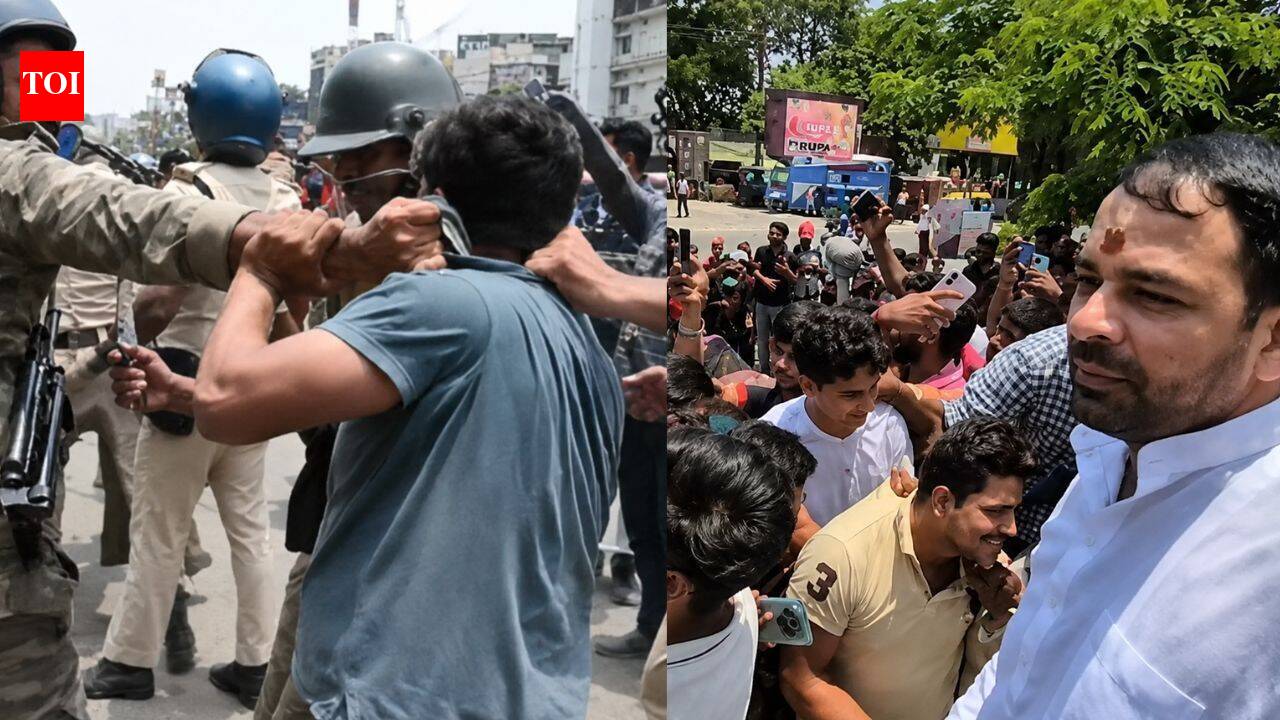
The Delhi High Court has dismissed a PIL seeking an NIA investigation into the Cockroach Janta Party's 'Chalo Sansad' march. The court emphasized that law enforcement agencies are already addressing the alleged violence, noting that NIA referrals fall under the Centre's purview.
Delhi High Court Dismisses Plea for NIA Probe into 'Chalo Sansad' March
Judicial Restraint and the Separation of Powers
On July 24, 2026, the Delhi High Court, led by a Bench comprising Chief Justice D. K. Upadhyaya and Justice Tejas Karia, formally dismissed a Public Interest Litigation (PIL) that had sought an investigation by the National Investigation Agency (NIA) into the 'Chalo Sansad' march organized by the Cockroach Janta Party (CJP). The march, held on July 20 to protest against the NEET-UG paper leak, resulted in reported incidents of vandalism and subsequent police lathi-charges. The court’s refusal to entertain the plea underscores the principle of judicial restraint, with the Bench explicitly noting that the decision to involve specialized federal agencies like the NIA rests with the Central government, not the judiciary.
Addressing Alleged Vandalism and Law Enforcement
During the proceedings, the Bench emphasized that the relevant authorities are already cognizant of the alleged acts of vandalism that occurred during the protest. By asserting that these incidents are under the notice of law enforcement, the court effectively signaled that existing legal mechanisms are sufficient to handle the investigation and potential prosecution. This stance aligns with standard judicial protocols, which prefer to allow local police and administrative bodies to conduct their primary duties before considering the involvement of high-level investigative agencies.
Contextualizing the Protest and Police Response
The 'Chalo Sansad' march was a flashpoint for tensions regarding the NEET-UG examination integrity, drawing significant student participation. The situation escalated when protesters attempted to march from Jantar Mantar to Parliament House, leading to clashes with police personnel. The court's dismissal followed a sequence of events where it had previously sought responses from both the Centre and the Delhi Police regarding separate pleas alleging police excesses. This indicates that the judiciary is actively monitoring the conduct of state machinery while simultaneously maintaining a firm stance on the scope of investigative mandates.
The Role of the Solicitor General
Solicitor General Tushar Mehta played a pivotal role in the hearing, prompting the petitioner's counsel to withdraw the PIL following the court’s observations. This interaction highlights the collaborative, albeit adversarial, nature of constitutional litigation, where the court’s clear articulation of legal limitations often leads to the resolution of procedural deadlocks. By withdrawing the petition, the legal challenge seeking an NIA probe was effectively closed, leaving the investigation in the hands of the agencies currently overseeing the case.
Future Implications for Protest Oversight
This ruling serves as a precedent for how the Delhi High Court intends to handle petitions related to civil unrest and public protests. By insisting that protests are not 'isolated' incidents and that there is a defined 'law' for how authorities must manage such events, the court is signaling a strict adherence to due process. As the investigation into the NEET-UG paper leak continues, this decision ensures that the focus remains on the established legal framework for public order, rather than expanding the scope of federal investigations into every instance of demonstration-related violence.
Multiple Citing Sources