118 Cops Injured, 70 Detained After CJP Protest Turns Violent In Delhi
Source Entity
NDTV News Search Records Found 1000
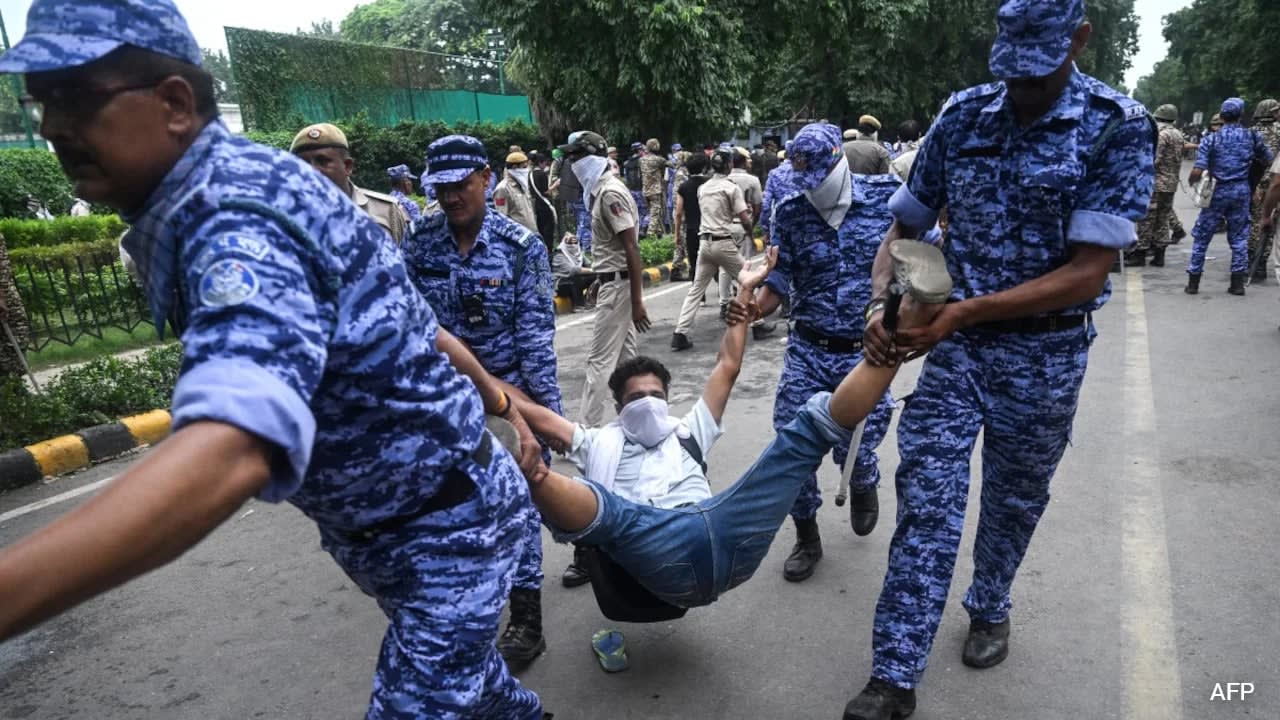
A CJP-led protest march in Delhi demanding the resignation of Education Minister Dharmendra Pradhan turned violent, resulting in significant injuries to both protesters and police. The event highlights growing civil unrest and the detention of prominent figures like Sonam Wangchuk amidst escalating tensions.
The Delhi Protest Crisis: A Collision of Demands and Order
The recent protest march in the heart of Delhi, organized under the banner of the CJP, has underscored a significant escalation in political tensions. Protesters, rallying with the explicit demand for the resignation of Education Minister Dharmendra Pradhan, converged on Parliament Street, leading to a volatile confrontation between demonstrators and law enforcement. The atmosphere was described as one of chaos, punctuated by the sounds of sirens, slogans, and the deployment of teargas shells, forcing many participants to seek sanctuary within the walls of the historic Gurdwara Bangla Sahib.
Escalation and the Cycle of Violence
According to official reports from the Delhi Police, the situation rapidly spiraled into a violent clash. Authorities stated that over 118 police personnel sustained injuries, including senior officers, as a result of what they described as a targeted assault involving stones and various objects. The police account further alleges that the protesters engaged in the vandalism of government vehicles and the destruction of public property, ultimately ignoring prohibitory orders and refusing to disperse despite repeated warnings.
Impact on Protesters and Public Safety
Conversely, the perspective from the ground highlights the physical toll on the demonstrators. Reports indicate that approximately 60 protesters were injured during the scuffle, with many fleeing into the gurdwara to escape the police lathi-charge. The emotional weight of the event was captured by the reactions of participants, with family members expressing profound distress over the treatment of the youth involved, framing the incident as an attack on the country’s future generations.
The Role of Leadership and Detention
Central to the mobilization was the presence of Sonam Wangchuk, whose influence served as a rallying point for the marchers. The situation reached a critical juncture when the Delhi Police intervened, shifting Wangchuk to Safdarjung Hospital. This move further polarized the narrative, as supporters continued to carry placards expressing their solidarity with his cause, even as the protest site was cleared and the crowd dispersed.
Broader Implications for Civil Discourse
This event serves as a stark illustration of the friction between organized political dissent and public order management in an urban center. The demand for ministerial accountability, specifically regarding the Education Minister, points to deeper underlying grievances that have yet to be addressed. As both sides trade accusations of violence and excessive force, the incident raises pressing questions about the limits of peaceful protest and the state’s mechanisms for containment.
Looking Ahead: The Path of Potential Unrest
As the dust settles, the long-term implications of this march remain uncertain. The high number of injuries sustained by both police and protesters suggests a hardening of stances that may make future reconciliation difficult. If the demands regarding the Ministry of Education remain unaddressed, the potential for further, perhaps more intense, mobilizations remains high, highlighting a need for constructive dialogue to prevent further volatility in the capital.
Multiple Citing Sources
Verification Required?