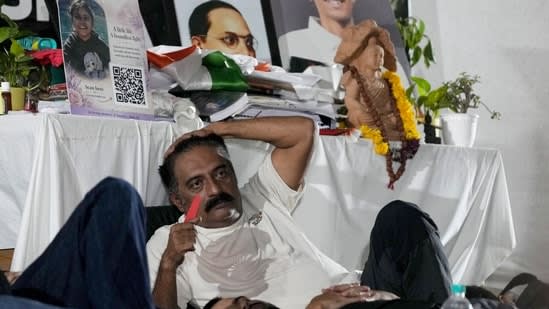
Prakash Raj says a movement like freedom struggle is brewing again with CJP protest: ‘I will stand by them’
Source Entity
Latest News: Today's Latest News Headlines from India & World | Hindustan Times | Hindustan Times
A massive protest march in Delhi led by the CJP ended in violent clashes between demonstrators and police, resulting in over 180 total injuries. The unrest, which centered on demands for the Education Minister's resignation and support for Sonam Wangchuk, led to numerous detentions and the hospitalization of Wangchuk.
The Delhi Turmoil: A Deep Dive into the Parliament Street Protests
The Anatomy of the Conflict
On a recent Monday, the heart of Delhi transformed into a scene of chaotic confrontation as a march led by the CJP turned into a violent clash between protesters and law enforcement. The demonstration, which sought the resignation of Education Minister Dharmendra Pradhan and expressed solidarity with activist Sonam Wangchuk, saw thousands converge on Parliament Street. The atmosphere, initially marked by slogans and placards, quickly devolved into a series of skirmishes characterized by teargas shells, ambulance sirens, and a desperate scramble for safety.
The Refuge at Gurdwara Bangla Sahib
As the situation on the ground deteriorated, hundreds of protesters sought sanctuary within the gates of Gurdwara Bangla Sahib. This iconic site served as a temporary haven for those fleeing the police lathi-charge. Witnesses described a scene of distress, with individuals nursing the effects of teargas and others clutching signs supporting Sonam Wangchuk. This retreat highlights the intensity of the police intervention, which left many participants feeling forced to abandon their protest to avoid physical harm.
Conflicting Narratives of Violence
Official reports from the Delhi Police paint a grim picture of the day's events, citing that more than 118 police personnel, including senior officers, sustained injuries. The police statement explicitly accuses the protesters of initiating large-scale violence, including the hurling of stones and the vandalism of government property. Conversely, the protesters' perspective emphasizes the brutality of the lathi-charge and the physical toll taken on their own ranks, with at least 60 protesters reported injured during the scuffle.
The Detention of Sonam Wangchuk
Central to the friction was the role of activist Sonam Wangchuk. Amidst the chaos, the Delhi Police confirmed the removal of Wangchuk from the protest site and his subsequent transfer to Safdarjung Hospital. This move has become a focal point for the protest movement, serving as both a rallying cry for his supporters and a point of contention regarding the state's handling of prominent activists during public demonstrations.
Broader Implications for Civil Discourse
This incident underscores the fragility of public assembly in high-security zones like Delhi’s Parliament Street. When protests escalate to this level of violence, it raises critical questions about the balance between the right to dissent and the maintenance of public order. The involvement of such a high number of injured personnel and the widespread use of force suggests a breakdown in communication between the organizers and the authorities, which could have long-term implications for how future demonstrations are managed.
Future Trends and Outlook
Looking ahead, the fallout from these events is likely to intensify the political debate surrounding the Education Ministry and the administration’s response to civil unrest. As the CJP continues to challenge the current government, the state may adopt even stricter prohibitory measures, potentially leading to further cycles of escalation. The outcome of the ongoing legal and medical processes regarding the detained protesters and Sonam Wangchuk will likely dictate the next phase of this movement, signaling either a period of cooling or a continued mobilization of opposition forces.
Multiple Citing Sources
Verification Required?