The other challenge at Jantar Mantar: 15,000 kg of garbage everyday
Source Entity
Mishal Mussaddique, Tabshir Shams
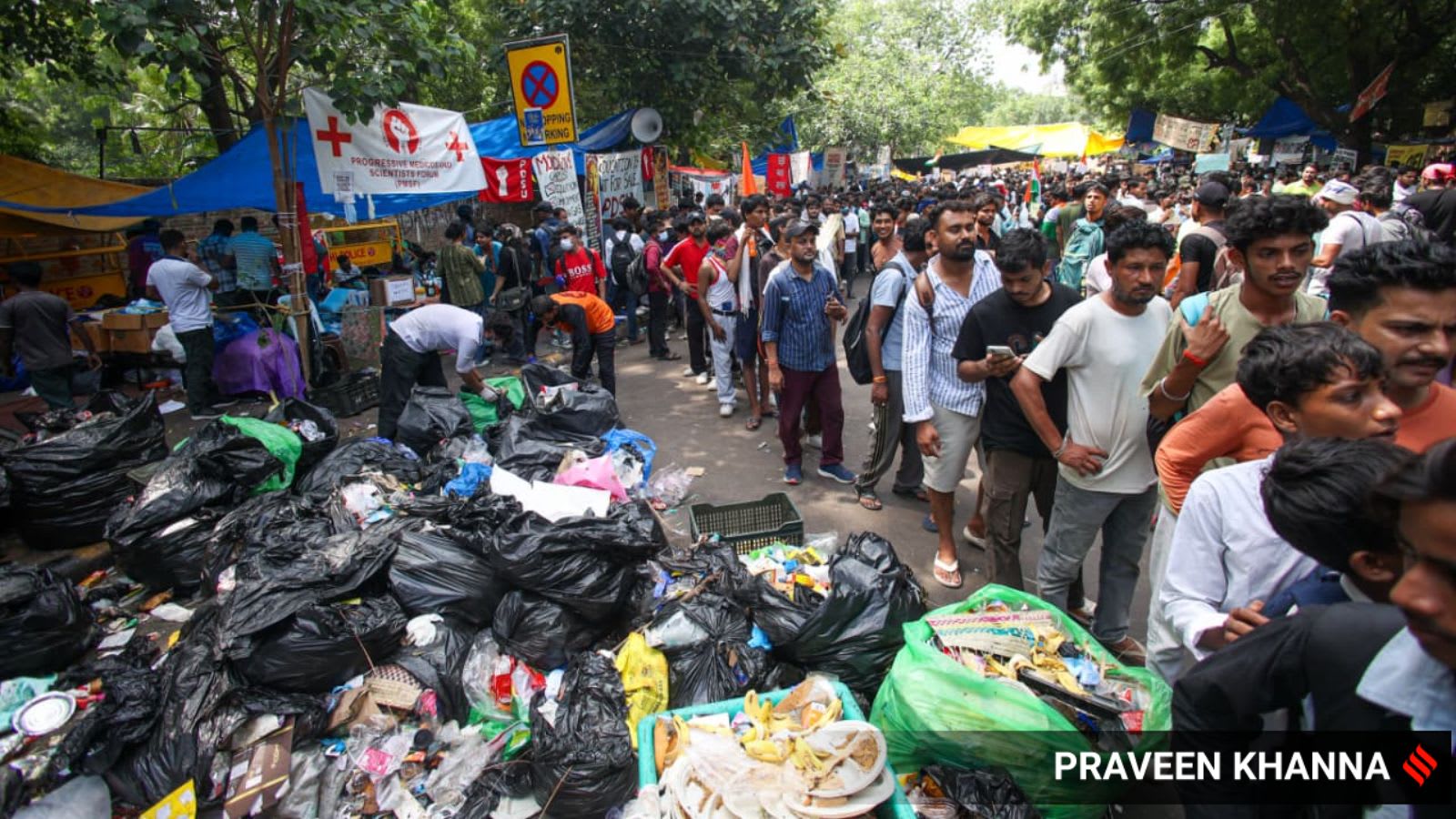
Delhi Police have intensified surveillance and logistical restrictions at the Jantar Mantar protest site, utilizing facial recognition technology and tracking food suppliers. Protesters, particularly women, report significant distress due to the scarcity of basic amenities like water and sanitation facilities.
Surveillance and Logistical Pressure at Jantar Mantar
The ongoing protests at Delhi’s Jantar Mantar have transitioned into a high-stakes environment characterized by aggressive state surveillance and significant logistical hurdles. As crowds continue to congregate, the Delhi Police have escalated their monitoring efforts, deploying advanced technological assets including the DP-Dristhi and Ikshana surveillance vans. These mobile units utilize AI-assisted facial recognition to scan live CCTV feeds, cross-referencing attendees against criminal databases in real-time. This digital perimeter has instilled a palpable sense of apprehension among participants, particularly younger protesters who fear the implications of their presence being documented by state authorities.
The Digital Panopticon
The integration of AI-driven surveillance at a public protest site represents a growing trend in urban policing. By installing additional CCTV cameras around the venue and monitoring these feeds via a Mobile Command and Control Vehicle, law enforcement is effectively creating a persistent record of dissent. For students like Anushka, a first-year Delhi University attendee, the technology transforms the act of protest into a source of personal anxiety. The ability to identify and isolate individuals through automated systems creates a chilling effect, potentially deterring participation by those who worry about the long-term consequences of being flagged by police databases.
Targeting Logistical Support
Beyond digital surveillance, the Delhi Police have adopted a strategy of logistical attrition by targeting the supply chain of the protest. By collecting discarded food wrappers and packaging from the site, authorities have reportedly traced the origin of food deliveries to local restaurants and cafes. Owners have been subjected to police visits, demands to furnish records of bulk orders, and, in some cases, summons to police stations. This tactic aims to disrupt the ability of organizers to sustain the crowd by pressuring local businesses to cease providing food, whether paid or donated, effectively attempting to starve the protest of its essential support systems.
The Humanitarian Crisis on the Ground
While the police focus on surveillance and logistical disruption, the protesters themselves are facing a mounting humanitarian crisis. Women at the site report that the lack of basic infrastructure, specifically clean water and accessible sanitation, has become a primary obstacle to their continued participation. With the water supply at the venue reportedly cut and nearby facilities becoming inaccessible, many are forced to leave the site to meet basic biological needs. This lack of hygiene infrastructure is not merely an inconvenience; it is a significant barrier that disrupts medical services and disproportionately impacts the ability of women to sustain their presence in the protest movement.
Broader Implications for Civil Liberties
The situation at Jantar Mantar underscores a critical friction point between the right to assembly and state-led control mechanisms. The combination of AI surveillance and the systematic disruption of logistical support suggests a concerted effort to shorten the lifecycle of public demonstrations. By simultaneously tracking identities and eroding the physical endurance of protesters through the denial of basic necessities, the state is utilizing a multi-pronged approach to manage and potentially disperse the crowd. As these trends continue, the ability of citizens to maintain long-term demonstrations in urban centers may become increasingly precarious, shifting the landscape of democratic engagement in India.
Multiple Citing Sources