Trump takes swipes at press during White House Correspondents' Dinner
Source Entity
BBC News
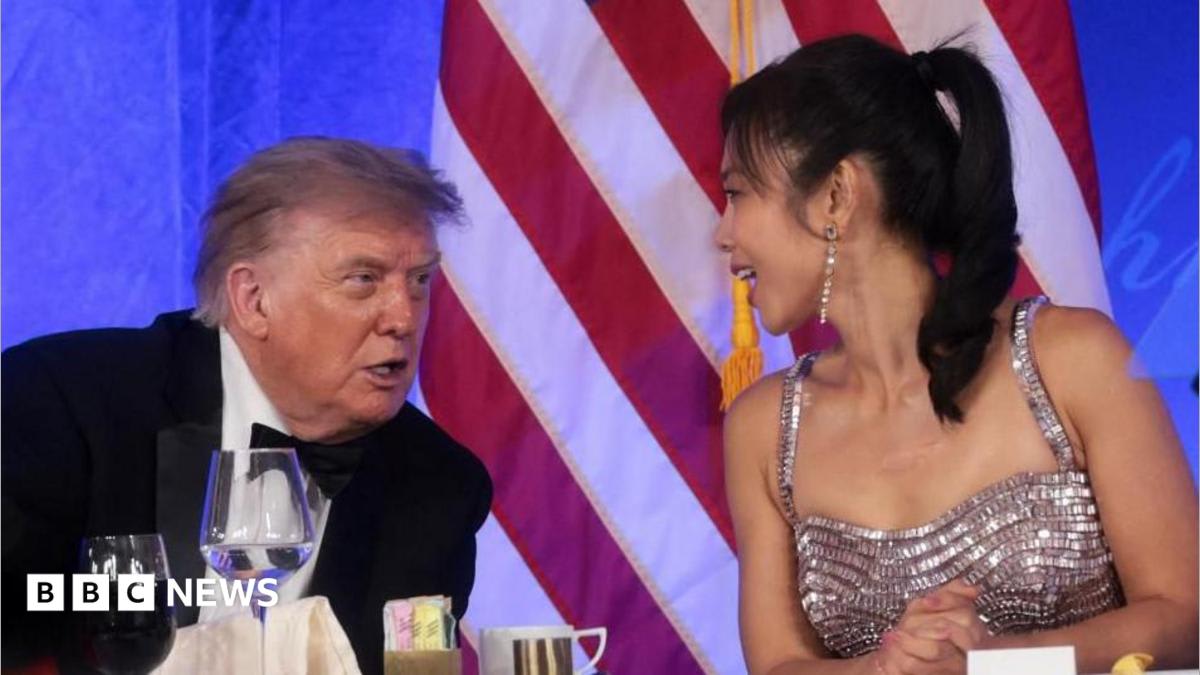
The White House Correspondents' Association Dinner was held at the Waldorf Astoria following a three-month delay caused by an attempted assassination in April. President Trump attended the event, which balanced themes of journalistic perseverance with his characteristic criticism of the media.
A Resilience-Driven Return to Tradition
The White House Correspondents' Association (WHCA) Dinner, a staple of Washington D.C.'s political and social calendar, took place this Friday under extraordinary circumstances. Held at the Waldorf Astoria on Pennsylvania Avenue, the event served as a rescheduled iteration of the original dinner that was abruptly cut short three months ago due to a security breach. The presence of President Donald Trump at this year's gathering underscores a complex moment in American political history, where the intersection of physical security, institutional tradition, and adversarial rhetoric is increasingly visible.
The Shadow of Violence
The necessity of this rescheduling stems from a harrowing incident in April, where a gunman attempted an assassination of President Trump outside the original event venue. The decision to reconvene was framed by outgoing WHCA President Weijia Jiang as an act of defiance against political violence. By refusing to let the perpetrator have the final word, the association sought to reaffirm the endurance of the press corps and the importance of the tradition itself, despite the clear psychological and physical toll that the earlier event took on all involved.
A Shift in Venue and Security
Moving the event from its traditional home at the Washington Hilton to the Waldorf Astoria represents more than a logistical change; it reflects the heightened security environment currently surrounding the presidency and the press. The transition to a new venue highlights the logistical hurdles involved in maintaining high-profile public events in an era of increased threats. Security measures were explicitly tightened for this Friday's proceedings, serving as a reminder that the safety of both the President and the members of the fourth estate remains a paramount concern for federal law enforcement.
The Paradox of the Presidential Address
While the evening was ostensibly dedicated to celebrating press freedom and funding journalism scholarships, the atmosphere was marked by the familiar friction between the executive branch and the media. President Trump’s attendance allowed for a rare face-to-face interaction with outlets he has frequently challenged, including the New York Times, CNN, and the Wall Street Journal. However, the tone remained contentious, as the President utilized his platform to reiterate grievances against what he termed "fake news" and accused attendees of suffering from "Trump Derangement Syndrome."
Broader Implications for Press Freedom
The duality of the evening—honoring award-winning journalism while simultaneously enduring presidential barbs—encapsulates the current state of American media relations. The WHCA dinner has historically functioned as a stage for dialogue, yet it has evolved into a venue for highlighting the polarization defining modern political discourse. As the association looks toward the future, the challenge remains in balancing the professional recognition of journalists with the increasingly hostile rhetoric that characterizes the current political landscape.
Conclusion: A Legacy of Persistence
In conclusion, the successful completion of the rescheduled WHCA dinner stands as a testament to the resilience of the press. Despite the trauma of the April shooting and the ongoing, often vitriolic, clashes between the President and the media, the event proceeded as a symbol of institutional stability. The night demonstrated that while the relationship between the White House and the press remains fractured, the commitment to maintaining these traditional forums for public engagement—even under duress—remains a core feature of the democratic process.
Multiple Citing Sources