In Delhi’s wholesale hub Sadar, choked drains and water inside shops
Source Entity
Mishal Mussaddique
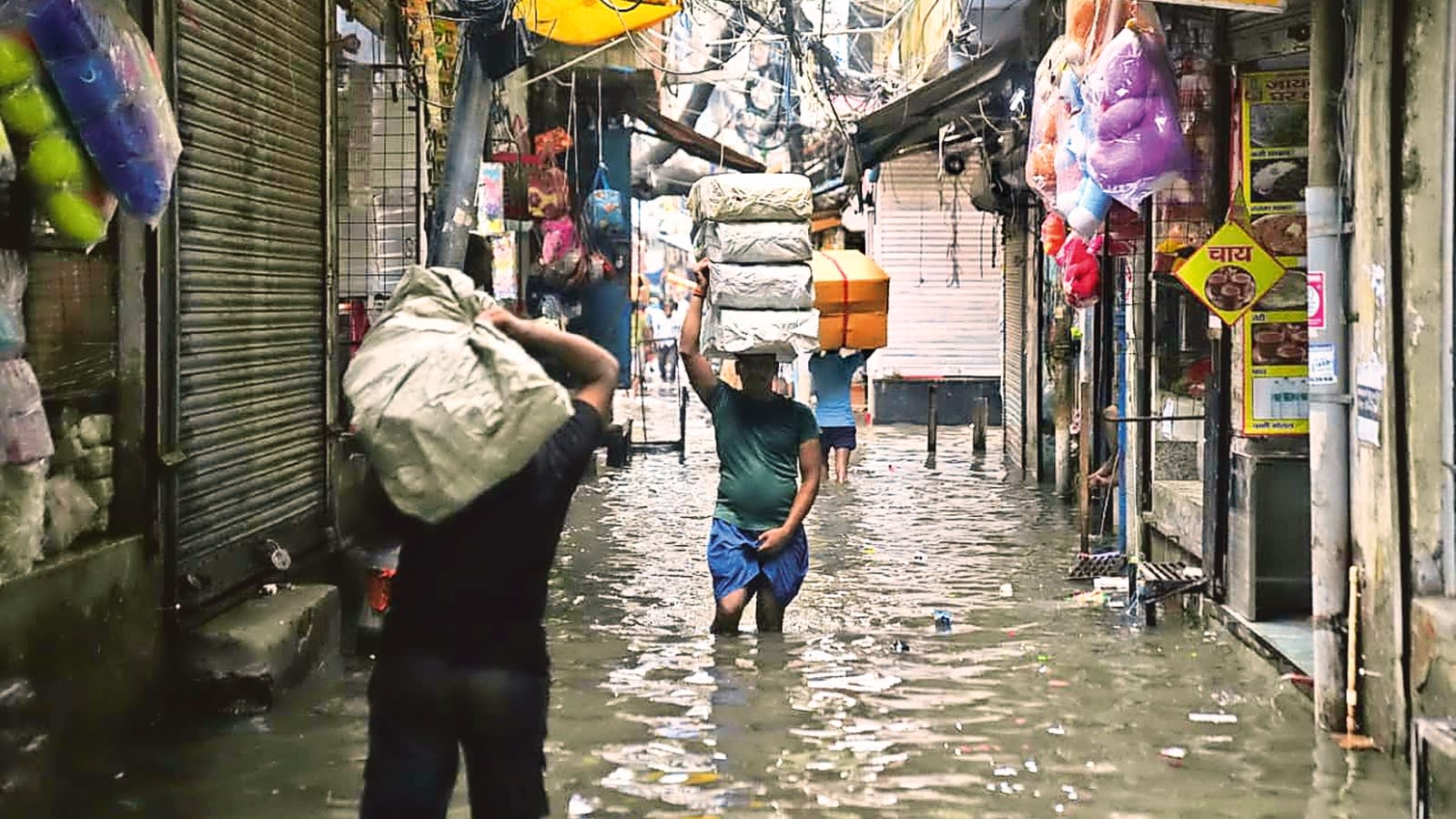
Heavy monsoon rains have triggered severe waterlogging across Delhi-NCR, causing significant disruption to major commercial hubs like Sadar Bazar and Connaught Place. The IMD has issued an orange alert as flooding forced businesses to halt operations and caused widespread traffic chaos.
Monsoon Chaos: Delhi’s Infrastructure Under Strain
Recent heavy rainfall across the National Capital Region (NCR) has once again exposed the deep-seated vulnerabilities in Delhi’s urban infrastructure. As the Indian Meteorological Department (IMD) issued an 'orange alert' for the city, the downpour resulted in widespread waterlogging, effectively bringing major commercial arteries to a standstill for several hours. From the historic wholesale hub of Sadar Bazar to the upscale corridors of Connaught Place, the deluge has disrupted daily life and inflicted tangible financial losses on the trading community.
The Recurring Crisis in Sadar Bazar
For business owners like Anil Kumar, who has operated in Sadar Bazar for two decades, the current flooding is a grim reminder of a decades-long systemic failure. Despite the area's status as one of India's largest wholesale markets for souvenirs, glassware, and furniture, it remains a perpetual waterlogging hotspot. The sight of shopkeepers standing in knee-deep water, desperately attempting to salvage inventory, highlights a lack of effective drainage management. This cycle of flooding is not a recent anomaly but a persistent feature of the monsoon season that continues to threaten the livelihoods of thousands of workers and traders.
Commercial Disruption in the Heart of the City
Beyond the wholesale markets, the impact extended to the heart of the capital. According to the New Delhi Traders Association, commercial activity in Connaught Place—specifically in the G Block, A Block, and the Outer Circle—was severely hampered until the early afternoon. The inability of the city’s drainage systems to manage the volume of rainfall recorded at stations like Safdarjung (32.4 mm) and the Ridge (37.6 mm) transformed arterial roads into canals. This paralysis of trade, occurring in one of Delhi’s most prominent business districts, underscores the fragility of the city's commercial infrastructure under extreme weather conditions.
Regional Impact and Meteorological Warnings
The crisis was not confined to Delhi, as neighboring cities like Noida, Gurgaon, and Chandigarh also grappled with the consequences of heavy precipitation and gusty winds. The IMD’s 'orange alert' signals a heightened state of risk, advising the public to remain cautious as moderate to heavy rain persists. The regional nature of this disruption suggests that the challenges facing Delhi are reflective of a broader urban planning deficit across the NCR, where rapid expansion has frequently outpaced the development of robust water management systems.
Future Trends and Urban Resilience
Looking ahead, the recurring nature of these floods poses a significant challenge to the economic stability of the capital’s commercial hubs. As climate patterns become increasingly unpredictable, the reliance on outdated drainage systems will likely lead to even greater economic costs. Future urban development in Delhi must prioritize the modernization of water drainage infrastructure, particularly in high-density zones like Sadar Bazar, to mitigate the impact of the monsoon. Without systemic upgrades, the city risks continued economic paralysis every time the skies open up, turning essential business days into periods of crisis and cleanup.
Multiple Citing Sources