'Thanks BJP for promoting': Rahul takes swipe at govt over Nov 1 rally in Delhi
Source Entity
AASTHA JHA
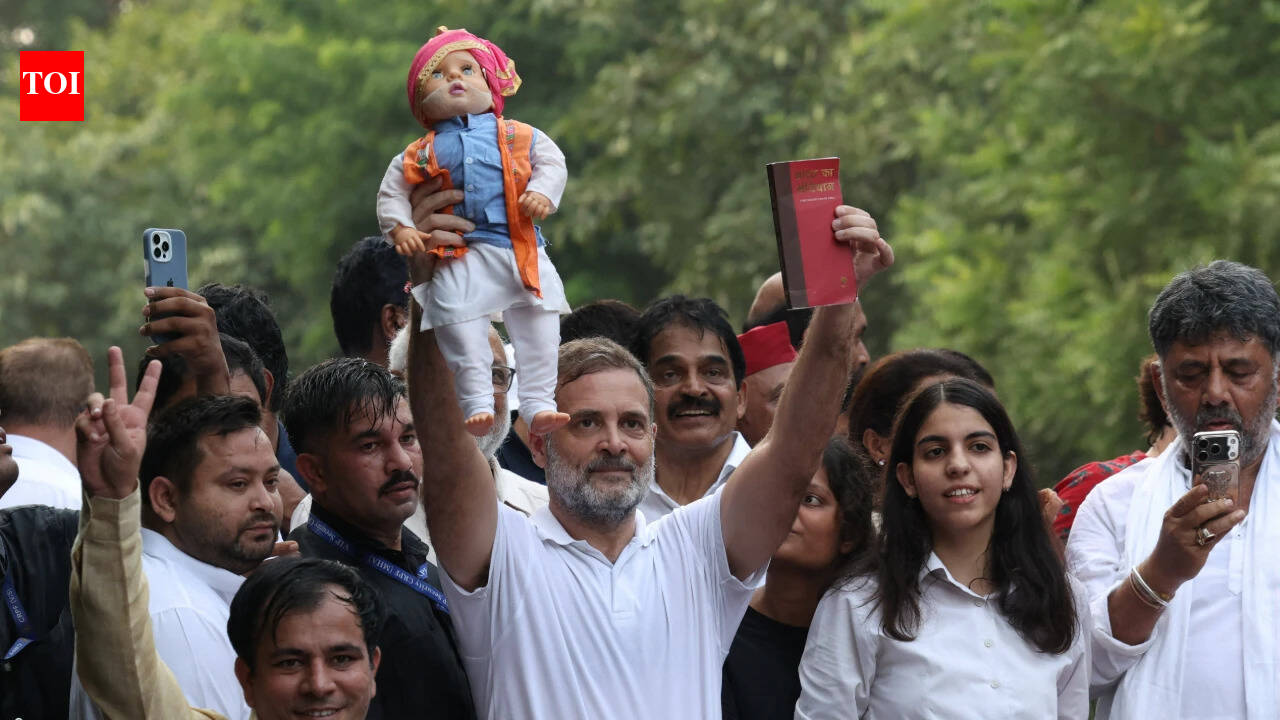
The Congress party's November 1 rally in Delhi has sparked controversy, with trade bodies warning of significant economic losses during the festive season. Meanwhile, the BJP and other groups have criticized the timing for its proximity to the 1984 anti-Sikh riots anniversary, while Rahul Gandhi remains defiant.
The Economic and Political Tug-of-War Over the November 1 Rally
The planned November 1 rally by the INDIA bloc, led by Leader of Opposition Rahul Gandhi at Delhi's Ramlila Maidan, has become a flashpoint for competing interests. As the capital gears up for the peak Diwali shopping season, the Chamber of Trade and Industry (CTI) has formally urged Gandhi to postpone the event until after November 10. The economic stakes are high; CTI chairman Brijesh Goyal highlighted that Delhi typically sees Rs 25,000 crore in business during Dhanteras, and the organization estimates that a rally of this magnitude could jeopardize Rs 10,000 crore in trade due to traffic restrictions and limited market access.
Impact on Essential Services and Trade
The ripple effects of the proposed rally extend beyond retail commerce to essential service sectors. The Federation of LPG Distributors of India (FLDI) has explicitly urged its members to ignore calls for strikes or protests, emphasizing the need to maintain supply chains during this critical period. By distancing themselves from the political agitation, these distributors are highlighting the tension between the democratic right to protest and the logistical necessity of keeping a major metropolitan economy functional during the most profitable time of the year.
Historical and Social Sensitivities
Beyond economic concerns, the timing of the rally has invited sharp criticism from the Bharatiya Janata Party (BJP). The BJP has pointedly noted that November 1 coincides with the anniversary of the 1984 anti-Sikh riots. By scheduling a major political mobilization on this date, the Congress party has faced accusations of insensitivity, with the BJP alleging that the rally could cause distress to the Sikh community. This intersection of political campaigning and historical trauma adds a layer of social volatility to an already crowded calendar.
The 'Vote Chori' Narrative
Rahul Gandhi has remained undeterred by the mounting pressure, framing the rally as a crucial stand against alleged "vote chori" or voter list inaccuracies. He has pivoted the criticism into a political narrative, thanking the BJP for inadvertently promoting the event through their vocal opposition. This strategy suggests that the Congress leadership views the rally as a foundational moment to mobilize its base against the ruling party, regardless of the criticism regarding logistics or timing.
Broader Political Implications and Future Trends
This confrontation underscores a growing trend in Indian politics where the physical space of the national capital becomes a battleground for competing visions of governance. The clash between trade associations—who prioritize the stability of the festive market—and political parties—who prioritize public demonstration—is likely to intensify as election cycles become more frequent. As the capital continues to struggle with the dual pressures of economic growth and political dissent, the ability of leaders to balance public outreach with the practical needs of the citizenry will remain a primary metric of political maturity.
Concluding Summary
In summary, the November 1 rally at Ramlila Maidan serves as a microcosm of the current political climate in India, where economic pragmatism frequently collides with ideological mobilization. While the Congress party seeks to highlight issues of electoral integrity, they face significant headwinds from trade bodies concerned with festive revenue and political rivals leveraging historical sensitivities. Whether the rally succeeds in its stated goals or is overshadowed by the controversy surrounding its timing remains to be seen.
Multiple Citing Sources