Beyond Jantar Mantar: The Dharmendra Pradhan report card
Source Entity
India Latest News: Top National Headlines Today & Breaking News | The Hindu
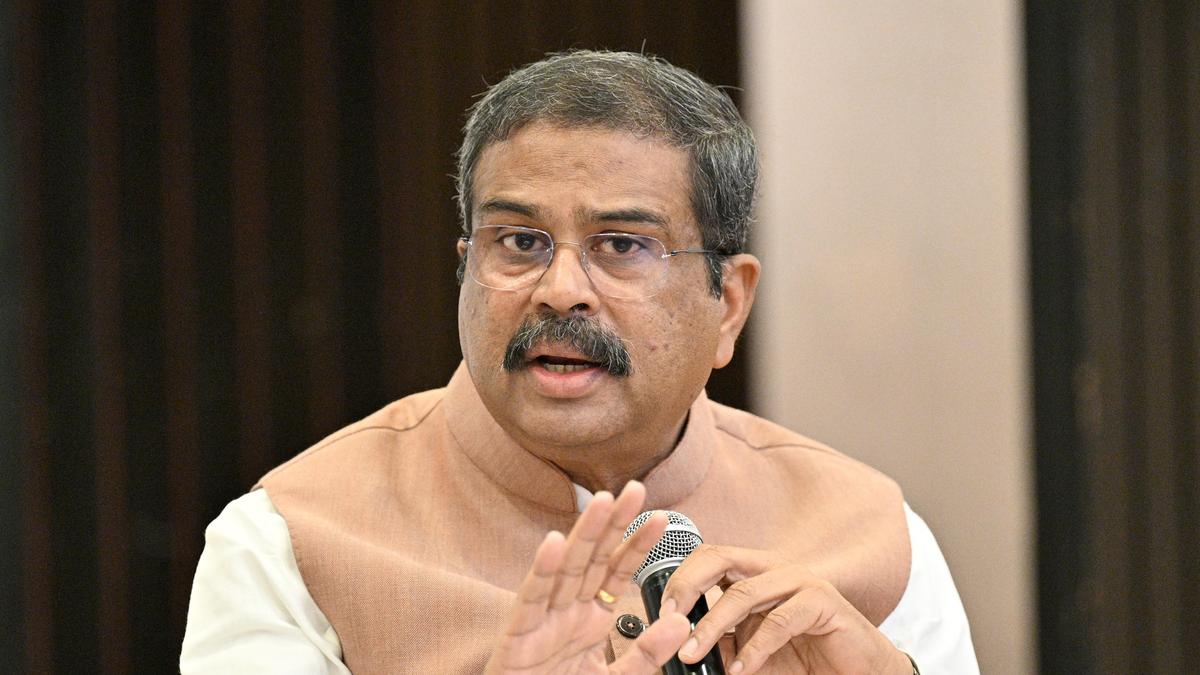
Former Union Education Minister Dharmendra Pradhan’s tenure is under scrutiny following his resignation amidst nationwide exam paper leak controversies. Meanwhile, the Odisha government faces pressure over textbook inaccuracies, and new leak allegations have emerged at Gujarat Ayurved University.
The Legacy and Turbulence of Dharmendra Pradhan’s Education Tenure
Dharmendra Pradhan’s tenure as Union Education Minister has concluded under a cloud of controversy, defined by a polarized legacy of ambitious reform and systemic failure. While his supporters point to his aggressive implementation of the National Education Policy (NEP) 2020—a framework adopted shortly before his appointment—critics highlight the recurring, high-profile exam paper leaks that culminated in mass protests at Jantar Mantar. This duality reflects a broader challenge in Indian governance: balancing grand structural overhauls with the fundamental necessity of maintaining institutional integrity.
The Reform Agenda: NEP 2020 and Beyond
Pradhan’s approach to the education sector was heavily influenced by his previous experience in the Petroleum Ministry, where he gained a reputation for rapid, target-oriented implementation, most notably the delivery of eight crore LPG connections. This 'delivery-first' mindset was applied to the Ministry of Education through a flurry of initiatives. From the development of the National Curriculum Framework (NCF) to the introduction of the Vikshit Bharat Shiksha Abhiyan (VBSA) and the push for a three-language formula, his tenure was characterized by a desire to modernize the pedagogical landscape. These reforms aimed at fostering multidisciplinarity and flexible learning, yet they often struggled to gain traction amidst the operational crises that defined the later years of his term.
The Crisis of Credibility: Paper Leaks and Protests
The defining narrative of Pradhan’s departure was the erosion of public trust in the examination system. The protests at Jantar Mantar served as a flashpoint for widespread dissatisfaction regarding paper leaks, a systemic issue that transcended state boundaries. The gravity of these failures is further underscored by fresh incidents, such as the suspected leak of the ‘Shalya Tantra-1’ paper at Gujarat Ayurved University. These events suggest that the administrative mechanisms designed to secure the integrity of academic evaluations have failed to keep pace with modern technological threats, leading to a recurring pattern of public embarrassment for the ruling party.
The Odisha Textbook Controversy: A Parallel Failure
The systemic issues plaguing the education sector are not limited to higher education examinations; they have permeated primary education as well. In Odisha, the Mohan Majhi government is currently under fire following the detection of 1,678 errors in textbooks for Classes I to VIII. Former Chief Minister Naveen Patnaik has leveraged this crisis to demand the resignation of School and Mass Education Minister Nityananda Gond, explicitly drawing a parallel to Pradhan’s own exit. This situation highlights a pervasive issue of accountability, as the BJD points out that despite multiple documented instances of institutional failure, including 23 paper leak incidents in the state, punitive action remains elusive.
Broader Implications and Future Trends
The current landscape suggests a critical inflection point for educational administration in India. The reliance on high-level committees, such as the one headed by Development Commissioner D.K. Singh in Odisha, indicates a reactive rather than proactive governance style. As long as students continue to rely on error-ridden materials and examination systems remain vulnerable to digital distribution of leaked content, the credibility of the entire education apparatus will remain in jeopardy. The trend moving forward will likely involve increased political scrutiny on educational ministers at both the state and central levels, with the 'Pradhan model' of resignation serving as a new benchmark for political accountability in the face of public outcry.
Multiple Citing Sources
Verification Required?