Punjab got ₹13L under PM minority welfare scheme in 2025-26: Govt in RS
Source Entity
Latest News: Todays Latest News Headlines from India & World | Hindustan Times | Hindustan Times
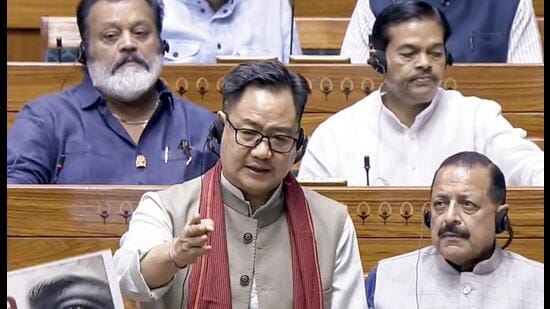
Punjab's funding under the Pradhan Mantri Jan Vikas Karyakram plummeted to ₹13 lakh in 2025-26 from ₹104.58 crore in 2022-23. The Centre attributes this decline to the scheme's demand-driven nature, which requires states to submit eligible project proposals to secure grants.
Analysis of PMJVK Funding Trends in Punjab
A Significant Fiscal Contraction
Recent data presented in the Rajya Sabha by Union Minister of Minority Affairs Kiren Rijiju reveals a stark contraction in central funding for Punjab under the Pradhan Mantri Jan Vikas Karyakram (PMJVK). The allocation for the 2025-26 period has plummeted to a mere ₹13 lakh, a figure that represents an overwhelming decrease compared to the ₹104.58 crore disbursed during the 2022-23 fiscal year. This shift highlights a dramatic departure from previous levels of federal support for minority-concentration areas within the state.
The Mechanics of a Demand-Driven Scheme
To understand this reduction, one must analyze the structural design of the PMJVK. The Ministry of Minority Affairs clarified that this is a demand-driven, centrally sponsored scheme rather than one based on fixed state-wise budgetary allocations. In this framework, the flow of funds is predicated entirely on the submission of eligible, well-structured project proposals by the respective state governments and Union Territories. Consequently, the current low funding level suggests a disconnect between the state's proposed infrastructure pipeline and the ministry’s vetting criteria.
Impact on Minority Infrastructure
Historically, the PMJVK has served as a critical pillar for developing essential social infrastructure in areas with significant minority populations. The scope of these projects typically encompasses the construction of schools, health centers, and skill development institutes, alongside various community assets. The sudden reduction in funding raises concerns regarding the continuity of these developmental projects. If the state fails to secure grants, the momentum for upgrading facilities in underserved regions may face significant stagnation.
Administrative and Policy Implications
This development underscores the necessity for state-level administrative efficiency in navigating federal funding mechanisms. Because the scheme is predicated on 'demand-driven' performance, the onus rests on the state government to identify needs, design viable projects, and submit them in compliance with central guidelines. The disparity between the 2022-23 peak and the 2025-26 low suggests either a change in the state's prioritization of these projects or a potential breakdown in the proposal submission process.
Future Outlook and Strategic Trends
Moving forward, the fiscal health of minority welfare initiatives in Punjab will likely depend on the state’s ability to align its development proposals with the Ministry’s specific eligibility parameters. As the Centre maintains its stance on the demand-driven nature of the PMJVK, policymakers in Punjab must likely conduct a thorough review of their project management strategies to regain access to these funds. The outcome will be a litmus test for the effectiveness of federal-state cooperation in addressing the infrastructure deficits of minority-concentrated regions.
Verification Required?