DVAC conducts drone survey of irrigation tank in illegal sand mining charge against DMK’s E.V. Velu
Source Entity
India Latest News: Top National Headlines Today & Breaking News | The Hindu
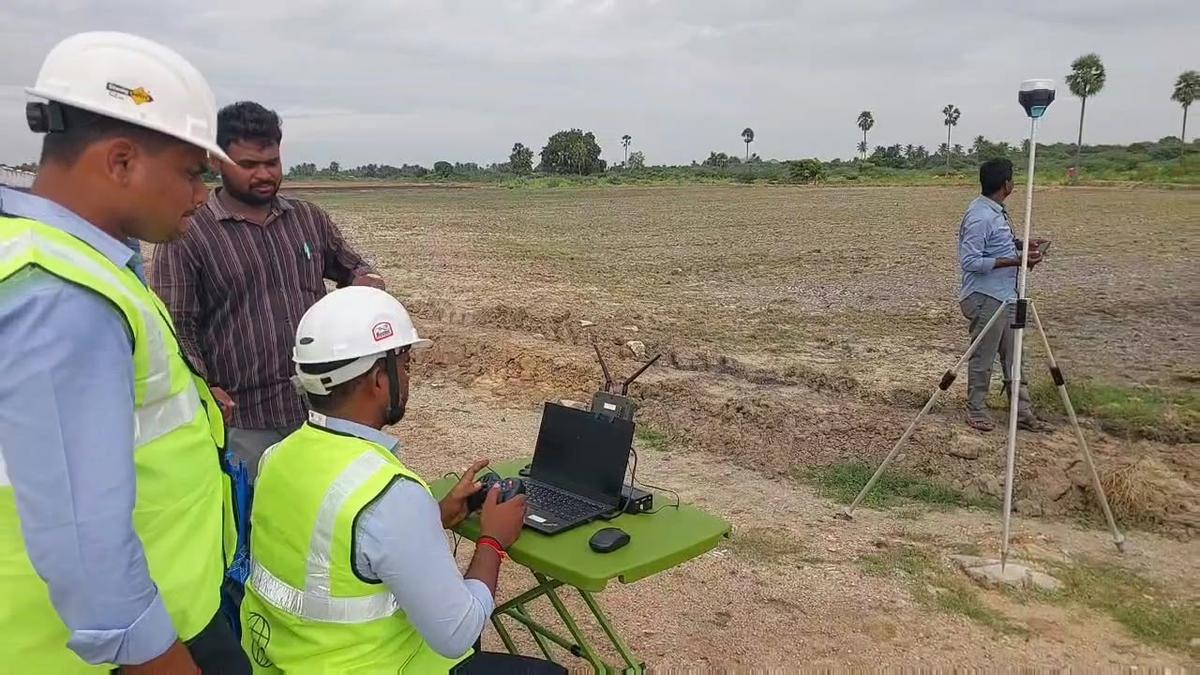
The DVAC has launched a drone survey in Malappambadi to investigate allegations of illegal sand mining linked to DMK leader E.V. Velu. The probe aims to assess environmental damage caused by excavation for a political conference.
Investigation into Illegal Sand Mining Allegations in Tiruvannamalai
The Scope of the DVAC Operation
In a significant move targeting political accountability, the Directorate of Vigilance and Anti-Corruption (DVAC) has initiated a comprehensive drone survey at an irrigation tank in Malappambadi village, near Tiruvannamalai. The operation, which involves coordination between the Revenue Department, local police, and the Tiruvannamalai Corporation, is focused on quantifying the environmental degradation caused by unauthorized sand excavation. This technical approach underscores the authorities' intent to gather irrefutable, data-backed evidence regarding the scale of the alleged environmental violations.
Connections to Political Events
The controversy centers on allegations involving senior DMK leader and former PWD and Highways Minister, E.V. Velu. Reports indicate that the sand mining activity was allegedly conducted to facilitate preparations for the DMK’s Northern Zone Youth Wing Conference, which took place on December 14, 2025. By utilizing advanced aerial surveillance, the DVAC is seeking to determine the exact volume of sand removed, which will be critical in establishing the link between the mining activities and the logistical requirements of the political gathering.
Environmental and Legal Implications
Illegal sand mining poses a severe threat to local ecosystems, particularly regarding water storage capacity in irrigation tanks. The survey, monitored by Deputy SP Ganesan and RDO K. Selvam, aims to map the total depth and width of the tank post-excavation. Such damage often leads to compromised groundwater recharge and irrigation reliability for local agricultural communities. Legally, the findings of this survey will serve as a foundational piece of evidence to determine if the activities violated environmental protection statutes and public property regulations.
Administrative Oversight and Coordination
The multi-agency nature of this investigation highlights the seriousness with which state authorities are approaching the complaint. By involving the Revenue Divisional Officer and local law enforcement, the DVAC is ensuring that the survey results are cross-referenced with official land records and previous site inspections. This collaborative framework is essential for maintaining the integrity of the investigation, especially given the high-profile nature of the individual implicated in the charges.
Future Trends in Anti-Corruption Enforcement
This case signals a growing trend in the use of geospatial technology to combat corruption and illegal resource extraction. As state agencies increasingly adopt drone and satellite monitoring, the ability to document environmental crimes in real-time is shifting the landscape of accountability. If the survey confirms substantial unauthorized mining, it could set a precedent for how future political events are scrutinized for their environmental footprint, potentially leading to stricter oversight on how land and natural resources are utilized for public or political functions.
Conclusion
The ongoing investigation in Malappambadi serves as a critical test case for the enforcement of environmental and anti-corruption laws in Tamil Nadu. As the DVAC compiles its final report based on the drone-captured data, the transparency of this process will be vital in maintaining public trust. The outcome of this probe will likely have lasting implications for the regulatory standards governing natural resource management and political accountability in the region.
Verification Required?