Around Madras city in hand-pulled rickshaws
Source Entity
India Latest News: Top National Headlines Today & Breaking News | The Hindu
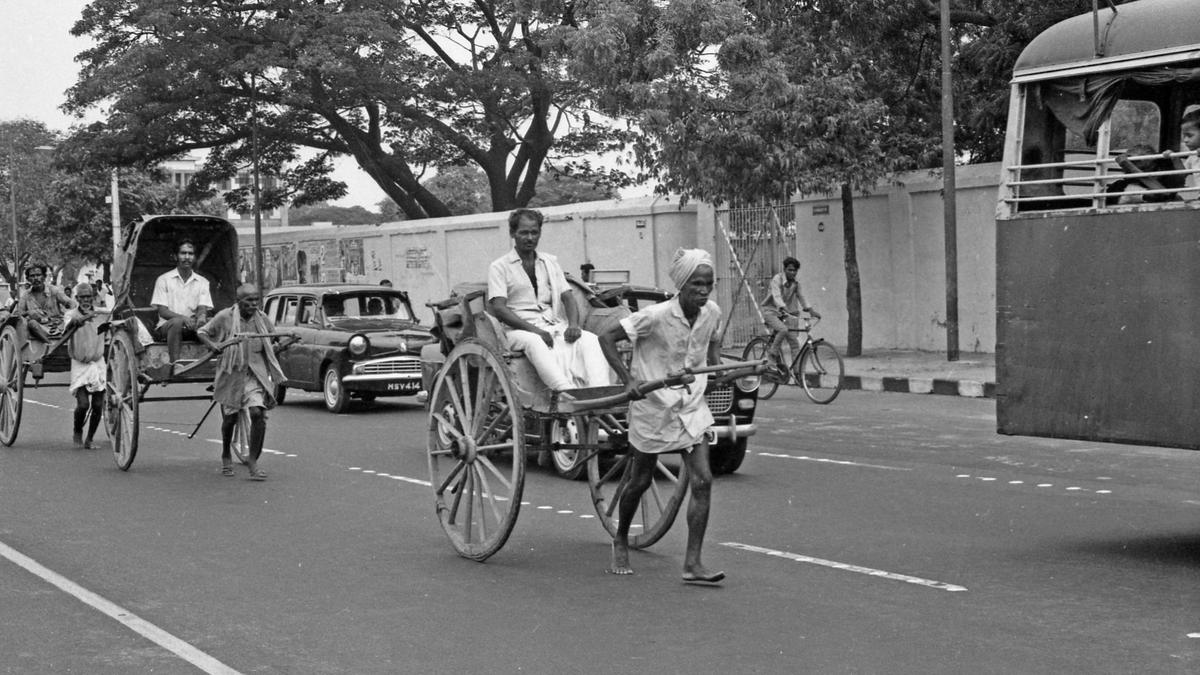
Chennai's urban mobility has evolved from 1880s bicycles and early 1970s autorickshaws to a sprawling network of buses and two-wheelers. These diverse modes of transport now serve as essential lifelines for millions, reflecting a complex, long-standing relationship between the city's residents and their transit systems.
The Evolution of Urban Mobility in Chennai
The history of transportation in Chennai (formerly Madras) is a tapestry of shifting modes, each leaving an indelible mark on the city's character. From the early introduction of bicycles in the 1880s to the massive proliferation of motorized two-wheelers and public transit, the city's streets have been defined by a constant state of flux. This evolution reflects the broader urbanization of the region, where the need for efficient movement has consistently outpaced the infrastructure provided.
The Rise of the Autorickshaw
Perhaps no vehicle captures the 'love-hate' dynamic of Chennai’s streets quite like the autorickshaw. Introduced in the early 1970s with a modest fleet of just 200 units, these vehicles have exploded in number to approximately 100,000 by 2026. While they are frequently criticized for traffic violations, they remain an indispensable lifeline, ferrying 1.5 million passengers daily. They represent a chaotic but necessary solution to the city's 'last-mile' connectivity challenges.
The MTC Bus as a Social Fabric
Public transit in Chennai has moved through distinct eras, most notably the transition from tram services, which ended in 1953, to the dominance of the Metropolitan Transport Corporation (MTC) buses. Today, approximately 4,000 buses serve 32.85 lakh passengers daily. These buses are more than just transit; they are social hubs where long-term relationships are forged between passengers and staff. Unique cultural markers, such as the 35-year tradition of honoring specific bus crews in Melapedu, illustrate the deep emotional connection residents maintain with their public transport.
Bicycles and the Two-Wheeler Revolution
Before the roar of engines, the bicycle was the primary mode of personal transport, appearing in the 1880s and even prompting early calls for dedicated infrastructure like cycle lanes. Historical records from 1899 indicate that early cycling in the city was already a subject of regulation, signaling that the 'modern' problems of road safety and traffic etiquette have deep historical roots. The subsequent rise of motorized two-wheelers, bolstered by local manufacturing giants like Royal Enfield, solidified personal motorized transport as the city's most convenient method for navigation.
The Perpetual Catch-up of Infrastructure
Across all these modes of transport, a common theme emerges: the authorities have historically struggled to keep pace with the rapid growth of the city’s transit needs. Whether it is the regulation of autorickshaws or the expansion of bus routes, the city’s governing bodies often find themselves reacting to developments rather than leading them. This historical lag explains the current state of Chennai’s traffic, where the sheer volume of vehicles often overwhelms the existing road capacity.
Conclusion: A City in Motion
Chennai’s transportation story is a testament to resilience and adaptation. From the animal-drawn rekla of the past to the massive bus networks and autorickshaw fleets of 2026, the city has continuously reinvented its mobility. While the challenges of traffic and regulation remain, the reliance on these diverse modes of transport highlights a city that is constantly moving, driven by the needs of its millions of daily commuters.
Verification Required?