Grabette: an open system to record robot-manipulation data
Source Entity
Hugging Face - Blog
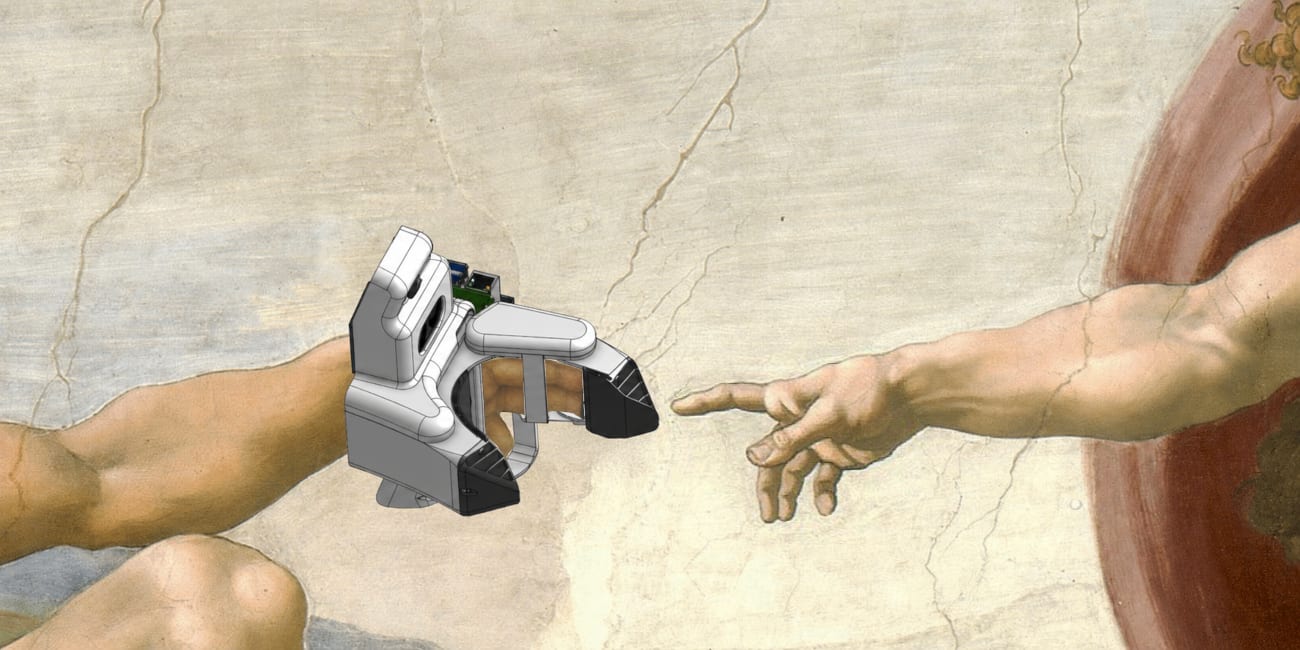
Grabette is an open-source system designed to simplify the collection of robot-manipulation data using handheld grippers. By removing the need for complex robot hardware, it aims to solve the data scarcity bottleneck currently hindering advanced robot learning.
The Data Bottleneck in Robotics
Modern robotics is currently at a critical juncture where the limiting factor in development is no longer the sophistication of the neural network architectures, but the availability of high-quality, diverse training data. While advancements in transformer-based Vision-Language-Action (VLA) models and diffusion policies have theoretically provided the "brains" for autonomous systems, these models remain starved of the real-world experiences necessary to generalize across complex physical tasks. Grabette emerges as a strategic intervention in this ecosystem, aiming to democratize the data collection process.
Simplifying Data Collection with Grabette
Historically, the process of teaching robots to manipulate objects has been hindered by the high barrier to entry associated with teleoperation. Traditional methods require access to expensive robotic hardware and complex control interfaces, often limiting data collection to well-funded academic or industrial laboratories. Grabette addresses this by allowing users to record manipulation tasks using only a handheld gripper. This hardware-agnostic approach significantly lowers the cost and technical expertise required to contribute to the field, effectively turning a wider range of researchers and hobbyists into data contributors.
From Handheld Motion to Robot-Ready Datasets
One of the most significant features of Grabette is its ability to automatically transform raw recordings into structured, robot-ready datasets. By streamlining the pipeline from physical interaction to machine-readable data, the system removes the friction of manual annotation and data cleaning. This automation is essential for creating the massive, multi-task datasets required to train general-purpose robotic agents, as it allows for the rapid iteration and scaling of data collection efforts across distributed networks of contributors.
Fostering Collaborative Open Source Progress
Beyond its technical utility, Grabette is positioned as a community-driven initiative hosted on GitHub. By encouraging users to share their data, the project aims to build a comprehensive, shared repository of manipulation tasks. This collaborative model mirrors the open-source success stories seen in other domains of artificial intelligence, where shared datasets have historically acted as a catalyst for rapid innovation. The philosophy here is clear: collective action can overcome the industry-wide data scarcity that individual labs cannot solve alone.
Broader Implications for Robot Learning
If successful, the widespread adoption of Grabette could fundamentally reshape the landscape of robot learning. As more researchers contribute to the shared dataset, the performance of robotic policies is likely to improve, leading to more robust and versatile autonomous systems. This shift towards community-sourced data could accelerate the transition of robotics from controlled, structured environments into the chaotic reality of the human world, where adaptability is paramount.
Future Trends and Conclusion
Looking forward, the success of Grabette will likely depend on its ability to maintain data quality while scaling. As the dataset grows, the community will need to implement robust verification processes to ensure that the recorded manipulations are diverse and high-fidelity. By focusing on the fundamental bottleneck of data availability, Grabette provides a necessary and practical framework for the next generation of robotic research, emphasizing that the future of intelligent machines lies in the accessibility and scale of the data they consume.