Gujarat bars outsiders from govt schools without principal’s nod; Congress alleges cover-up
Source Entity
Latest News: Todays Latest News Headlines from India & World | Hindustan Times | Hindustan Times
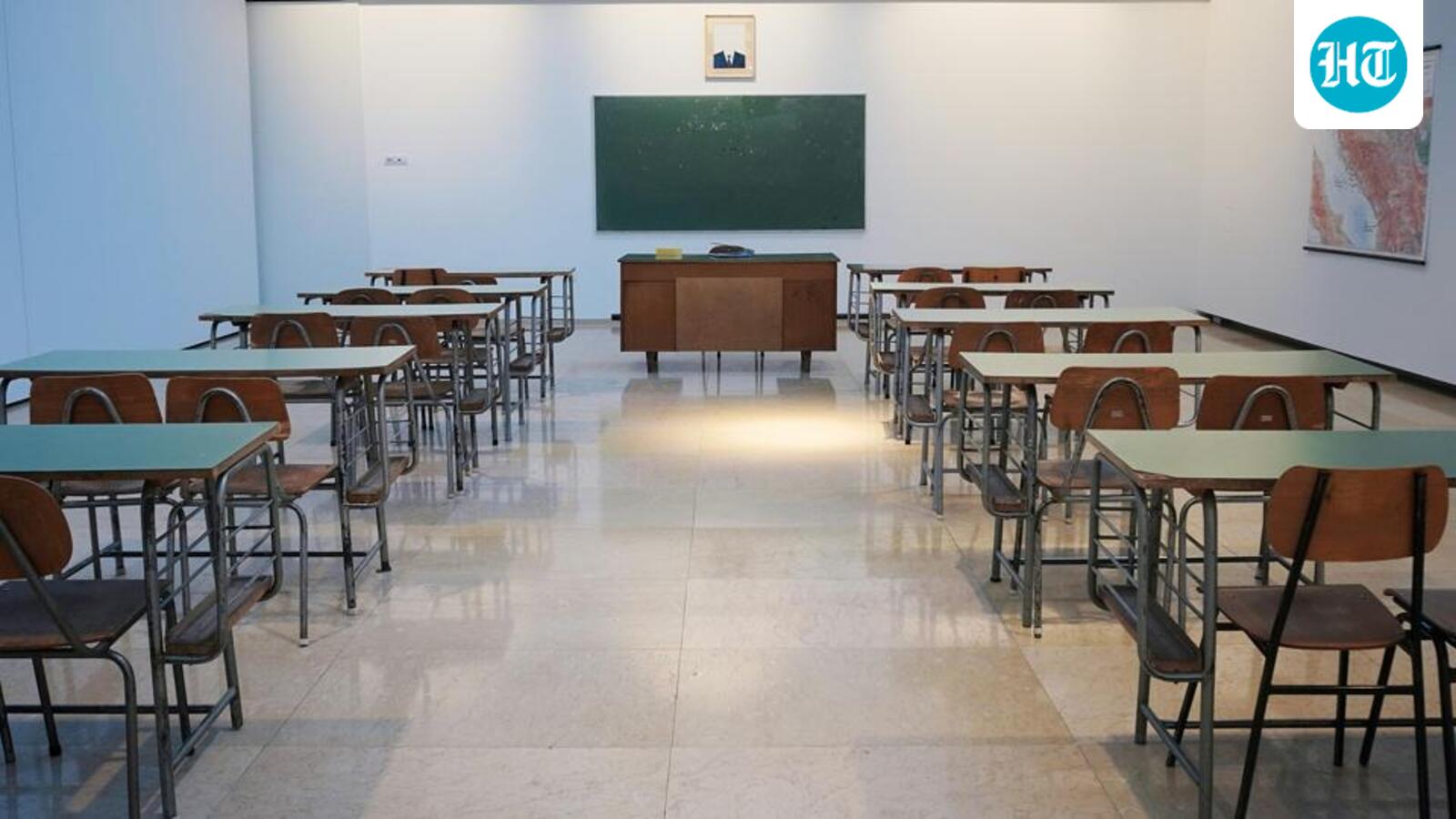
The Gujarat government has implemented strict new entry protocols for government schools, requiring written authorization for visitors to protect students under child safety laws. Opposition leaders have criticized the move, arguing it serves as a distraction from systemic issues like teacher shortages and poor infrastructure.
Gujarat Implements Stricter Security Protocols for Government Schools
Protecting Students Under 'In Loco Parentis'
In a move centered on student safety, the Gujarat state education department issued a circular on October 21 mandating that all external individuals must secure prior written authorization from school principals before entering government school premises. This policy is explicitly framed under the legal principle of in loco parentis, which dictates that the state assumes a custodial responsibility for children while they are under the care of educational institutions. By formalizing these entry requirements, the government aims to create a protective barrier against potential exploitation, citing child sexual abuse laws as the fundamental catalyst for these tightened operational standards.
Operational Changes and Surveillance Controls
Beyond mere entry restrictions, the new circular imposes granular control over campus activity. Visitors are now required to log their details in an official entry register, and access to sensitive areas—including classrooms, laboratories, libraries, playgrounds, and toilets—is strictly contingent upon written permission. Furthermore, the mandate stipulates that any photography or videography involving students or teachers is prohibited without explicit approval. Even when access is granted, visitors must be accompanied by school officials at all times, ensuring that third-party interactions with pupils remain under direct institutional oversight.
The Opposition's Perspective on Policy Priorities
Predictably, the policy has met with political friction. Manish Doshi, a spokesperson for the Gujarat Congress, has publicly alleged that these restrictions serve as a cover-up for the systemic failures plaguing the state's education system. Doshi argues that the government’s focus on visitor protocols ignores more pressing concerns, such as chronic teacher shortages, the deteriorating condition of classrooms, and a general lack of essential student facilities. The opposition contends that bureaucratic hurdles regarding campus access do little to improve the quality of education or the learning environment for students.
Balancing Security and Transparency
This development highlights the ongoing tension between maintaining secure learning environments and ensuring transparency in public institutions. While the state government views these measures as a necessary evolution of child protection laws, critics see a potential reduction in accountability. If external observers, such as journalists or concerned citizens, are restricted from documenting the state of facilities, it becomes significantly more difficult to independently verify the quality of infrastructure and the actualization of government education schemes.
Future Implications for School Administration
Looking ahead, the successful implementation of this circular will depend on the administrative capacity of school principals. By placing the burden of authorization on the head of the institution, the state has effectively transformed school leaders into gatekeepers of public access. While this may indeed reduce unauthorized intrusions, it also places an additional administrative load on principals who are already managing educational delivery. Whether this policy effectively deters abuse or simply stifles external oversight remains a point of contention that will likely be debated in the coming academic sessions.
Verification Required?