At least 12 school buses go under in Gurgaon, children stranded for hours
Source Entity
Abhimanyu Hazarika
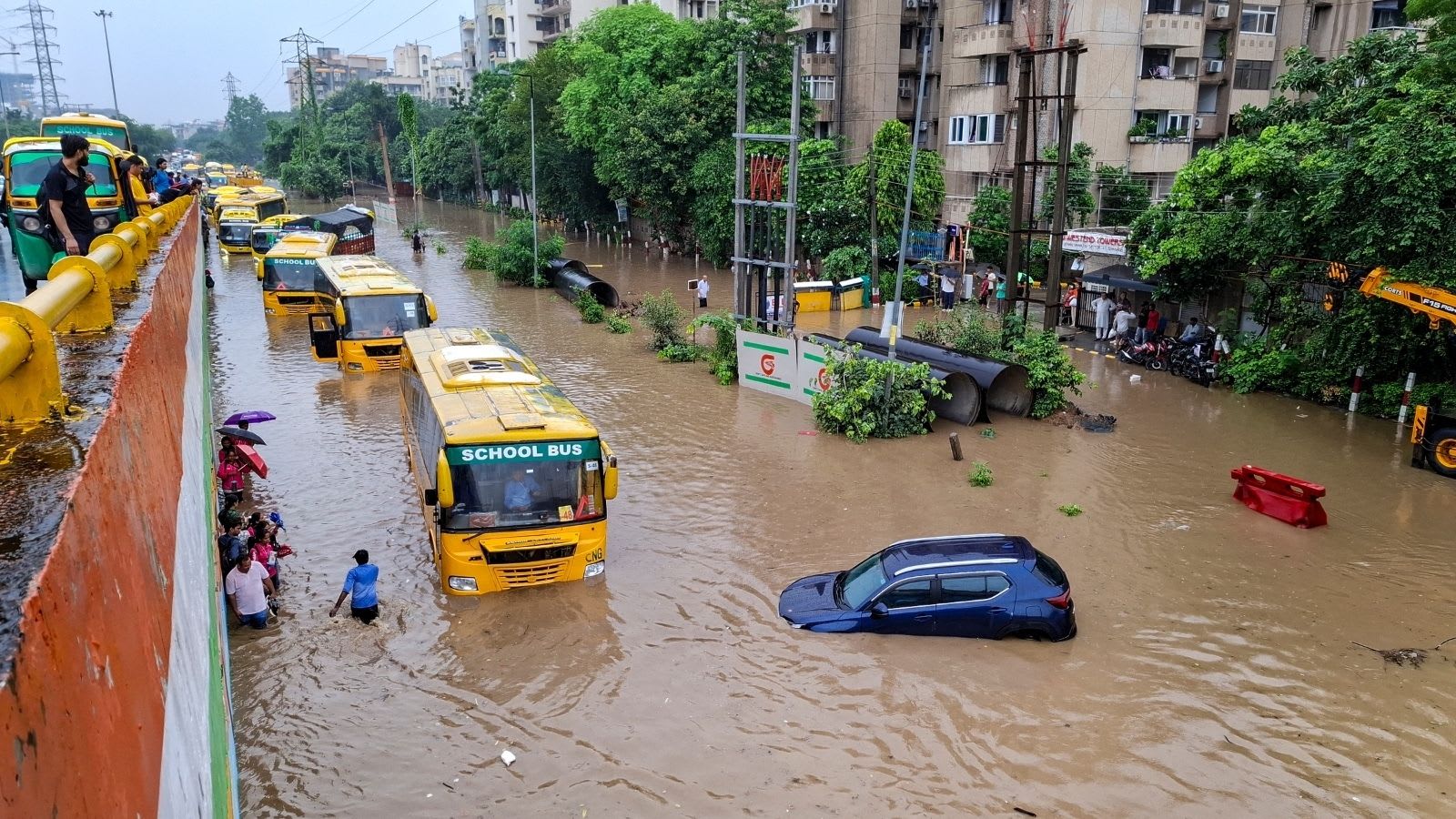
Gurgaon faces severe urban infrastructure challenges as heavy rainfall causes widespread waterlogging, stranding school buses and prompting work-from-home advisories. Local residents and entrepreneurs are calling for better civic accountability amidst recurring drainage failures.
The Infrastructure Crisis in Gurgaon: A Recurring Nightmare
The recent bout of heavy rainfall in Gurgaon has once again brought the city’s infrastructure to a standstill, highlighting a deepening crisis in urban planning. With 75 mm of rain falling between 8 am and 5 pm, the city witnessed scenes of chaos, including the stranding of at least 12 school buses near Subhash Chowk. For parents and students, the ordeal involved wading through knee-deep water for hours, a situation that underscores the fragility of the city's drainage systems during monsoon events.
The Human and Economic Cost
Beyond the immediate physical danger—which included reports of safety hazards from exposed electrical wires—the economic impact is becoming increasingly difficult to ignore. Dr. Shivin Chaudhary, a local founder, highlighted the frustration felt by the business community, noting that the poor state of civic services, despite heavy taxation, is leading some to question the viability of operating in the city. The comparison to "the Venice experience" is a biting critique of urban planning failures that turn arterial roads into canals after only an hour of rain.
Systemic Failures and Civic Accountability
Despite periodic efforts to improve drainage, the recurring nature of these floods suggests that current interventions are insufficient to handle the city's rapid expansion. The inability of the drainage network to cope with moderate rainfall indicates a need for a comprehensive audit of urban development policies. Residents are increasingly vocal about the gap between the taxes they pay and the quality of public amenities provided, creating a sense of disillusionment among both the workforce and the entrepreneurial class.
Broader Regional Implications
While Gurgaon has been the primary focal point of this recent crisis, it is not an isolated incident. Reports indicate that neighboring areas, including Noida, Gautam Budh Nagar, and Ghaziabad, are also struggling with similar waterlogging issues. This regional pattern suggests that the challenges are not merely local but are indicative of a larger systemic failure in the National Capital Region (NCR) to manage extreme weather events through robust urban engineering.
Future Trends and Necessary Reforms
Looking ahead, the district administration's reliance on work-from-home advisories and shifting schools to online classes is a temporary bandage on a chronic wound. To ensure long-term sustainability, the city must shift its focus toward climate-resilient infrastructure. Without significant investment in storm-water management and a move away from reactive governance, Gurgaon risks losing its competitive edge as a premier business hub, as the "cost of time" continues to rise for its residents.
Conclusion
The situation in Gurgaon serves as a stark reminder that rapid urbanization without adequate civic support is unsustainable. Whether it is the safety of schoolchildren or the productivity of local businesses, the city’s inability to manage rainfall is a bottleneck to growth that requires urgent, data-driven, and transparent administrative reform.
Multiple Citing Sources