India is going ‘beyond advocacy’ on the Russia-Ukraine conflict: Jaishankar
Source Entity
India Latest News: Top National Headlines Today & Breaking News | The Hindu
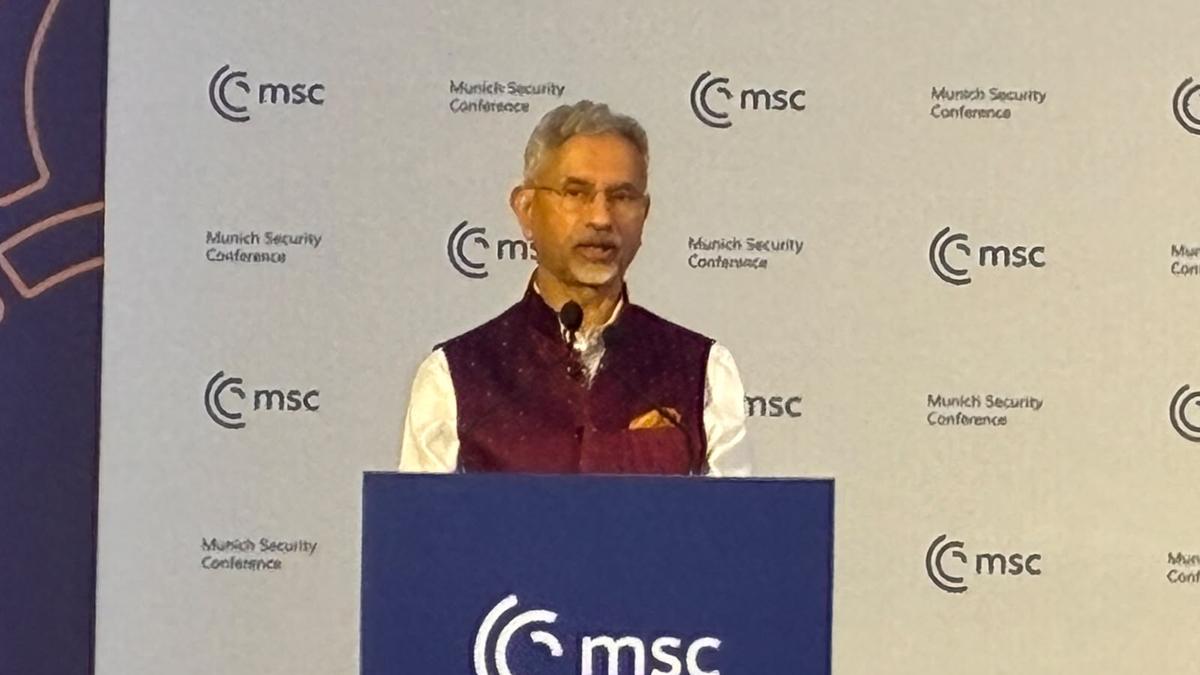
External Affairs Minister S. Jaishankar announced that India has moved beyond mere advocacy to active diplomatic engagement with Russia and Ukraine. New Delhi is currently facilitating talks aimed at ending the war, focusing on Black Sea security and energy exports.
India’s Shift Toward Active Mediation in the Russia-Ukraine Conflict
External Affairs Minister S. Jaishankar has officially confirmed that India has transitioned from a position of passive advocacy to active diplomatic engagement regarding the ongoing Russia-Ukraine conflict. Speaking at the Munich Leaders Meeting in New Delhi on October 4, 2026, Jaishankar noted that India is now directly involved in conversations with both Moscow and Kyiv. This marks a significant strategic pivot for New Delhi, which has historically maintained a stance of non-interference while calling for dialogue and diplomacy.
Historical Foundations of the India-Russia Partnership
Central to India’s diplomatic leverage is its long-standing, stable relationship with Russia, which dates back to the 1950s. Jaishankar emphasized that India does not forget historical allies, particularly those who supported the nation during periods when its territorial integrity and security were under existential threat. This deep-rooted trust allows India to maintain an open channel with the Kremlin, even as it simultaneously cultivates a burgeoning relationship with the European Union and the broader West.
The Scope of New Delhi’s Diplomatic Efforts
India’s involvement extends beyond broad calls for peace; it is specifically focused on practical, humanitarian, and economic stability. Jaishankar clarified that New Delhi is currently engaging in discussions regarding the safety of shipping in the Black Sea, the continuity of grain and energy exports, and exploring "non-attack possibilities" for critical infrastructure. By addressing these specific logistical pain points, India aims to mitigate the global fallout of the war, particularly for the Global South.
International Validation of India’s Role
This shift in policy has received international recognition. Ukrainian Foreign Minister Andrii Sybiha recently acknowledged that Kyiv has received a "comprehensive" and "broad" ceasefire proposal from India, describing it as the most significant among four such international submissions. Simultaneously, Russian President Vladimir Putin has publicly lauded Prime Minister Narendra Modi’s "excellent ideas," suggesting that India’s proposals are being viewed as a credible framework for a mutually acceptable resolution.
Geopolitical Implications and Future Trends
India’s emergence as a mediator highlights its growing stature as a "middle power" capable of bridging deep geopolitical divides. By leveraging its unique position as a strategic partner to both the West and Russia, India is attempting to foster a climate where negotiations can transcend the current military stalemate. As the conflict continues, India’s role as a diplomatic conduit is likely to increase in importance, provided that its proposals can bridge the fundamental security concerns of both warring parties.
Conclusion
In summary, India’s move "beyond advocacy" represents a calculated attempt to use its historical diplomatic capital to resolve a conflict that has paralyzed global security and economic systems. By focusing on tangible outcomes like grain safety and energy security, New Delhi is positioning itself as a pragmatic, neutral arbiter capable of steering the international community toward a negotiated end to the war.
Verification Required?