Railway official: India chose to have its own bullet train as Japan could not have delivered E10 before 2034
Source Entity
The Indian Express
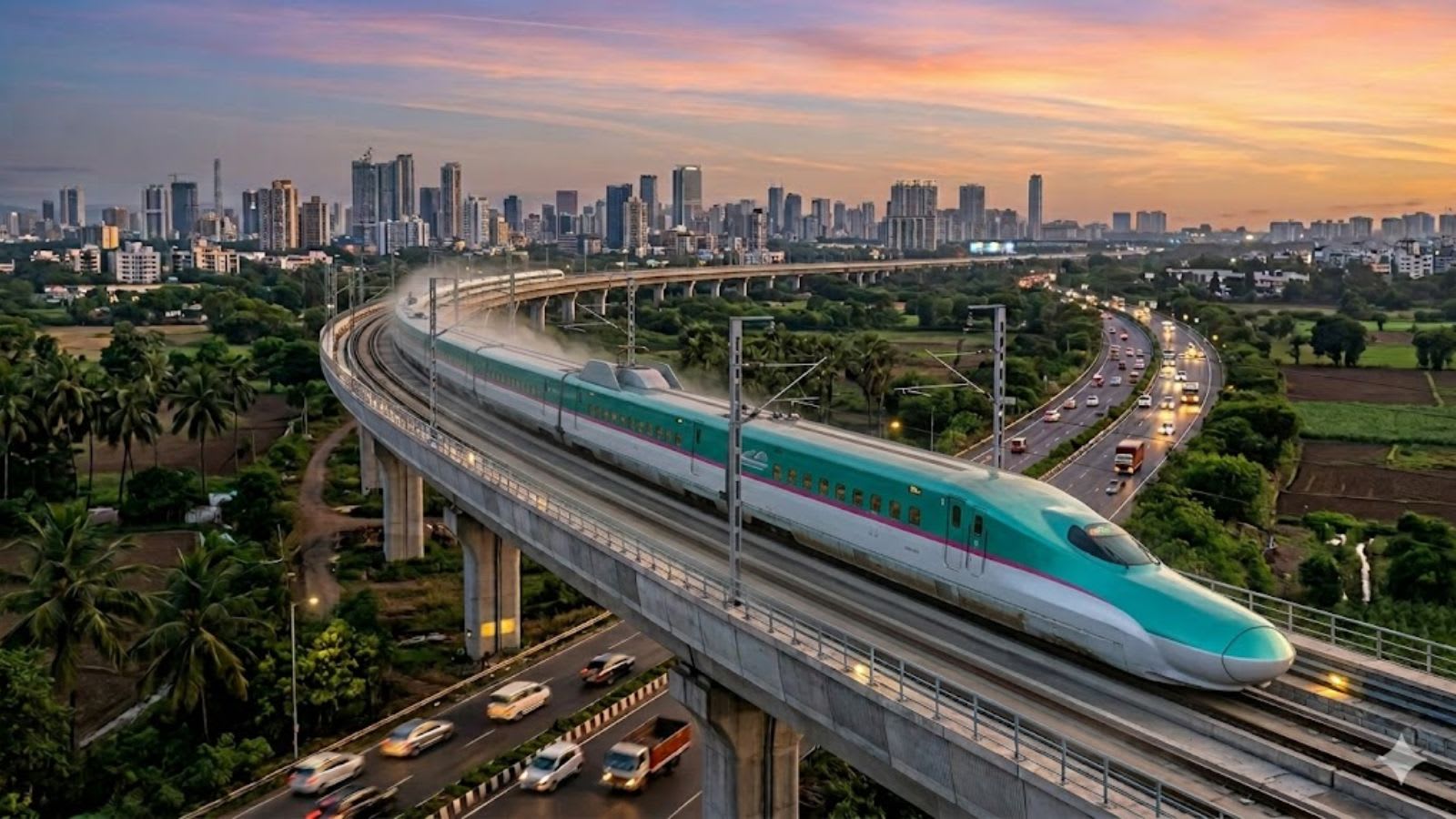
India will develop its own bullet train and adopt an international signaling system for the MAHSR project. This follows news that Japan cannot deliver the E10 Shinkansen trains until 2034 as they are still under design.
Strategic Pivot in the Mumbai-Ahmedabad High Speed Rail Project
The Mumbai-Ahmedabad High Speed Rail (MAHSR) project, a landmark 508-km infrastructure venture, is undergoing a significant strategic shift. Originally envisioned as a collaborative effort leveraging Japanese expertise, the project is now pivoting toward indigenous development. This transition comes after critical revelations regarding the delivery timeline of the E10 Shinkansen trains, forcing the Indian government to reconsider its reliance on a single international partner for the project's core technology.
The Catalyst: The E10 Delivery Crisis
At the heart of this policy shift is a substantial delay in the procurement of rolling stock. According to senior Railway ministry officials, it became evident in 2024 that Japan would be unable to deliver the E10 Shinkansen trains before 2034. The primary bottleneck is that the E10 train is still in the design phase. Because the technology is not yet finalized, the Japanese side has been unable to provide concrete offers for the trains, the necessary signaling systems, or the Operation Control Centre (OCC) systems. A decade-long wait for the primary vehicle of a high-speed rail project is an untenable timeline for India's infrastructure goals.
Analysis of the Technical Framework
The MAHSR project was structured around a clear division of labor: India was responsible for the extensive civil construction work, while Japan was tasked with providing three critical high-tech systems: the Shinkansen bullet trains, the Signalling System, and the Operation Control Centre (OCC). These three components form the "brain" and "muscle" of the railway. Without the signaling and OCC, the physical tracks are merely dormant infrastructure. The inability of Japan to commit to a delivery date for these integrated systems has created a technical vacuum that India must now fill to avoid indefinite project stagnation.
The Shift Toward Indigenization
In response to these delays, the Indian government has decided to develop its own bullet train and deploy an international signaling system. This move represents a broader trend toward technological self-reliance. By opting to create a domestic version of the high-speed train, India is not only mitigating the risk of foreign delivery delays but is also aiming to build a sustainable domestic ecosystem for high-speed rail technology. This shift likely aims to reduce long-term dependence on Japanese proprietary systems for maintenance and future expansions of the high-speed network.
Broader Implications for Infrastructure and Diplomacy
This development highlights the complexities of large-scale international technology transfers. While the Shinkansen is world-renowned for its safety and punctuality, the gap between design and delivery can create significant friction in bilateral projects. India's decision to pivot to an "international signaling system" suggests a willingness to diversify its technology stack, potentially looking at other global standards to ensure the MAHSR project remains viable. This diversification serves as a hedge against the risks associated with relying on a single vendor's development cycle.
Conclusion and Future Outlook
The MAHSR project remains a cornerstone of India's transport modernization, but the path to completion has evolved. The transition from a Japan-centric technology model to an indigenous and diversified approach marks a critical turning point. While the civil works continue, the focus now shifts to the successful design and manufacture of a domestic bullet train. If successful, this will not only bring the Mumbai-Ahmedabad corridor to life but will also position India as a developer of high-speed rail technology rather than just a consumer.
Multiple Citing Sources