India rejects UN rapporteur's 'India-based' label for Dawood Ibrahim's D-Company
Source Entity
India Latest News: Top National Headlines Today & Breaking News | The Hindu
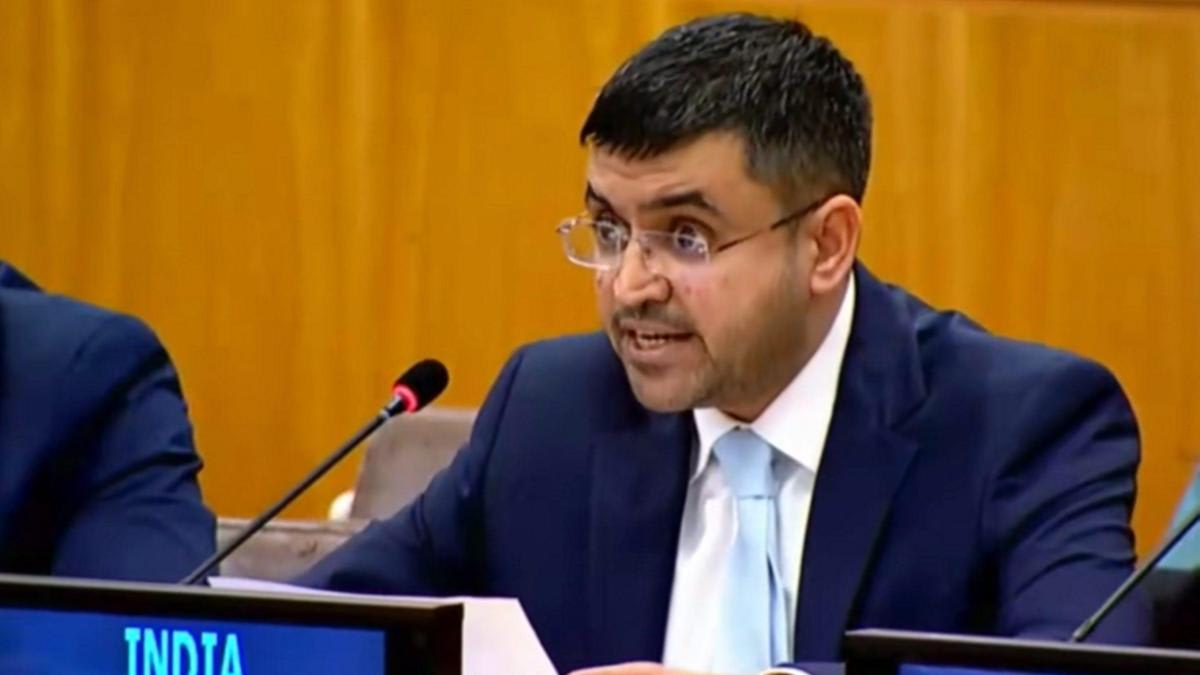
India has formally rebuked a UN report that labeled Dawood Ibrahim's D-Company as an 'India-based' criminal group. New Delhi insists that the notorious terrorist resides in Pakistan, citing the report's inaccuracies as a threat to the UN's credibility.
India Challenges UN Over Dawood Ibrahim's Reported Origins
In a significant diplomatic confrontation at the United Nations, India has formally rejected a report authored by Ben Saul, the UN Special Rapporteur on the Promotion and Protection of Human Rights and Fundamental Freedoms while Countering Terrorism. The point of contention lies in the report’s classification of Dawood Ibrahim’s 'D-Company' as an 'India-based' criminal group. India’s Permanent Mission to the UN, represented by First Secretary Raghoo Puri, has labeled this characterization as a 'glaring inaccuracy' that undermines the factual integrity of the world body's documentation.
The Geopolitical Reality of Dawood Ibrahim
India has long maintained that Dawood Ibrahim, one of the world's most wanted terrorists, resides in Pakistan. By labeling the D-Company as 'India-based,' the UN report inadvertently creates a narrative that shifts the geographic responsibility for his operations away from the state that New Delhi accuses of harboring him. This discrepancy is not merely semantic; it touches upon the sensitive geopolitical struggle between India and Pakistan regarding state-sponsored terrorism and the sanctuary provided to fugitives.
Concerns Over Institutional Legitimacy
During the Third Committee of the UN General Assembly on October 21, 2026, Raghoo Puri highlighted that such factual errors present member states with a 'fait accompli.' The Indian delegation argued that when UN-mandated experts release reports containing demonstrable inaccuracies, it damages the credibility and legitimacy of the United Nations as an impartial arbiter of global security concerns. The rebuke serves as a warning that procedural incompetence in reporting can have real-world consequences for international counter-terrorism cooperation.
Historical Context of the D-Company
Dawood Ibrahim is a central figure in the history of organized crime and terrorism in South Asia, most notably associated with the 1993 Bombay bombings. India’s frustration stems from the fact that the D-Company has evolved into a global syndicate with deep ties to terrorist networks, often operating from safe havens outside of India. To classify the group as 'India-based' ignores decades of intelligence and international security assessments that have traced the syndicate's activities to Pakistani soil, mirroring the historical presence of figures like Osama bin Laden.
Broader Implications for Counter-Terrorism
This incident highlights a growing tension between national governments and UN rapporteurs regarding the accuracy of reporting on sensitive security matters. India's strong stance reflects a broader policy shift toward holding international organizations accountable for the narratives they propagate. By publicly challenging the UN, New Delhi is signaling that it will not tolerate the legitimization of false narratives that downplay the role of neighboring states in fostering terrorist elements.
Future Trends in Diplomatic Accountability
Looking forward, this event is likely to influence how future UN reports are vetted and how member states engage with rapporteurs. We can expect India to continue its rigorous verification process for all UN-authored documents, prioritizing the correction of factual errors that impact its national security interests. As the international community grapples with the complexities of modern terrorism, the demand for precision and objectivity in UN reporting will only intensify, making this diplomatic rebuke a cornerstone case for future institutional accountability.
Multiple Citing Sources
Verification Required?