International community must work collectively to safeguard critical sea lanes: India tells UNSC
Source Entity
India Latest News: Top National Headlines Today & Breaking News | The Hindu
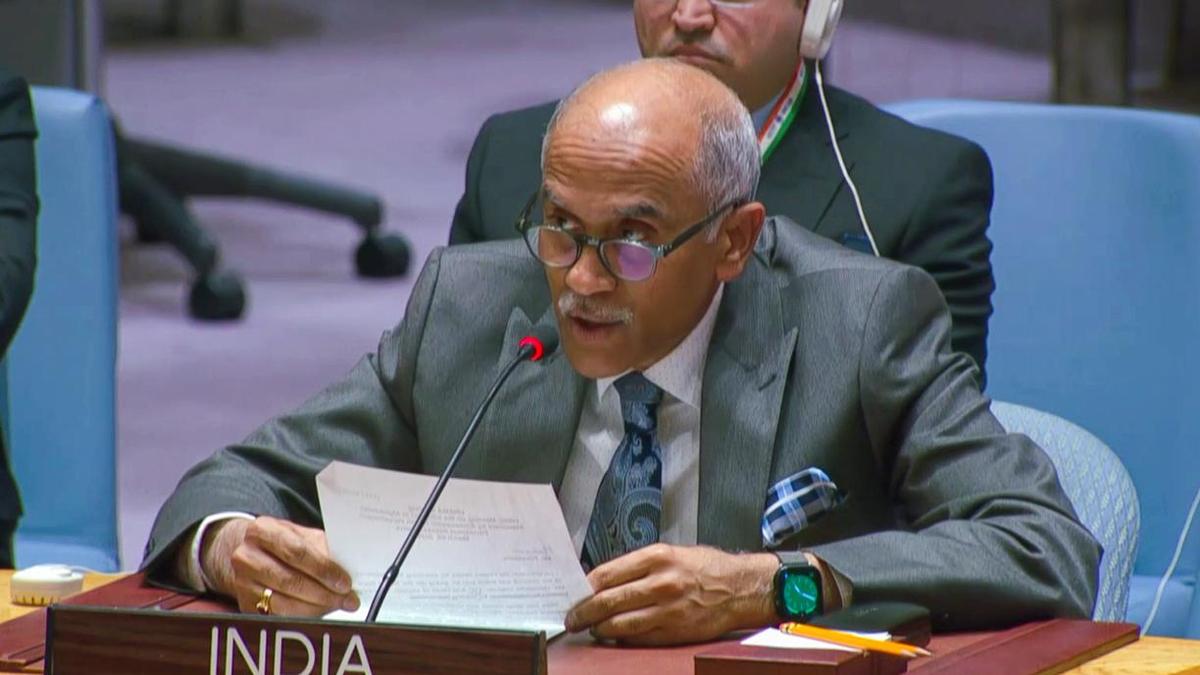
India has urged the UN Security Council to protect critical maritime trade routes to prevent global food and energy crises. Ambassador Harish Parvathaneni emphasized that armed conflicts now cause widespread ripple effects that threaten international supply chains.
Safeguarding Global Maritime Trade: An Indian Perspective
The Nexus of Conflict and Food Security
India’s recent address to the United Nations Security Council (UNSC) highlights a critical evolution in modern geopolitical challenges: the direct link between localized armed conflict and global food insecurity. Ambassador Harish Parvathaneni’s statement underscores that in an interconnected global economy, the humanitarian consequences of war are no longer confined to the immediate theater of hostilities. Instead, they propagate outward, destabilizing the movement of essential goods such as food, fertilizers, and fuel across the globe.
Protecting Critical Sea Lanes
The core of India’s proposal rests on the necessity of collective international action to safeguard critical sea lanes. As the primary arteries of global commerce, these maritime routes are vulnerable to the spillover effects of regional conflicts. By emphasizing that maritime trade must remain secure and predictable, India is advocating for a rules-based order that prioritizes the uninterrupted flow of life-sustaining resources, even amidst geopolitical volatility.
The Ripple Effect of Modern Warfare
Today’s conflicts generate ripple effects that extend far beyond the battlefield. Disruptions to supply chains, whether through physical blockades, political instability, or the weaponization of trade routes, create systemic risks for developing nations. India’s intervention at the UNSC suggests that the Security Council must expand its traditional focus on security to include the protection of economic logistics, as these are increasingly becoming the secondary targets of modern warfare.
Addressing Energy and Agricultural Vulnerability
During the high-level debate titled ‘Food Under Fire,’ it was noted that disruptions to energy markets are intrinsically tied to food production. Because fertilizers and agricultural transport rely heavily on energy availability, any volatility in the energy sector directly impacts global food prices. India’s call to action serves as a warning that without securing the transit of these commodities, the world faces a compounding crisis of affordability and availability.
Future Trends and Global Responsibility
Looking ahead, the international community faces the challenge of reconciling national security interests with the global need for trade stability. India’s proactive stance signals a shift toward a more integrative approach, where maritime security is viewed not just as a naval concern but as a humanitarian imperative. Future trends will likely see increased pressure on the UN to establish formal protocols for the protection of commercial maritime traffic in conflict-affected regions to prevent further humanitarian disasters.
Verification Required?