Intel Corporation (INTC) Just Had Its Best Quarter in 15 Years. Is the Turnaround Finally Real?
Source Entity
Yahoo Finance
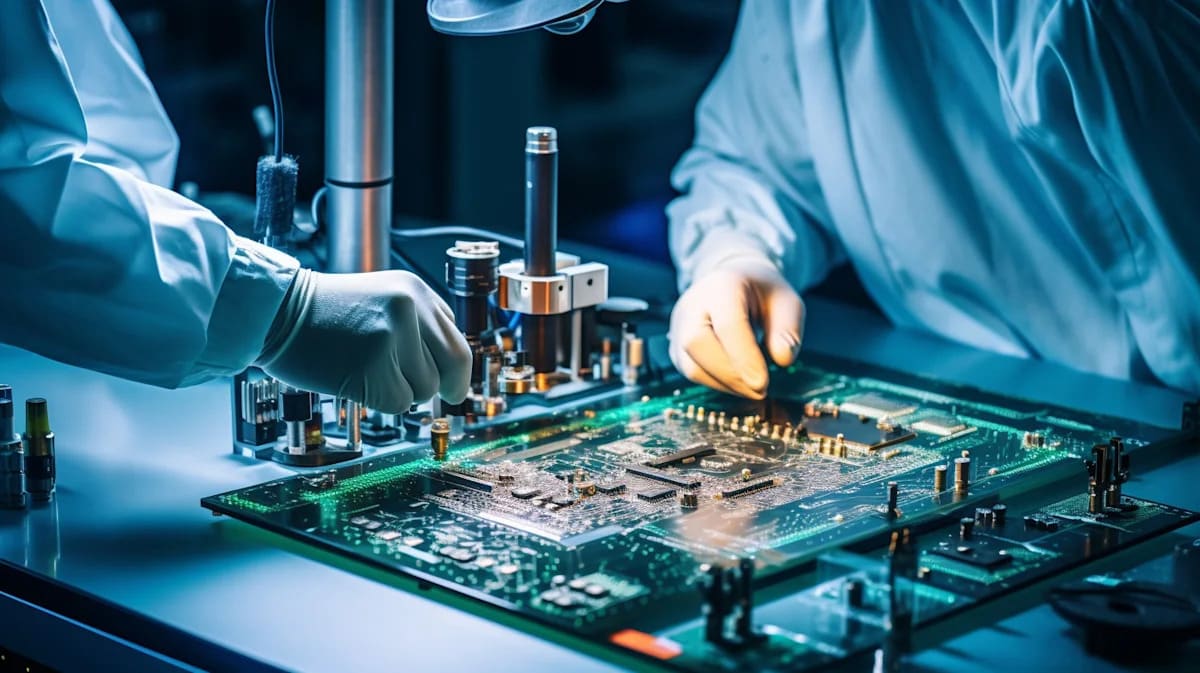
Intel reported a record-breaking quarter with $16.1 billion in revenue, significantly outperforming analyst expectations. The company is pivoting toward agentic AI, positioning its CPUs as essential components for the next generation of automated computing tasks.
Intel's Strategic Resurgence: A Deep Dive into Q2 Performance
Intel Corporation (NASDAQ:INTC) has recently reported its most significant financial performance in nearly 15 years, signaling a potential turning point for the semiconductor giant. With quarterly revenue hitting $16.1 billion—a 25% year-over-year increase—the company comfortably surpassed the $14.42 billion consensus estimate from analysts. This surge in top-line growth, coupled with an adjusted profit of 42 cents per share, which doubled the anticipated 21 cents, highlights a robust operational recovery.
The Shift Toward Agentic AI
Historically, the AI narrative has been dominated by graphics processing units (GPUs), primarily those manufactured by Nvidia. However, the market is witnessing a fundamental shift toward 'agentic AI.' Unlike standard generative models, agentic AI systems are designed to perform complex, multi-step tasks such as autonomous coding and workflow execution. Intel’s core competency in Central Processing Units (CPUs) is becoming increasingly central to this new wave of AI, suggesting that Intel’s hardware remains indispensable for the infrastructure of the next generation of intelligent software.
Financial Health and Cash Flow Dynamics
Beyond revenue growth, Intel’s balance sheet has shown signs of stabilization. Reports indicate that, excluding one-time payments, the company achieved positive free cash flow (FCF) in Q2. This metric is critical for investors, as it demonstrates that Intel’s core operations are now self-sustaining despite the high capital expenditure requirements of the chip manufacturing industry. While the stock experienced volatility—including an initial after-hours jump followed by a 4.6% decline on July 24—the underlying fundamentals suggest a strengthening financial position.
Market Sentiment and Analyst Outlook
Despite a significant drawdown from its June 22 peak of $140.94, the market sentiment surrounding Intel is shifting. Analysts have begun raising 2027 revenue forecasts, reflecting confidence that the current growth trajectory is sustainable. Some market participants are exploring options strategies, such as shorting out-of-the-money puts, to capitalize on the perceived undervaluation of the stock relative to its improved cash flow generation and revenue performance.
Future Trends and Strategic Implications
Looking ahead, Intel has provided optimistic guidance for the next quarter, projecting revenue between $15.8 billion and $16.8 billion, which significantly exceeds the $15.1 billion analysts had originally estimated. This guidance suggests that management anticipates sustained demand for its latest silicon architectures. If Intel can successfully integrate its CPU dominance with the growing needs of agentic AI deployments, the company may solidify its role as a primary beneficiary of the broader AI hardware revolution, moving beyond the shadow of its competitors.
Conclusion
Intel's recent performance represents more than just a quarterly beat; it is a validation of the company's strategic pivot toward AI-integrated computing. While market volatility remains a factor, the combination of record revenue growth, positive free cash flow, and an evolving role in the AI ecosystem provides a compelling case for Intel’s long-term recovery. Investors will likely remain focused on whether the company can maintain this momentum as it navigates the competitive landscape of 2026 and beyond.