Iran warns U.S. of Hormuz ‘red line,’ says it will retaliate to Trump’s strike threats
Source Entity
US Top News and Analysis
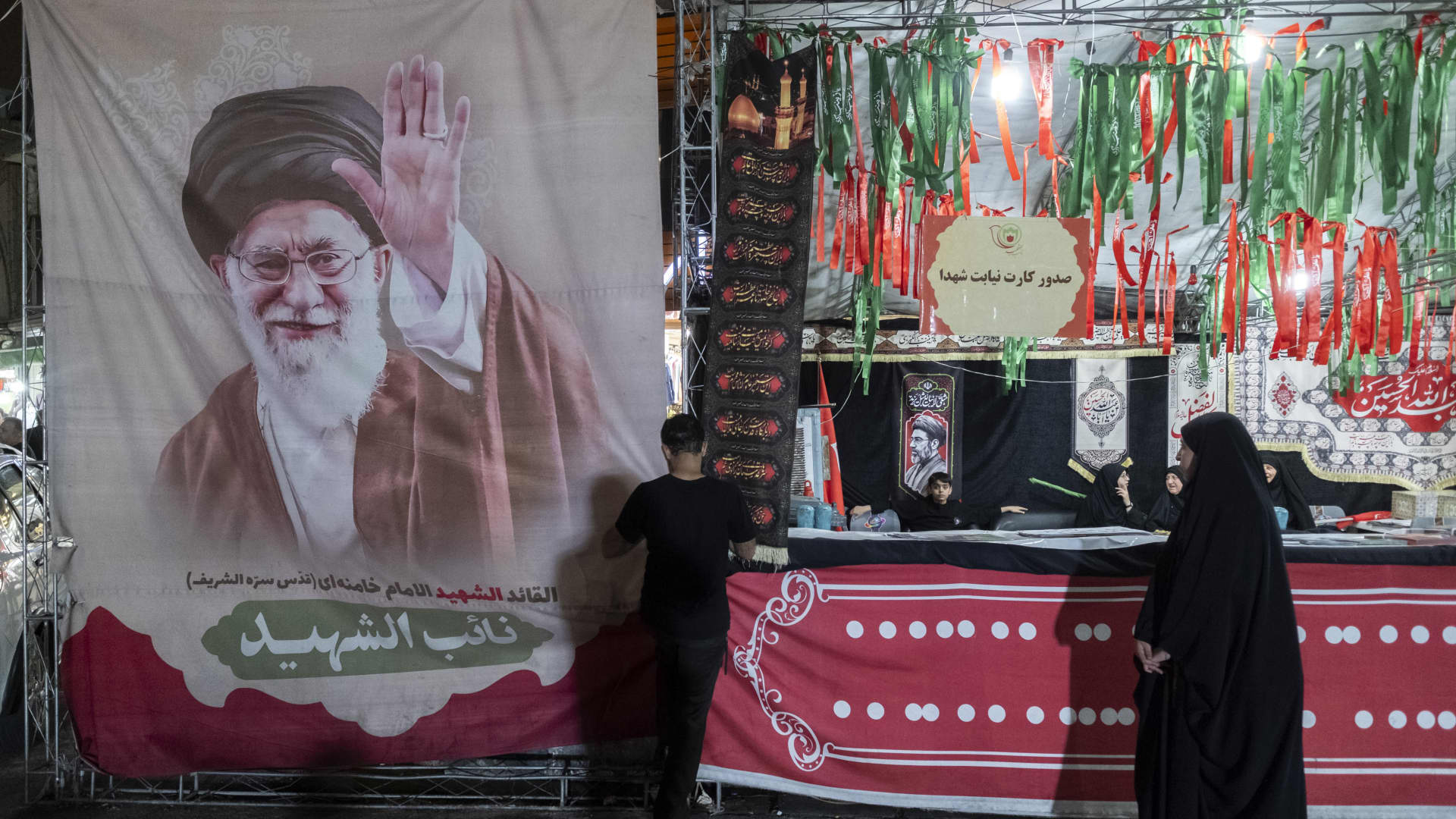
Iran has threatened retaliation and declared the Strait of Hormuz a 'red line' following warnings from Donald Trump that the U.S. would target Iranian infrastructure if negotiations do not resume.
Escalation in the Gulf: The High-Stakes Standoff Between Washington and Tehran
The geopolitical landscape in the Middle East has reached a critical flashpoint following a direct exchange of threats between the United States and Iran. The core of the current crisis stems from a stark ultimatum delivered by Donald Trump, who has warned that the U.S. will target Iranian infrastructure as early as next week should negotiations fail to resume. In a swift and aggressive counter-response, Iran has designated the Strait of Hormuz as a 'red line,' signaling that any U.S. military action will be met with severe retaliation. This exchange represents a dangerous escalation in the 'maximum pressure' campaign, shifting the conflict from economic sanctions to the immediate threat of kinetic military engagement.
The Strategic Significance of the Strait of Hormuz
To understand why Iran has labeled the Strait of Hormuz a 'red line,' one must analyze its role as a global energy choke point. The Strait is the world's most important oil transit corridor, with approximately one-fifth of the world's total oil consumption passing through its narrow waters daily. By threatening this waterway, Iran is utilizing its most powerful asymmetric lever. If Iran were to disrupt shipping or close the Strait in retaliation for U.S. strikes, the immediate result would be a catastrophic spike in global crude oil prices, creating economic instability that would ripple through every major economy, including that of the United States. This threat serves as a deterrent, reminding Washington that an attack on Iranian infrastructure could trigger a global economic crisis.
Analyzing the U.S. Strategy of Infrastructure Targeting
Donald Trump's threat to target Iranian infrastructure marks a pivot toward a more aggressive posture intended to force Tehran back to the negotiating table. By specifically mentioning 'infrastructure,' the U.S. is likely referring to oil refineries, petrochemical plants, or military command centers. The objective is to increase the internal cost of Iranian defiance, making the status quo untenable for the Iranian leadership. This strategy relies on the assumption that the threat of physical destruction will outweigh the domestic political cost of returning to negotiations. However, this approach carries the inherent risk of miscalculation, where a limited strike could be perceived by Tehran as the beginning of a full-scale regime-change operation.
Iran's Retaliatory Framework and Asymmetric Warfare
Iran's warning of retaliation is not merely rhetorical; it is backed by a sophisticated doctrine of asymmetric warfare. Beyond the Strait of Hormuz, Iran possesses a vast array of ballistic missiles and a network of regional proxies that could be deployed to target U.S. assets or allies across the region. The 'red line' mentioned by Iranian officials suggests a threshold beyond which they believe the preservation of the state requires an immediate and proportional response. This creates a precarious security dilemma: as the U.S. increases its threats to ensure security and diplomatic leverage, Iran increases its readiness for retaliation, thereby increasing the likelihood of an accidental or preemptive clash.
Broader Economic and Geopolitical Implications
The implications of this standoff extend far beyond the borders of Iran and the U.S. The global energy market is hypersensitive to instability in the Persian Gulf. Even the threat of a strike on infrastructure can lead to volatility in oil futures, affecting transportation costs and inflation rates globally. Furthermore, regional allies of the U.S., particularly in the Gulf Cooperation Council (GCC), find themselves in a vulnerable position, fearing that their territory could become a battlefield in a wider U.S.-Iran war. The tension underscores the fragility of regional security and the failure of previous diplomatic frameworks to create a sustainable long-term peace.
Historical Context of U.S.-Iran Hostility
This current crisis is the latest chapter in a decades-long history of mutual distrust and hostility, dating back to the 1979 Islamic Revolution. The cycle of sanctions, threats, and proxy conflicts has defined the relationship. The current friction is particularly acute because it follows a pattern where diplomatic openings—such as the JCPOA (Joint Comprehensive Plan of Action)—are followed by periods of intense aggression. The current threat of strikes on infrastructure reflects a breakdown in the diplomatic channel, where both sides feel that only the threat of force can achieve their respective goals of security and sanctions relief.
Conclusion: The Path Toward De-escalation or Conflict
As the deadline for the resumption of negotiations approaches, the world faces two primary scenarios. In the first, the threat of infrastructure strikes successfully coerces Iran into returning to the table, leading to a fragile diplomatic truce. In the second, a strike is carried out, triggering a retaliatory closure of the Strait of Hormuz and plunging the region into a hot war. The current situation is a volatile equilibrium; while neither side may desire a full-scale war, the rhetoric of 'red lines' and 'infrastructure targets' leaves very little room for error. The coming days will determine whether the path leads toward a negotiated settlement or a systemic geopolitical shock.