Israel elections: Reports of fraud attempts & missing ballots amid record turnout
Source Entity
KANCHAN YADAV
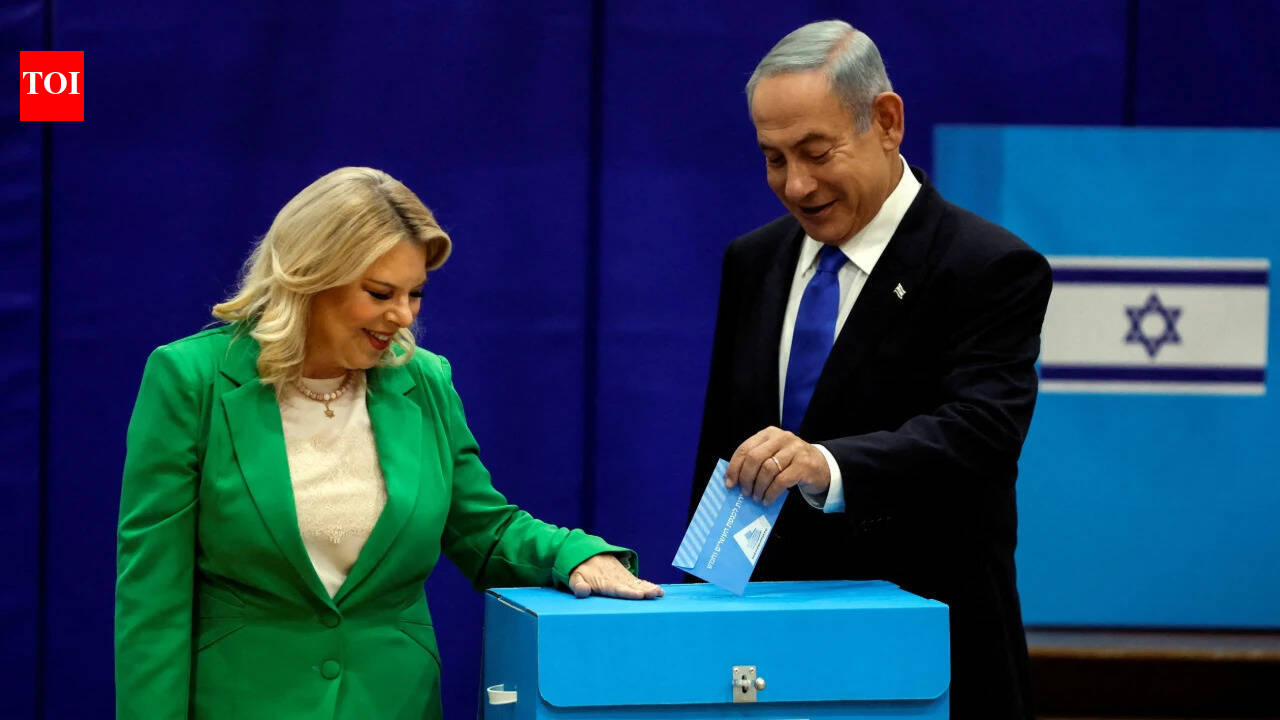
Israel faces a pivotal election on October 27, where Prime Minister Benjamin Netanyahu’s long-standing leadership is being challenged by former army chief Gadi Eisenkot. The election follows the security fallout of the October 7, 2023, attacks, with polls showing a tight race that may leave both major political blocs without a clear majority.
The Crossroads of Israeli Governance: The October 27 Election
Israel stands at a critical juncture as the nation prepares for elections on October 27, a vote that represents the ultimate test of Benjamin Netanyahu’s political longevity. Having dominated Israeli politics for decades, Netanyahu now faces an existential challenge to his career. The election is framed not merely as a contest of policies, but as a defining moment for the future of the Israeli right, with Netanyahu labeling the event an "emergency" and a "matter of life or death" for his political coalition.
The Shadow of Security Failures
The central tension of this campaign is rooted in the aftermath of the October 7, 2023, Hamas attack. For years, Netanyahu cultivated an image as "Mr. Security," positioning himself as the singular individual capable of safeguarding the state. However, the unprecedented scale of the October 7 assault shattered this narrative, triggering widespread public scrutiny regarding government accountability and systemic security failures. The subsequent multi-front conflicts, including confrontations with Hezbollah in Lebanon, have intensified the pressure on his administration to justify its ongoing leadership.
The Rise of Gadi Eisenkot
Emerging as the primary challenger to the incumbent is 66-year-old Gadi Eisenkot, a former Chief of Staff of the Israeli Defense Forces. Eisenkot’s rise has been meteoric; having polled in single digits just a year ago, his Yashar party is now projected to secure 20 to 23 seats in the 120-member Knesset, potentially outperforming Netanyahu’s Likud. As the son of Moroccan immigrants, an electoral victory for Eisenkot would mark a historic milestone, making him the first Mizrahi prime minister in the nation’s history.
The Structural Gridlock
Despite the surge in support for Eisenkot, the path to forming a government remains fraught with difficulty. Current polling indicates that neither the bloc led by Netanyahu nor the coalition opposing him is on a clear trajectory to secure the 61-seat majority required to govern. This suggests that even after the votes are cast, Israel may face significant political instability, necessitating complex coalition negotiations that could paralyze legislative progress.
Strategic Messaging and Polarization
Netanyahu’s campaign strategy has reverted to his traditional playbook, emphasizing the perceived existential threats to the "Jewish State." By framing the election as a binary choice between his leadership and a perceived collapse of state security, he seeks to consolidate his base. Meanwhile, the opposition, bolstered by Eisenkot’s military credentials, focuses on the necessity of a new direction, arguing that the security failures of the past year necessitate a change in national leadership.
Future Implications for the Region
The outcome of this election will have profound implications for Israel’s regional security and internal cohesion. As the nation navigates the aftermath of recent wars, the next government will be tasked with reconciling the public’s demand for accountability with the realities of an volatile security environment. Whether the electorate chooses to maintain the status quo under Netanyahu or embrace the change represented by Eisenkot, the result will fundamentally alter the trajectory of Israeli governance for years to come.
Multiple Citing Sources