Opinion: Opinion | Will Israel 'Dump' Netanyahu? Why His Future Hangs In The Balance
Source Entity
NDTV News Search Records Found 1000
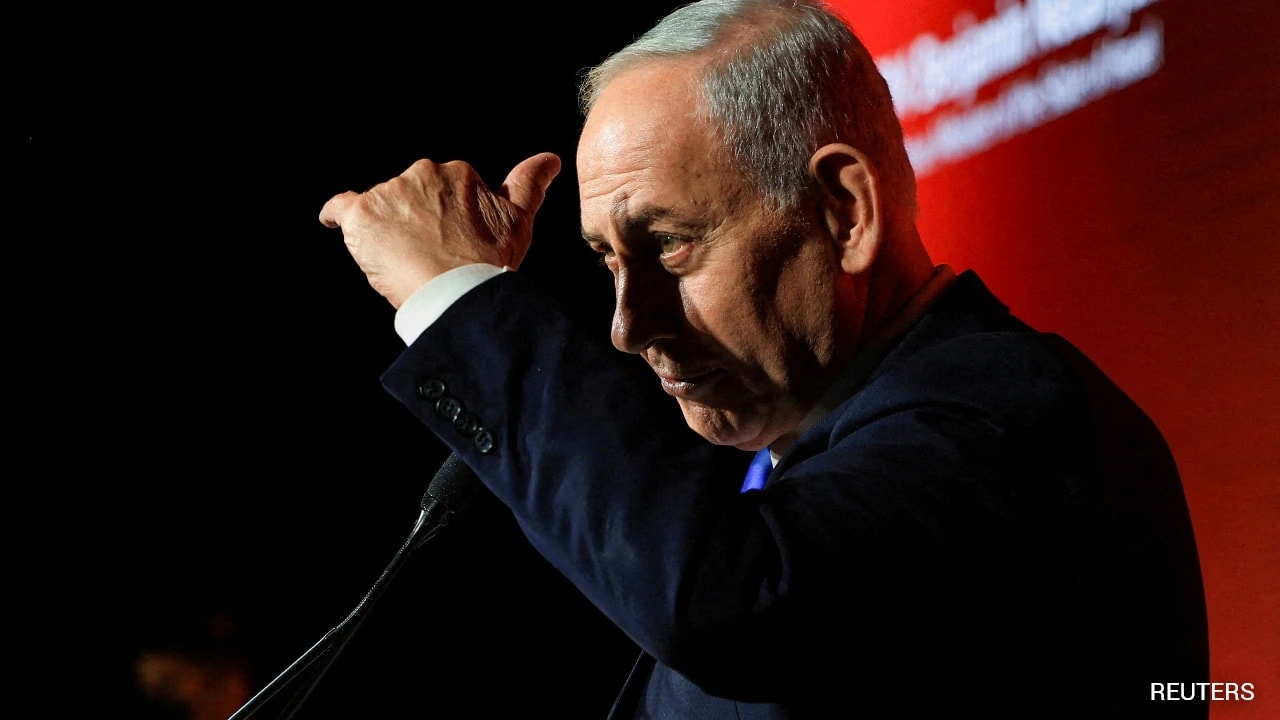
Israel faces a pivotal election on October 27, where Prime Minister Benjamin Netanyahu defends his long-standing leadership against challenger Gadi Eisenkot. The contest reflects deep national divisions following the October 7 attacks and the subsequent regional conflicts.
The Defining Moment for Israeli Leadership
Israel is approaching a political crossroads as the nation prepares for the October 27 elections. This cycle represents perhaps the most consequential test for Prime Minister Benjamin Netanyahu, whose political longevity has defined the Israeli landscape for decades. As the country grapples with the aftermath of the October 7, 2023, Hamas attack, the upcoming vote is framed by both the incumbent and his opposition as an existential decision regarding the future of the Jewish state and its security apparatus.
The 'Mr. Security' Paradox
Benjamin Netanyahu, widely known as "Bibi," has historically anchored his political brand on the promise of being the sole guardian of Israel’s security. However, the unprecedented security failure of October 7 has severely damaged this narrative. In response, Netanyahu has characterized the election as an "emergency" and a "matter of life or death" for the Israeli right, attempting to galvanize his base by warning of an existential threat to the state's character. This rhetoric is a familiar tactical deployment, yet its effectiveness remains in question as voters weigh past stability against recent failures.
The Rise of Gadi Eisenkot
Central to the opposition is Gadi Eisenkot, a 66-year-old former chief of the Israeli army. Having served as chief of staff under Netanyahu from 2015 to 2019, Eisenkot represents a significant shift in the political hierarchy. His rise from single-digit polling to potentially outperforming the Likud party with his Yashar party indicates a profound public desire for a change in leadership. As the son of Moroccan immigrants, an electoral victory for Eisenkot would mark a historic milestone, as he would become Israel’s first Mizrahi prime minister.
The Fragmentation of the Knesset
Despite the intense rivalry, the structural realities of the Israeli parliamentary system loom large. Current polling suggests that neither Netanyahu’s bloc nor the anti-Netanyahu coalition is likely to secure the 61 seats required for a majority in the 120-seat Knesset. This stalemate points toward a continued period of political instability, where small, ideologically driven parties may wield disproportionate influence over the formation of a government, regardless of which primary candidate secures more individual seats.
Regional Context and Future Trends
The broader implications of this election are inextricably linked to the ongoing wars in Gaza and the heightened tensions with Hezbollah in Lebanon. These conflicts have forced a national reckoning regarding military preparedness and governance. The outcome of the October 27 vote will inevitably dictate Israel's strategic approach to these regional threats, potentially altering the diplomatic and military trajectory of the Middle East. Whether the electorate chooses to maintain the status quo or pivot toward the reformist agenda championed by figures like Eisenkot will reverberate far beyond Israel's borders.
Multiple Citing Sources
Verification Required?