Jaishankar at G20 Foreign Ministers’ meeting: Tactical calculations should not lead to overlooking dangers of terror
Source Entity
Shubhajit Roy
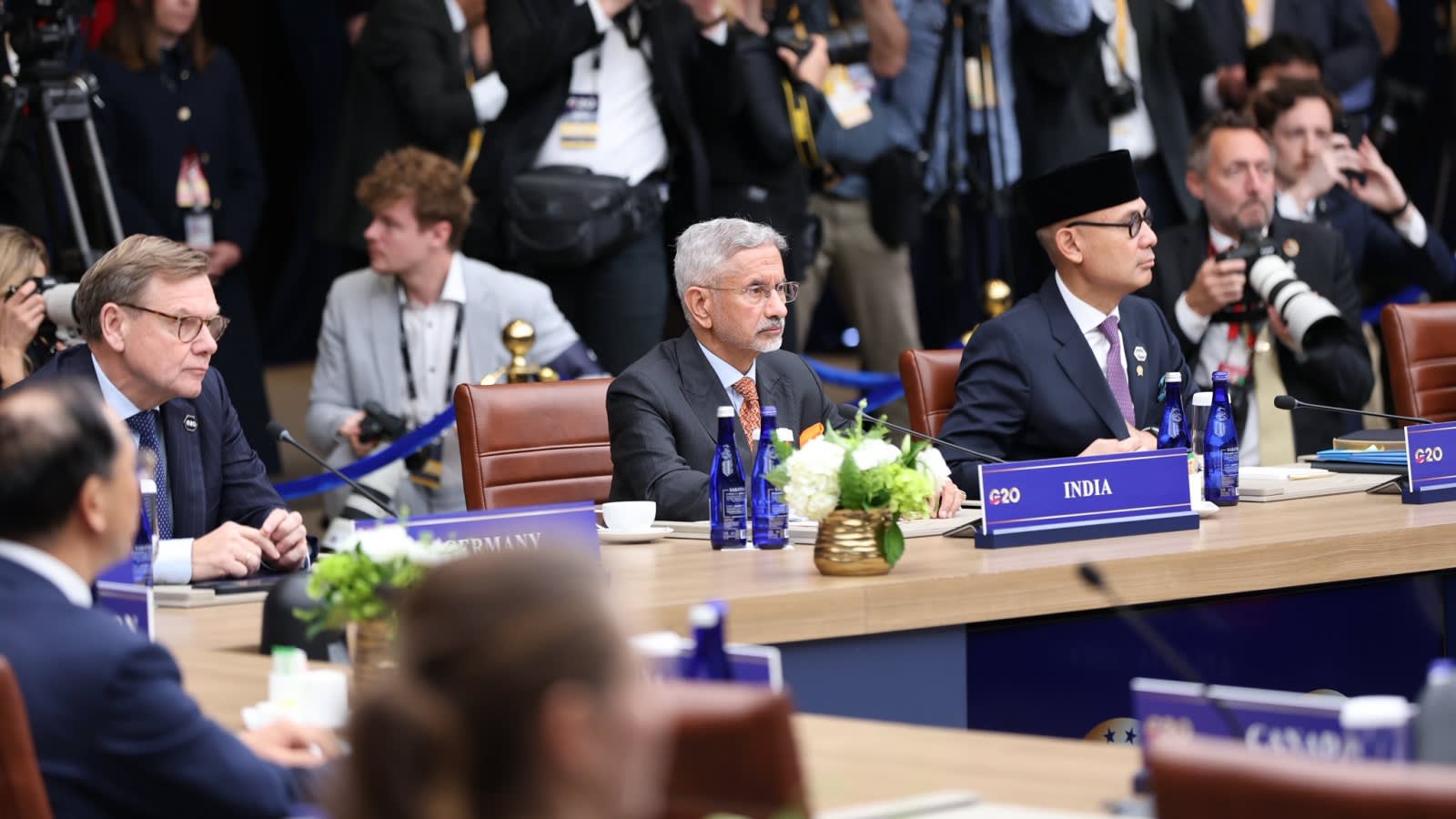
External Affairs Minister S. Jaishankar addressed the G20 Foreign Ministers' meeting in Atlanta, warning against the tactical use of terrorism and advocating for diplomacy over military solutions. He also highlighted the security threats facing Indian seafarers in the Hormuz region.
Strengthening Diplomatic Norms at the G20
At the recent G20 Foreign Ministers’ meeting held in Atlanta, External Affairs Minister S. Jaishankar delivered a pointed address regarding the intersection of global security and statecraft. Central to his message was the assertion that tactical calculations—often used by nations to leverage non-state actors for geopolitical gain—must not overshadow the inherent dangers of terrorism. By warning that terrorism is a 'high-risk activity' that inevitably impacts its practitioners, Jaishankar signaled a firm stance against the instrumentalization of terror as a tool of foreign policy.
Addressing Regional Security and State-Sponsored Terror
Jaishankar’s remarks were widely interpreted as a critique of the evolving strategic landscape in South Asia, particularly regarding the relationship between the United States and Pakistan. India has expressed consistent concern over the engagement between US leadership and Pakistani military officials, given the persistent threat of cross-border terrorism. The mention of the April 2025 Pahalgam terror attack serves as a stark reminder of the human cost of these policies, as India continues to hold Pakistan accountable for sponsoring violence against Indian civilians.
The Crisis in Maritime Security
Beyond terrestrial terrorism, the External Affairs Minister brought the plight of Indian seafarers in the Hormuz region to the forefront of the G20 agenda. The attacks on commercial vessels pose a significant risk to global supply chains and the lives of those navigating these critical waters. Jaishankar emphasized that the 'Global South bears the burden' of these disruptions, calling for a unified international response that adheres to the United Nations Convention on the Law of the Sea (UNCLOS) to ensure the freedom of navigation.
Diplomacy as the Preeminent Tool
Perhaps the most significant takeaway from the Atlanta plenary was Jaishankar’s explicit rejection of military-first approaches to contemporary global challenges. He argued that military solutions are failing to provide sustainable stability, suggesting instead that diplomacy must be prioritized. This shift in rhetoric reflects a broader Indian foreign policy doctrine that emphasizes multilateralism and the rule of law as the primary mechanisms for resolving complex international disputes.
Future Implications for Global Governance
As the G20 continues to grapple with fragmented security architectures, India's proactive role highlights its ambition to be a leading voice for the Global South. By linking the cessation of maritime attacks to international law and framing terrorism as a self-defeating strategy, Jaishankar is setting a precedent for how emerging powers can influence global norms. Moving forward, the effectiveness of these diplomatic overtures will depend on the willingness of major powers to align their tactical security interests with the long-term stability of the global order.
Multiple Citing Sources