Jamie Dimon says markets underestimate risks and he wouldn't buy stocks or Treasurys at current prices
Source Entity
US Top News and Analysis
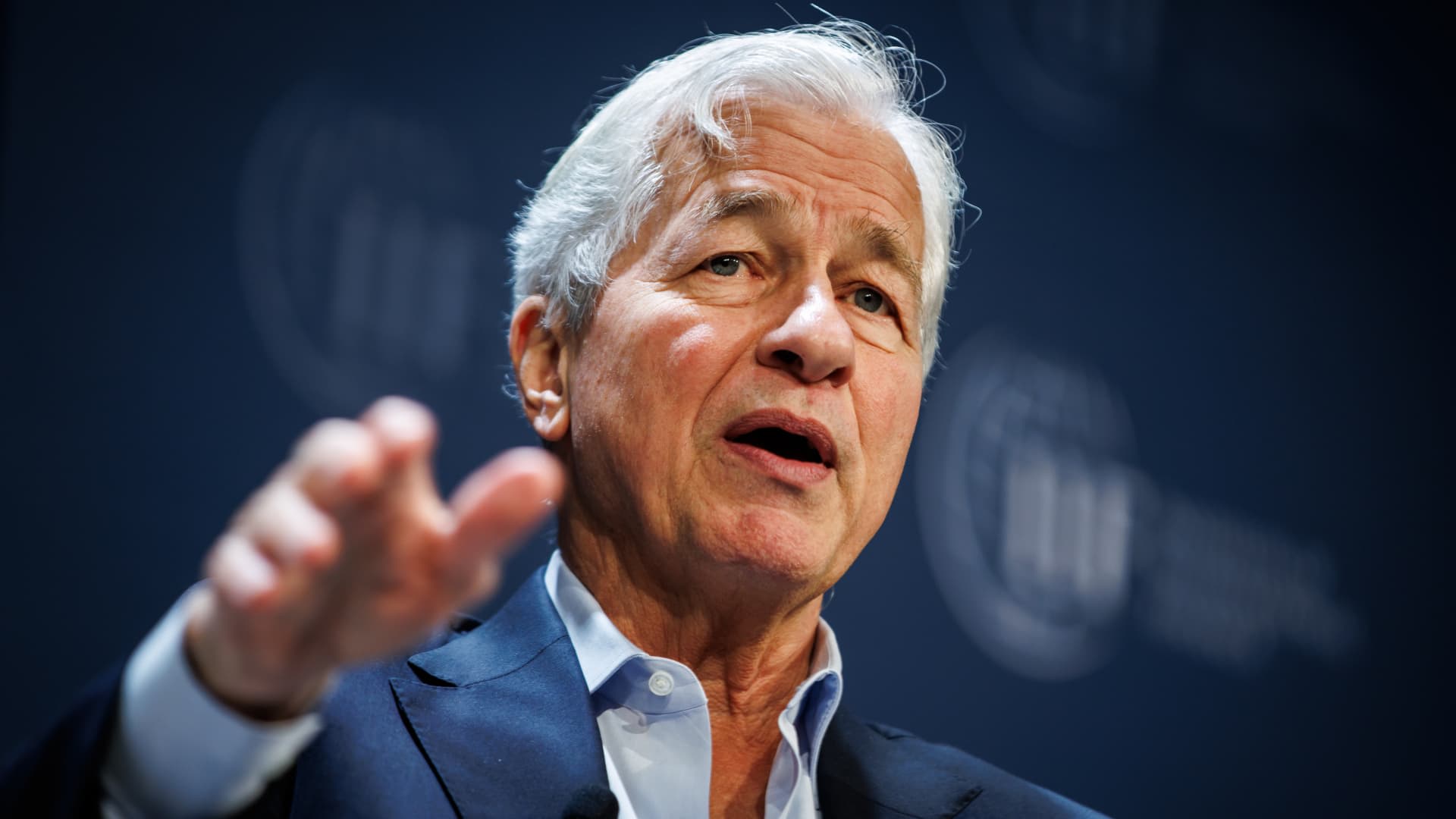
JPMorgan Chase CEO Jamie Dimon has warned that current market valuations fail to account for escalating geopolitical and fiscal risks. He specifically cautioned against purchasing equities and long-dated Treasurys at prevailing prices.
Market Caution in an Era of Uncertainty
JPMorgan Chase CEO Jamie Dimon has issued a stark warning regarding the current state of global financial markets, suggesting that investors are fundamentally mispricing risk. During a recent interview at the Institute of International Finance, Dimon articulated a cautious outlook, asserting that the prevailing optimism among market participants—who have largely looked past significant global shocks—is disconnected from the underlying economic reality. His refusal to purchase equities or long-dated U.S. Treasurys at current price levels signals a defensive posture intended to protect capital against potential volatility.
The Weight of Geopolitical Instability
At the heart of Dimon’s skepticism lies a complex web of geopolitical threats that he believes the market is failing to price in appropriately. The ongoing conflicts in Ukraine and the Middle East represent not only humanitarian crises but also persistent sources of instability that disrupt global supply chains and energy markets. Furthermore, the rising tensions between the United States and China add a layer of structural risk that could lead to further decoupling or trade restrictions. These factors, according to Dimon, create an environment where the probability of sudden, adverse market corrections is significantly higher than the consensus view suggests.
Fiscal Fragility and Military Spending
Beyond external geopolitical shocks, Dimon highlighted internal fiscal pressures as a major point of concern. He pointed specifically to the intersection of mounting government deficits and the necessity for increased military spending. As nations grapple with the financial burden of modernizing their defense capabilities, the resulting strain on fiscal budgets could lead to inflationary pressures or a degradation of sovereign creditworthiness. This fiscal reality is particularly problematic for long-dated U.S. Treasurys, which are traditionally viewed as safe-haven assets but may become less attractive if deficits continue to climb without a clear path to consolidation.
Divergence from Market Optimism
There is a clear disconnect between the current market sentiment and Dimon’s assessment of the global economic landscape. While investors have recently demonstrated a willingness to remain bullish despite wars, tariffs, and potential fiscal shocks, Dimon argues that this resilience may be rooted in a dangerous underestimation of the risks. By choosing to hold back from buying at current prices, he is effectively challenging the market's 'buy the dip' mentality, suggesting that the current valuations do not provide an adequate margin of safety for the risks inherent in today’s world.
Looking Toward Future Economic Trends
Predicting the trajectory of the markets requires acknowledging that we are in a period of transition where old paradigms—such as low interest rates and stable globalization—are fading. Dimon’s commentary serves as a reminder that institutional investors must account for 'tail risks' that could disrupt the status quo. If his assessment holds true, we may see a period of recalibration where equity prices are forced to align with the reality of higher fiscal burdens and persistent international friction. Investors would do well to consider the implications of his caution as they navigate an increasingly unpredictable global environment.