Fire, PWD, Income Tax, Jal Nigam: For a month now, notices from across departments to Jauhar University
Source Entity
Maulshree Seth
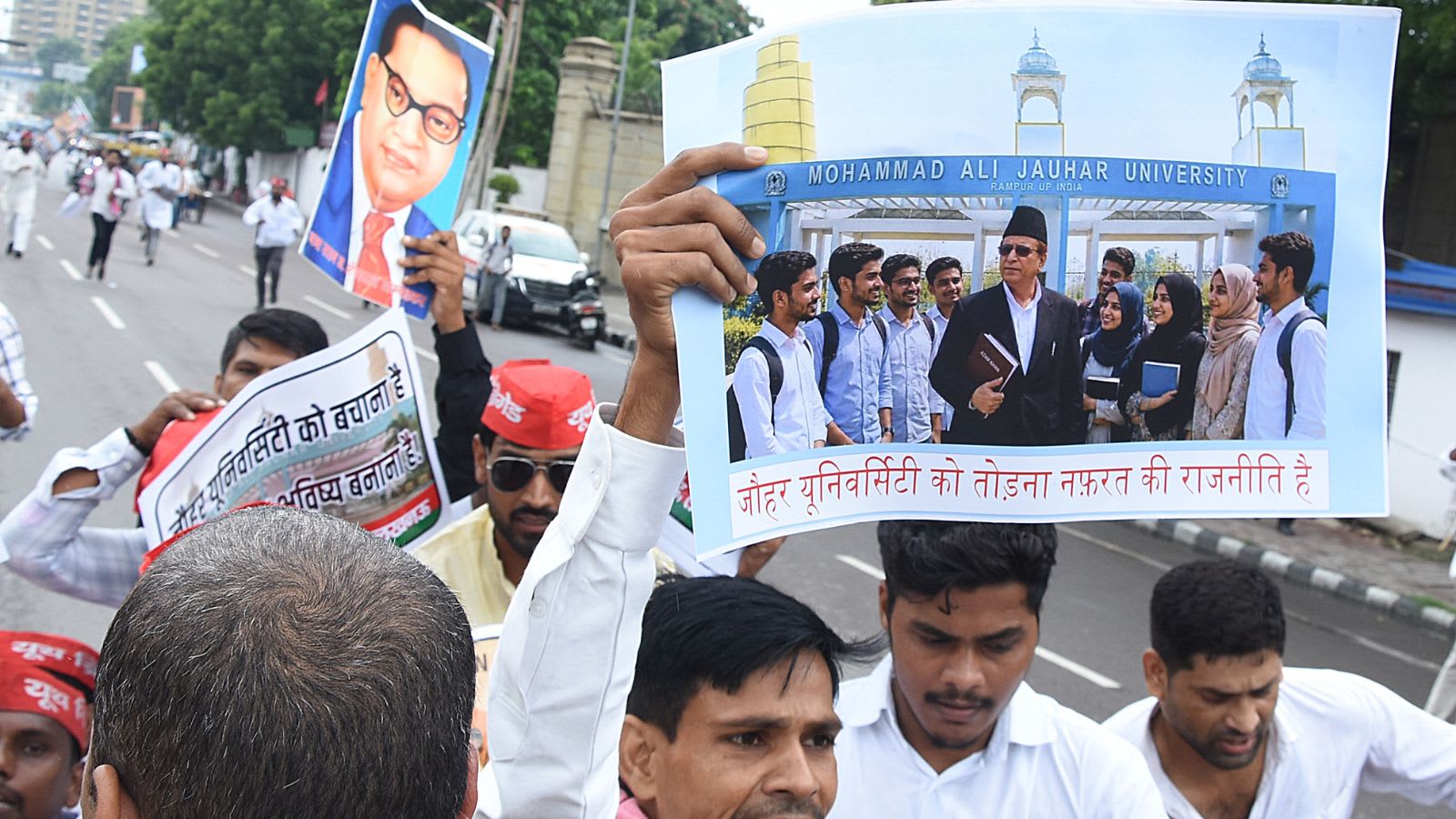
Mohammad Ali Jauhar University, linked to SP leader Azam Khan, is facing severe regulatory scrutiny and demolition threats for alleged construction irregularities. While the Allahabad High Court recently dismissed a petition regarding the issue, the university secured interim relief from the Moradabad Divisional Commissioner’s court.
Regulatory Siege on Jauhar University: An Overview
Mohammad Ali Jauhar University, a prominent educational institution in Rampur linked to Samajwadi Party leader Azam Khan, currently finds itself at the center of a complex legal and regulatory storm. Over the past month, the university has been subjected to a barrage of notices from various government agencies, including the Income Tax Department, the Rampur Development Authority (RDA), the Fire Department, the Public Works Department, and the Jal Nigam. This multi-agency scrutiny has culminated in an existential threat, with authorities proposing the demolition of 38 out of the university's 40 buildings due to alleged unauthorized construction.
The Financial and Structural Allegations
The intensity of the official action is underscored by the Income Tax Department’s involvement. Beginning with a show-cause notice on June 17, 2026, the tax authorities subsequently cancelled the registration of the Maulana Mohammad Ali Jauhar Trust, which governs the institution. By ordering the trust to reclassify its status to an “association of persons,” the government has effectively stripped the organization of critical tax benefits. These financial pressures are compounded by the RDA’s demolition order, which claims that the vast majority of the campus infrastructure was built without necessary permissions, providing the university only 15 days to address the alleged violations.
Legal Hurdles and Procedural Challenges
The university's attempt to seek legal recourse has been hampered by procedural complexities. The Allahabad High Court recently dismissed a petition filed on behalf of the university by a businessman acting as a 'pairokar' (pleader). The court upheld the state government's preliminary objection, argued by Additional Advocate General Anupam Trivedi, that a private individual lacking official standing cannot represent an institution in such a significant matter. This ruling highlights the importance of procedural rigor in high-stakes litigation involving institutional assets.
Interim Relief and Future Outlook
Despite the setback in the High Court, the university managed to secure a vital reprieve through the Moradabad Divisional Commissioner’s court. On July 27, 2026, Commissioner Anjaneya Kumar Singh granted interim relief, staying the proposed demolition until a final hearing can be conducted. This decision provides a temporary shield for the campus, allowing the university's legal team additional time to address the substantive claims of the RDA regarding the unauthorized nature of the buildings.
Broader Implications and Institutional Stability
The situation at Jauhar University serves as a significant case study on the intersection of political influence, administrative regulation, and institutional compliance in India. The rapid succession of notices from diverse departments suggests a coordinated effort to audit the institution's operational legitimacy. As the case progresses, the outcome will likely hinge on whether the university can provide documentation to rectify the alleged structural irregularities and restore its standing with the regulatory bodies. The long-term stability of the institution remains precarious, contingent upon both the upcoming court hearings and the university's ability to demonstrate full legal and financial compliance.
Multiple Citing Sources