He stepped out to save his car. He returned to find his family buried beneath their ‘Taj Mahal’
Source Entity
Arun Sharma
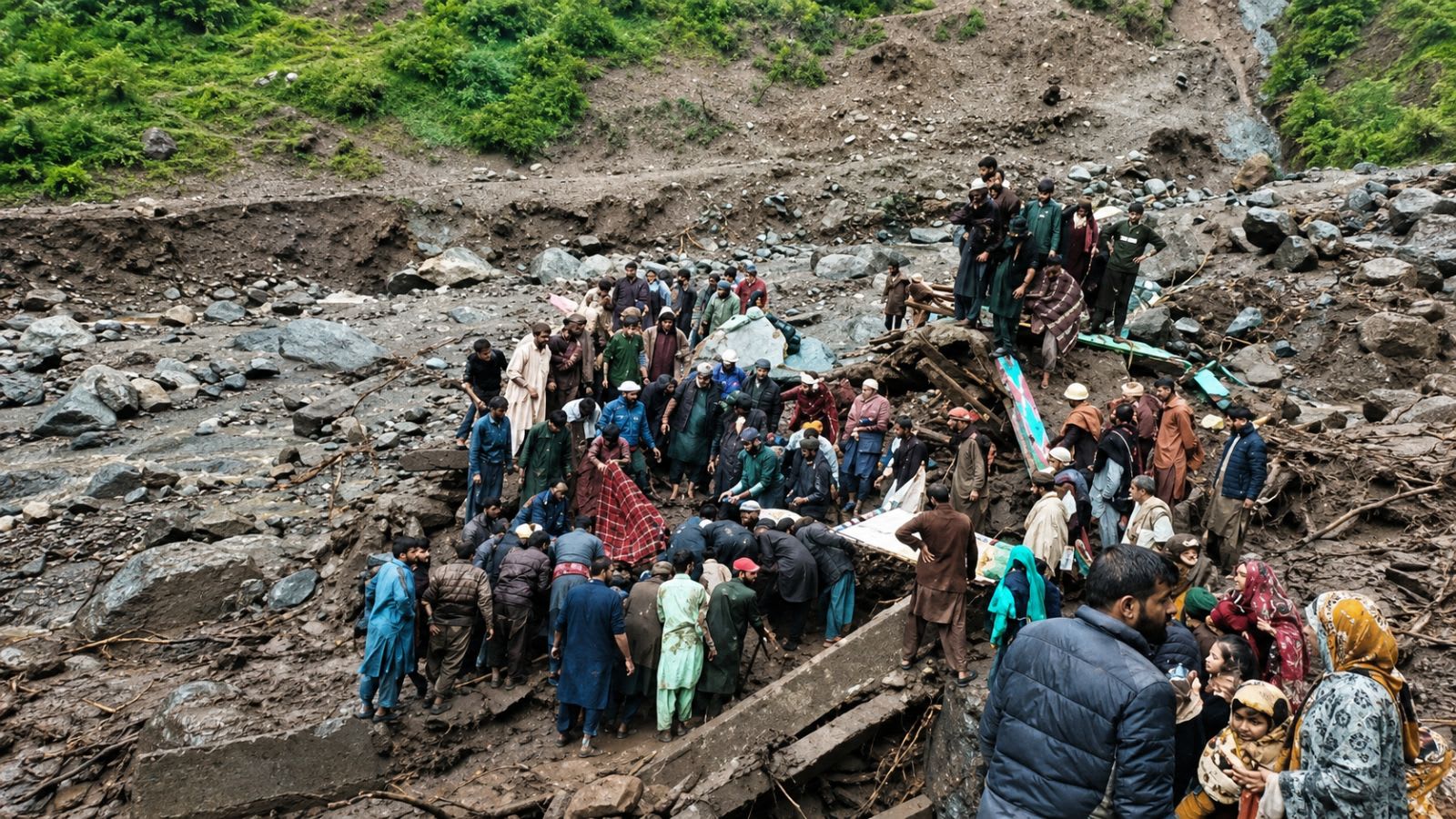
Jammu and Kashmir is grappling with dual crises: a devastating landslide in Poonch that killed 28 people, including Mohammad Latief's family, and rising tensions in Anantnag following the demolition of terrorist-linked homes. Chief Minister Omar Abdullah has criticized the demolitions, warning they undermine peace efforts and legal standards.
Tragedy and Turmoil in Jammu and Kashmir
The Human Cost of Natural Disaster
In the foothills of the Pir Panjal in Jammu’s Poonch district, a profound tragedy has unfolded. Mohammad Latief, a 59-year-old resident, has lost his entire family—his wife, daughter, three sons, and a toddler grandson—after a massive landslide decimated his five-storey home, locally known as the 'Taj Mahal.' This catastrophic event, occurring in the early hours of July 19, serves as a grim reminder of the vulnerability of mountain communities to extreme weather. With relentless downpours triggering widespread destruction, the death toll across the Union Territory has climbed to 28, with the overwhelming majority of these casualties occurring in Poonch.
The Fragility of Infrastructure
The destruction of Latief’s palatial home, leaving only a twisted steel frame behind, highlights the severe risks posed by unchecked construction in ecologically sensitive mountainous regions. The Pir Panjal range is prone to geological instability, and when combined with the record-breaking rainfall experienced since July 19, the results are often fatal. This event underscores a broader trend of climate-induced disasters in Jammu and Kashmir, where the rapid pace of development frequently outstrips the region's natural capacity to manage soil erosion and drainage, leading to such devastating landslides.
Escalating Tensions in South Kashmir
While the region struggles with recovery from floods and landslides, the security situation in South Kashmir has simultaneously deteriorated. On July 23, 2026, security forces conducted an operation in Anantnag’s Guri village and Hassanpora Tawella, involving the demolition of two residential houses belonging to alleged terrorists. This action followed the fatal shooting of a policeman the previous day. Reports indicate that explosives were used in the demolition, which allegedly resulted in collateral damage to a nearby mosque and a vehicle.
The Political and Legal Discourse
Chief Minister Omar Abdullah has publicly distanced his administration from these punitive demolition tactics. By stating that mass arrests and demolitions 'will not restore peace,' Abdullah has highlighted a critical disconnect between security operations and civil governance. Furthermore, he explicitly noted that these actions appear to contradict directives previously issued by the Supreme Court regarding the legality of property demolitions. This tension between security mandates and judicial oversight represents a significant challenge for the administration as it attempts to maintain order without further alienating the local populace.
Broader Implications for Peace
The simultaneous occurrence of environmental catastrophe and security-driven demolitions creates a volatile environment for the people of Jammu and Kashmir. The loss of life in Poonch has left a community in mourning, while the actions in Anantnag have reignited debates over the efficacy of demolition as a deterrent against terrorism. As the administration navigates these crises, the focus remains on the humanitarian response to the landslides and the legal ramifications of the security operations. The path forward remains precarious, requiring a delicate balance between public safety, environmental resilience, and the rule of law.
Multiple Citing Sources