Form 6, voter roll deletions: What Election Commission told the Supreme Court
Source Entity
The Indian Express
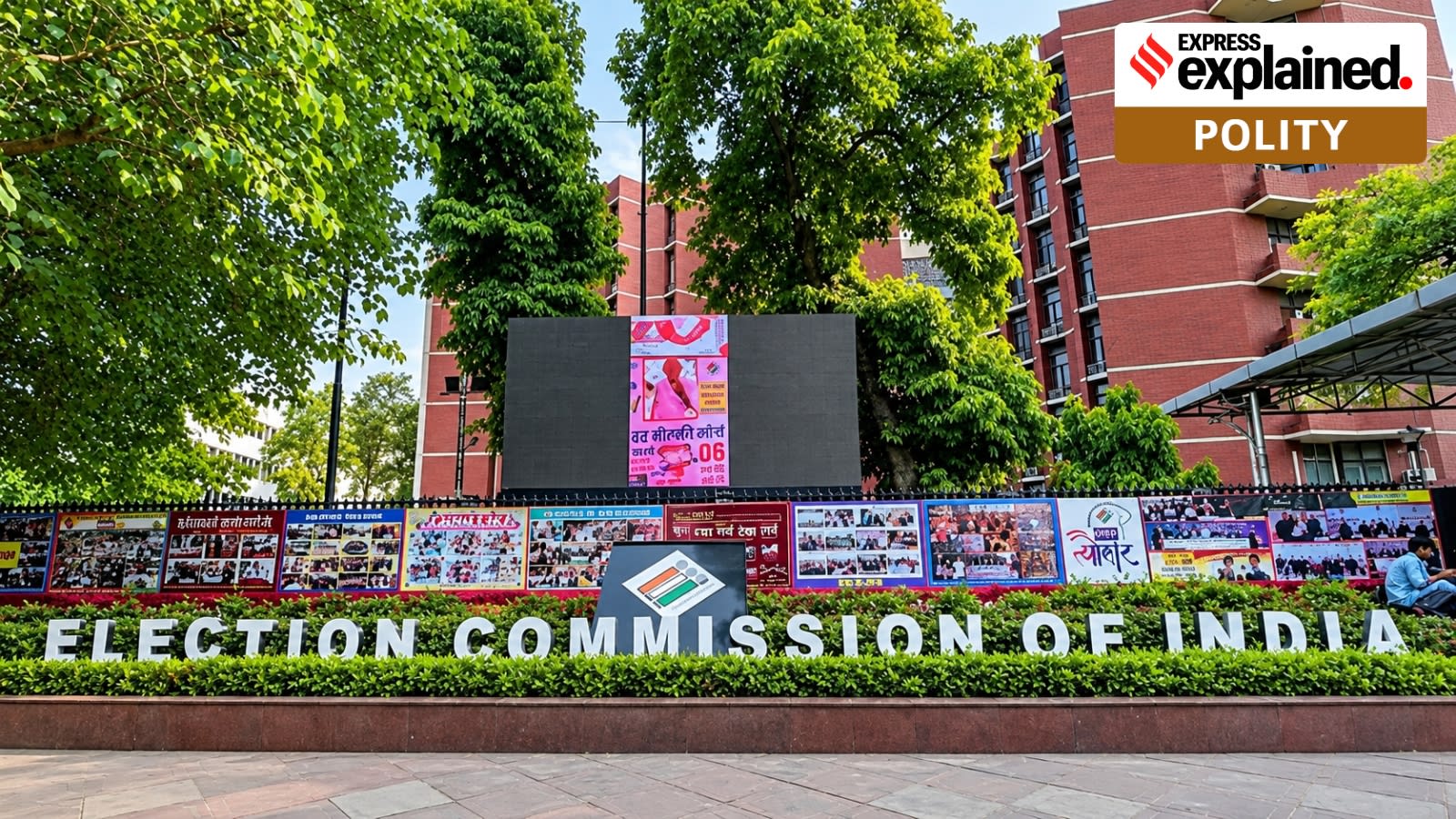
The Rajya Sabha Secretariat has intervened following allegations that MP John Brittas was assaulted by police during a protest against the Election Commission. This incident coincides with ongoing Supreme Court scrutiny regarding the ECI's internal decision-making and procedural transparency.
Tensions Escalate Over Election Commission Conduct
Recent developments have cast a spotlight on the friction between parliamentary oversight and the Election Commission of India (ECI). The incident involving CPI(M) MP John Brittas, who alleges he was assaulted by security personnel during an October 11 protest, has escalated to the highest levels of government. The Rajya Sabha Secretariat has formally sought a response from the Home Secretary, marking a significant step in addressing claims of a breach of parliamentary privilege.
The Brittas Allegation and Parliamentary Privilege
John Brittas, in his correspondence to the President, the Vice-President, and the Chief Justice of India, framed the alleged assault as a fundamental attack on democratic freedoms. His assertion that the incident occurred shortly after the Supreme Court issued directives to protect peaceful protests suggests a potential disconnect between judicial mandates and ground-level law enforcement execution. This case is not merely about an individual Member of Parliament; it raises systemic questions regarding the treatment of elected representatives when they engage in public dissent against constitutional bodies.
The ECI Under Judicial Scrutiny
Parallel to the physical confrontation in Delhi, the ECI is facing intense scrutiny within the Supreme Court. A petition filed by advocate Rakesh Kumar Singh, prompted by investigative reporting into internal disagreements among Election Commissioners, has forced the ECI to submit a formal counter-affidavit. The petition specifically questions the tenure and conduct of Chief Election Commissioner Gyanesh Kumar, seeking his suspension pending a probe into the commission's internal functioning.
Procedural Transparency and the SIR
At the heart of the legal discourse is the Special Intensive Revision (SIR) process. While the ECI maintains in its affidavit that all decisions regarding the SIR were reached through unanimous consensus among the commissioners, critics and legal observers argue that the institution has yet to provide a transparent explanation for several procedural changes. The ECI’s attempt to clarify its motives has been met with skepticism, particularly regarding the 'harassment' of citizens through onerous verification processes that the commission has only recently begun to relax.
Broader Implications for Indian Democracy
These events underscore a growing crisis of confidence regarding the independence and administrative processes of the ECI. The intersection of parliamentary protests, internal commission dissent—evidenced by the 14 written disagreements between commissioners over a 10-month period—and judicial intervention suggests a volatile period for India’s electoral management. If the ECI cannot reconcile its internal procedural inconsistencies with the public's demand for transparency, the legitimacy of future electoral exercises may continue to be challenged.
Conclusion and Future Outlook
The ongoing investigation into the assault on John Brittas, coupled with the Supreme Court’s review of ECI procedures, highlights a pivotal moment for Indian democratic institutions. As the Home Secretary prepares to address the Rajya Sabha Secretariat's queries, the public will be watching to see if there is accountability for the security personnel involved. Simultaneously, the Supreme Court’s handling of the petition against the Chief Election Commissioner will likely set a precedent for how much oversight is permitted into the internal deliberations of one of India's most critical constitutional bodies.
Multiple Citing Sources