Gen Z Has Done More For The Country Than You: CJP Slams Kangana Ranaut
Source Entity
NDTV News Search Records Found 1000
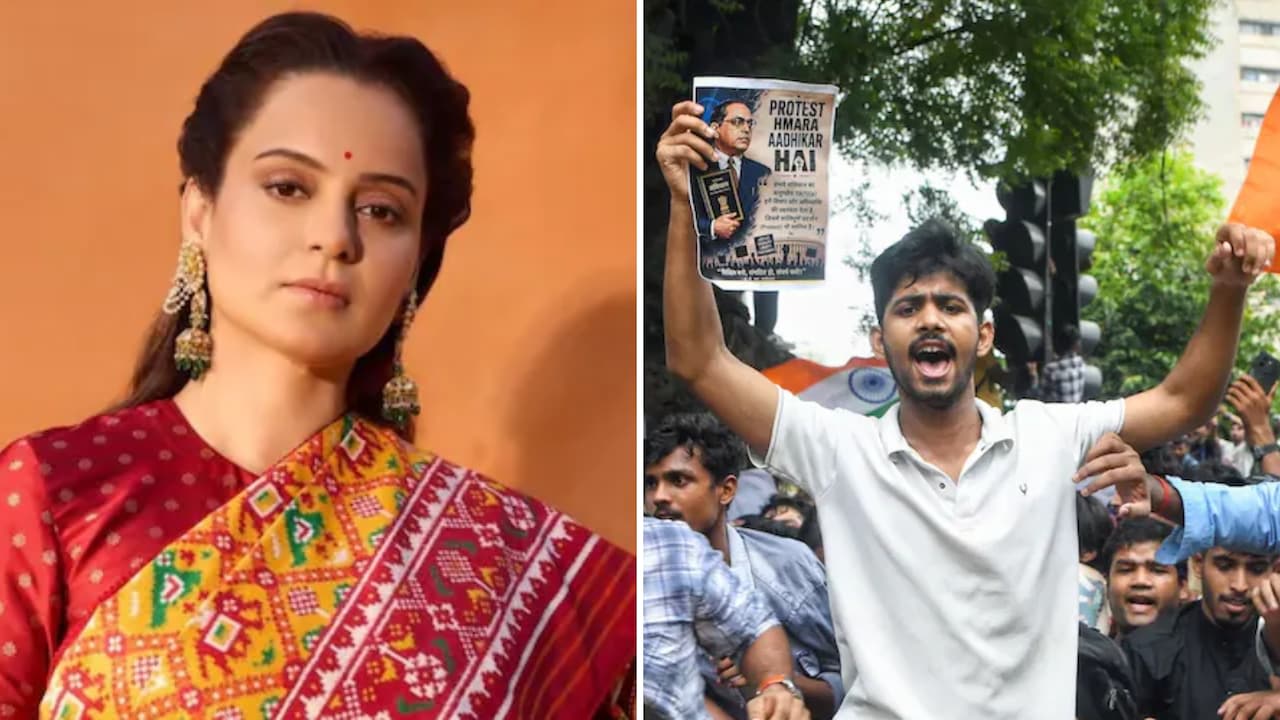
BJP MP Kangana Ranaut has publicly condemned Gen Z protesters associated with the 'Cockroach Janta Party' movement for their alleged abusive language and public misconduct. Ranaut defended the public backlash against these students, framing their treatment as a natural consequence of their actions and rhetoric.
The Intersection of Political Rhetoric and Public Dissent
Recent events surrounding the 'Cockroach Janta Party' (CJP) movement have ignited a fierce debate regarding the boundaries of free speech and public protest in India. BJP MP and actress Kangana Ranaut has emerged as a central figure in this discourse, issuing strong condemnations of the student protesters who gathered at Delhi's Jantar Mantar. Her response highlights a deepening polarization between political figures and a generation of activists utilizing social media to voice dissent.
The Justification of Public Backlash
Ranaut’s commentary, disseminated via Instagram and press interactions, posits that the physical confrontations faced by protesters on the streets are a direct result of their own behavior. By invoking the principle that "every action has an equal and opposite reaction," she suggests that the public backlash against these individuals is a natural byproduct of their "filthy and abusive" social media content and public conduct. This narrative shifts the focus from the content of the protests to the perceived moral failures of the participants.
Criticizing the 'Generation Gutter'
Beyond the protests themselves, Ranaut has launched a scathing critique of the demographics involved, specifically targeting young Hindu women. She characterized this cohort as "so-called westernized Indian women," questioning their academic pursuits and character. By labeling them as "Generation Gutter" and criticizing their lifestyle choices—such as the consumption of alcohol or drug use—she frames the movement not as a legitimate political struggle, but as a symptom of a broader societal decline in values and decorum.
The Sanctity of Leadership and Public Discourse
A pivotal point in Ranaut’s argument is the treatment of Prime Minister Narendra Modi and his late mother. Ranaut deemed the "filthy abuse" directed at the Prime Minister's family as "completely unacceptable" within a democratic framework. This stance aligns with the Delhi Police’s recent directives to social media platforms to remove offensive content, suggesting a concerted effort by the establishment to curb what they classify as hate speech rather than legitimate political criticism.
Implications for Democratic Engagement
These events underscore a volatile shift in how protests are perceived and managed in contemporary India. The rhetoric used by both the protesters and their critics suggests that the middle ground of civil discourse is rapidly eroding. While the protesters argue for their right to dissent, the response from figures like Ranaut emphasizes that such rights are subject to the constraints of public decency and respect for elected leadership.
Future Trends in Political Protest
As the CJP movement continues to gain visibility, the tension between the state's enforcement of decorum and the public's desire for aggressive expression will likely escalate. Future trends indicate that social media will remain the primary battlefield for these conflicts, with both the government and protesters utilizing digital platforms to shape public perception. The discourse initiated by Ranaut suggests that the political establishment will continue to challenge the legitimacy of student movements that employ inflammatory language, potentially leading to stricter oversight of digital dissent.
Multiple Citing Sources
Verification Required?