Total voters in Mysuru district down to 22.80 lakh from 27.99 lakh prior to SIR
Source Entity
India Latest News: Top National Headlines Today & Breaking News | The Hindu
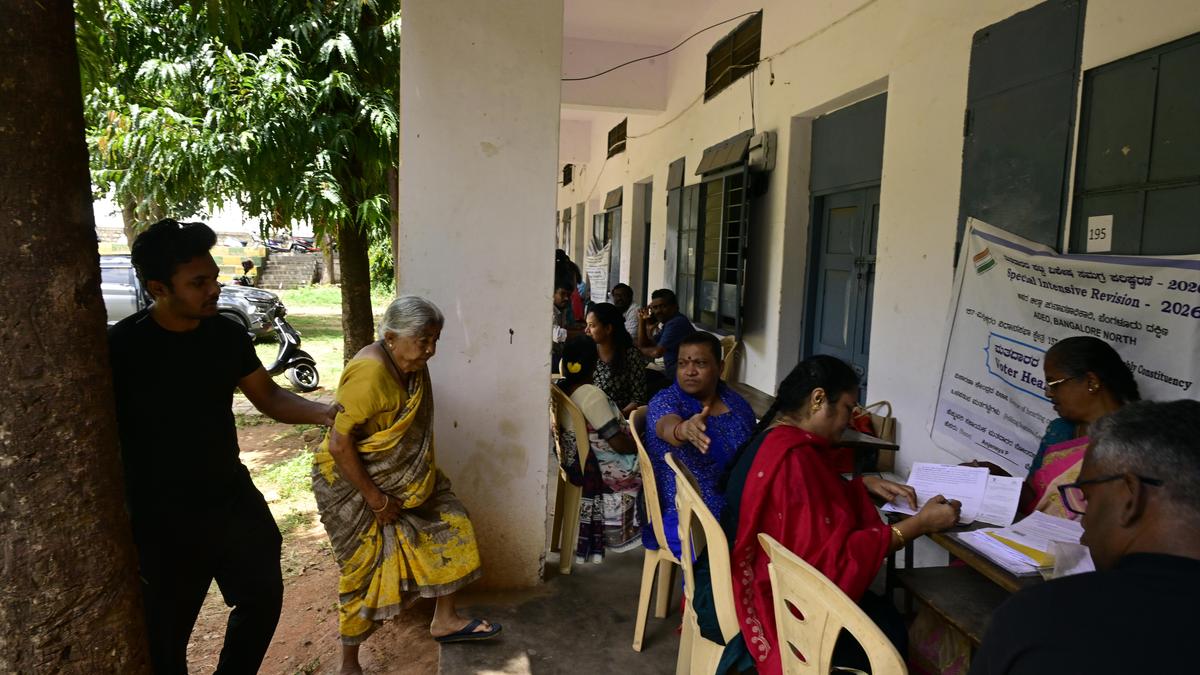
Karnataka and Delhi have recently concluded intensive voter roll revisions, resulting in significant deletions of millions of names. The process highlights challenges in maintaining accurate electoral databases, with Karnataka seeing nearly 1 crore removals and Delhi reporting tepid public participation in final enrollment camps.
The Great Electoral Cleanse: Analyzing Voter Roll Revisions in Karnataka and Delhi
Recent electoral data from Karnataka and Delhi reveals a massive undertaking in the maintenance of democratic infrastructure. Through the Special Intensive Revision (SIR) process, electoral authorities have sought to prune voter rolls of inaccuracies, ranging from duplicate entries to the names of deceased individuals and those who have permanently migrated. This systematic cleanup, while essential for the integrity of the voting process, has resulted in a staggering numerical reduction in the electorate, most notably in Karnataka.
The Scale of Karnataka's Voter Roll Reduction
In Karnataka, the SIR process concluded with a significant contraction of the voter base. From an initial figure of 5.5 crore, the state witnessed a reduction of approximately 99.76 lakh voters, leaving a final tally of roughly 4.54 crore. The data indicates that the bulk of these deletions—65.45 lakh—were attributed to individuals who had permanently shifted their residence. This underscores the difficulty in tracking internal migration in a rapidly urbanizing state, where transient populations often fail to update their electoral credentials, leading to bloated and outdated rolls.
Demographic Shifts and Urban Challenges
A particularly striking aspect of the Karnataka revision is the impact on the 20-29 age demographic, which saw 86.56 lakh voters removed. While the state also processed 6.83 lakh fresh registrations, the net loss in this younger bracket raises questions about civic engagement and the administrative hurdles young adults face when migrating for employment. Furthermore, Bengaluru’s four districts—specifically Bommanahalli, K.R. Pura, and Mahadevapura—accounted for nearly half of the state's ineligible electors. This concentration of exclusions in urban centers highlights the unique challenges posed by high-density, mobile populations in India’s metropolitan hubs.
Tepid Participation in Delhi's Final Camps
Parallel to the developments in Karnataka, Delhi’s electoral authorities concluded their final round of special camps at nearly 15,000 polling stations. Despite the effort to reach citizens, the response was notably muted, with only 3,000 Form-6 applications for inclusion received. Since August 31, Delhi has seen approximately 47.6 lakh deletions from its draft rolls. The low turnout at these final camps suggests a potential disconnect between the electorate and the administrative processes required to maintain their voting status, or perhaps a lack of awareness regarding the necessity of re-registering following automated deletions.
Broader Implications for Democracy
These revisions serve as a double-edged sword for democratic participation. On one hand, purging the rolls of 'ASDDO' (Absent, shifted, dead, duplicate, and others) entries is vital to preventing electoral fraud and ensuring that voter turnout percentages are calculated against a realistic and accurate base. On the other hand, the massive scale of deletions—especially in the youth demographic—risks disenfranchising eligible citizens who may be unaware that their names have been struck off the list until they arrive at the polling booth.
Future Trends and Administrative Outlook
Looking forward, the reliance on intensive manual revision camps appears increasingly strained by modern mobility patterns. The trend toward digital, Aadhaar-linked verification and more proactive data-sharing between government departments will likely be the future of electoral roll management. As India continues to urbanize, the administrative challenge will be to balance the necessity of 'clean' rolls with the imperative of accessibility, ensuring that the administrative cleanup does not inadvertently create barriers for the mobile, working-age population.
Multiple Citing Sources
Verification Required?