Gruha Lakshmi beneficiaries in Karnataka used funds to increase income
Source Entity
India Latest News: Top National Headlines Today & Breaking News | The Hindu
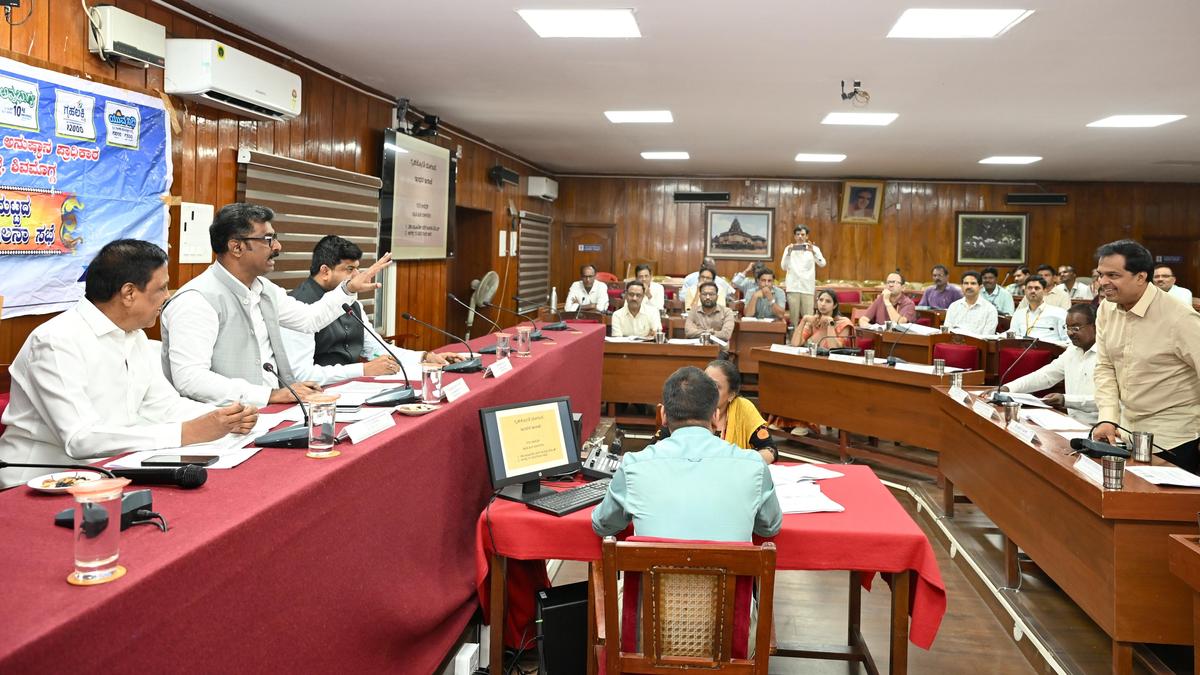
Karnataka's Gruha Lakshmi scheme is empowering women to transition from daily-wage labor to small-scale entrepreneurship. Beneficiaries in Shivamogga report using the funds to launch and expand businesses, directly increasing their household income.
Empowering Economic Independence: The Impact of Gruha Lakshmi
The Gruha Lakshmi scheme in Karnataka has emerged as a significant instrument for economic empowerment, as evidenced by recent interactions between state officials and program beneficiaries. During an official visit to Shivamogga on October 27, R. Mehroz Khan, Vice-Chairperson of the State Guarantee Schemes Implementation Authority, engaged with women who are leveraging the government-provided financial support to fundamentally alter their economic circumstances. Rather than serving merely as a consumption subsidy, these funds are increasingly being utilized as seed capital for micro-enterprises.
Transitioning from Labor to Entrepreneurship
The narratives shared by beneficiaries illustrate a clear shift from precarious labor to sustainable self-employment. For instance, Kalavathi of Ripponpet, who previously relied on the physically demanding and low-margin trade of ironing clothes, successfully pivoted to retail. By investing her Gruha Lakshmi funds into a clothing and sari business, she has diversified her income streams and achieved greater financial stability. This transition highlights how targeted cash transfers can provide the necessary liquidity for individuals to exit informal labor markets and enter the retail sector.
Addressing Income Inequality at the Grassroots
Similarly, the experience of Savitha from Umblebailu underscores the scheme's role in local economic development. Transitioning from a daily-wage laborer to the owner of a chicken stall represents a significant upgrade in economic status and operational autonomy. By enabling women to establish localized businesses, the Gruha Lakshmi scheme is effectively fostering micro-economies within rural Karnataka, allowing families to move beyond subsistence living and toward a more robust financial footing.
The Role of Government Oversight
The presence of the State Guarantee Schemes Implementation Authority in Shivamogga signifies a proactive approach to monitoring the efficacy of state welfare. By interacting directly with recipients like Neelamma and others, the administration is gathering qualitative data on how these funds circulate within the local economy. This feedback loop is essential for the government to assess whether the guarantee schemes are meeting their stated objectives of poverty alleviation and social upliftment.
Broader Implications and Future Trends
As these beneficiaries continue to scale their small businesses, the long-term impact on Karnataka's rural economy could be profound. If a significant percentage of recipients utilize these funds to generate new revenue streams, the multiplier effect could lead to increased local employment and enhanced purchasing power. Future trends suggest that as these micro-enterprises mature, there will be an increasing demand for formal financial literacy and micro-credit support to ensure the long-term sustainability of these nascent businesses.
Conclusion
In summary, the Gruha Lakshmi scheme is proving to be more than a simple social security measure; it is acting as a catalyst for grassroots entrepreneurship. By providing a financial cushion, the state is empowering women to take calculated risks, move away from volatile daily-wage labor, and contribute more effectively to their family's economic growth. The ongoing success of this initiative will likely depend on the state's continued commitment to monitoring outcomes and providing the necessary support systems to help these women grow their businesses.
Verification Required?