Meeting with MPs in Delhi ‘major success’: Karnataka chief minister DK Shivakumar
Source Entity
Latest News: Todays Latest News Headlines from India & World | Hindustan Times | Hindustan Times
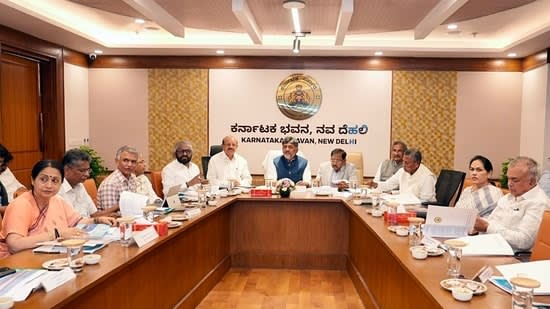
Karnataka Deputy CM D.K. Shivakumar successfully convened a cross-party meeting with state MPs in New Delhi to advocate for pending development projects. The initiative has been praised for fostering a bipartisan approach to securing federal support for the state.
A Unified Front: Assessing the Karnataka MP Summit
The Strategic Value of Bipartisan Cooperation
Karnataka Deputy Chief Minister D.K. Shivakumar’s recent engagement with the state’s Members of Parliament (MPs) in New Delhi marks a significant shift in regional political maneuvering. By convening representatives from across the political spectrum, Shivakumar has effectively signaled that state development is a non-partisan priority. This "major success" highlights the efficacy of collaborative advocacy when dealing with the central government, particularly concerning stalled infrastructure and developmental projects that require federal intervention.
Breaking the Gridlock of Regional Politics
Historically, state-center relations in India have often been strained by partisan friction, where development agendas are frequently stalled by political point-scoring. Shivakumar’s initiative to bridge this divide demonstrates a pragmatic approach to governance. By securing a collective commitment from MPs to jointly pursue pending projects, the Karnataka administration is attempting to create a unified lobbying force that transcends traditional party lines, thereby increasing the state's bargaining power in New Delhi.
The Significance of Inclusive Governance
The positive reception from opposition members underscores the success of Shivakumar’s inclusive approach. In a political climate often characterized by intense polarization, the acknowledgment from opposition leaders suggests that the objective—state development—outweighs individual political affiliations. This move not only bolsters the current government's image but also sets a precedent for how state leadership can leverage the collective mandate of their parliamentary delegation to achieve tangible results.
Addressing Pending Projects and Future Growth
At the heart of these discussions are the pending developmental projects that have long awaited federal clearance. The commitment to pursue these projects jointly is critical for Karnataka, a state that serves as a major engine for India’s economic growth. Should this united front sustain its momentum, it could lead to accelerated bureaucratic approvals and a more consistent flow of central funds, which are essential for the state’s long-term infrastructure and agrarian goals.
Broader Implications for Federalism
This initiative serves as a model for cooperative federalism within the Indian context. When state governments successfully align their parliamentary delegations, they minimize the risk of projects being sidelined due to political shifts at the center. If this model succeeds, it may encourage other states to adopt similar bipartisan strategies, potentially changing the nature of how states engage with the Union government on critical developmental issues.
Conclusion: A Foundation for Sustained Development
The meeting in New Delhi is more than a mere administrative gathering; it represents a strategic alignment of political capital. By fostering unity among MPs, the Karnataka government has positioned itself to better navigate the complexities of federal funding and project implementation. As the state moves forward with initiatives like the Agritech Mission 2026, this newfound unity will likely prove to be a vital asset in ensuring that Karnataka’s developmental roadmap remains on track despite the inherent challenges of the national political landscape.
Verification Required?