Karnataka’s final electoral roll published after SIR
Source Entity
India Latest News: Top National Headlines Today & Breaking News | The Hindu
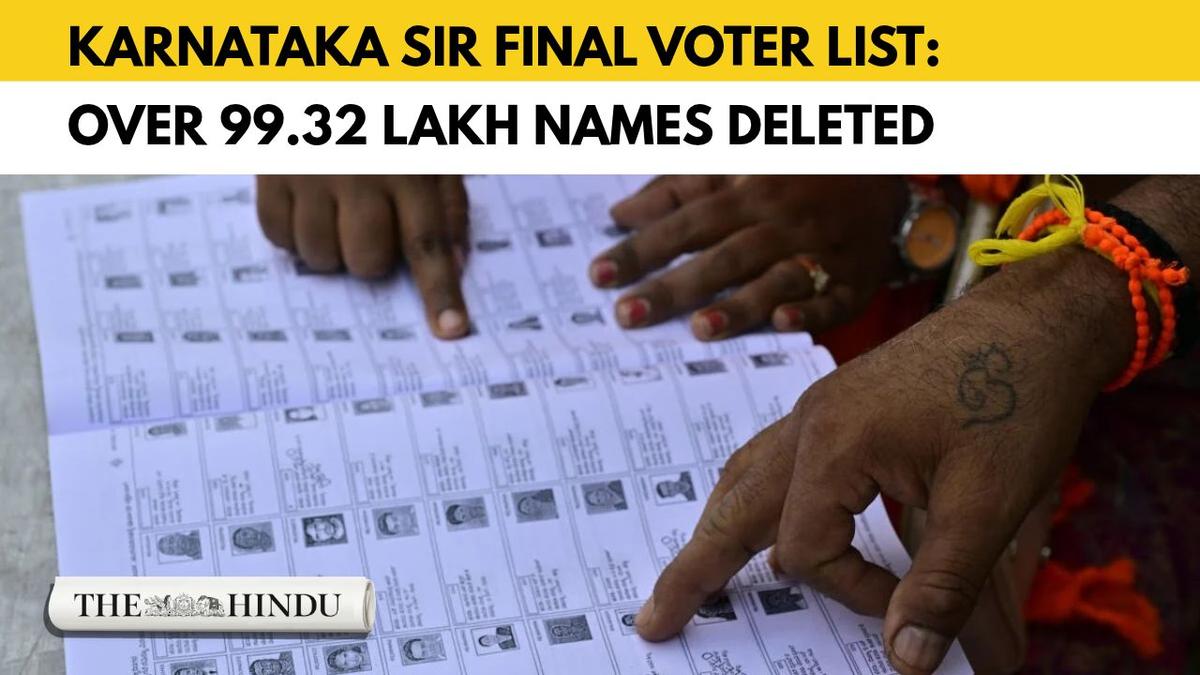
Karnataka's voter list has shrunk by nearly 1 crore following a comprehensive Special Intensive Revision (SIR). The exercise aimed to purge ineligible entries, focusing on voters who were dead, duplicated, or permanently shifted.
Karnataka’s Massive Electoral Cleanup: A Deep Dive into the SIR Process
The state of Karnataka has recently concluded a massive electoral overhaul known as the Special Intensive Revision (SIR), resulting in a significant reduction of its voter base. Starting from an initial electorate of approximately 5.54 crore, the state has trimmed nearly 99.76 lakh names, bringing the final count to roughly 4.54 crore. This administrative exercise, finalized on October 27, represents one of the most substantial purges of electoral rolls in the state's recent history, aimed at correcting long-standing discrepancies in the voter database.
The Mechanics of the Purge
The reduction was primarily driven by the identification of voters categorized as ASDDO—Absent, Shifted, Dead, Duplicate, and Others. Of these, the most significant segment consisted of 65.45 lakh individuals identified as having permanently shifted from their registered constituencies. By cross-referencing residency data and field verification, the Election Commission sought to ensure that the electoral rolls reflect current demographic realities rather than outdated administrative records.
Demographic Impact and Youth Representation
A particularly noteworthy aspect of this revision is the impact on the 20-29 age demographic, which saw 86.56 lakh entries removed from the rolls. While this figure is substantial, it must be balanced against the 6.83 lakh fresh registrations recorded during the same period. This suggests a significant churn within the younger population, likely due to internal migration for education and employment—a trend common in a rapidly urbanizing state like Karnataka, where the youth often shift residences without updating their electoral information.
The Goal: A 'Pure, Clean Electorate'
The overarching objective of the SIR, as stated by the Chief Electoral Officer, was to achieve a ‘pure, clean electorate.’ By systematically removing ineligible names, the state aims to reduce the risk of electoral fraud and ensure that the democratic process is not compromised by phantom voters. The publication of constituency-wise lists on the official website is a move toward greater transparency, allowing citizens and political stakeholders to verify the integrity of the data.
Broader Implications and Future Trends
This exercise highlights the inherent challenges of maintaining accurate electoral rolls in a highly mobile society. As Karnataka continues to be a hub for technology and migration, the discrepancy between legal registration and physical presence will likely persist. Moving forward, the Election Commission may need to implement more frequent, technology-driven updates rather than relying solely on intensive, periodic revisions to keep the rolls accurate.
Conclusion
The removal of nearly one crore voters is a monumental administrative effort that underscores the necessity of continuous data maintenance in a democracy. While the sheer scale of the reduction may draw scrutiny, it serves as a foundational step in ensuring that the electoral process remains robust, accurate, and reflective of the actual population. As the final lists are now published, the focus shifts to maintaining this updated database to ensure that future electoral cycles are conducted with the highest degree of data integrity.
Multiple Citing Sources
Verification Required?