Cabinet secretary lists 12 types of secretaries: File throwers, file sitters, latecomers
Source Entity
DIPAK K DASH
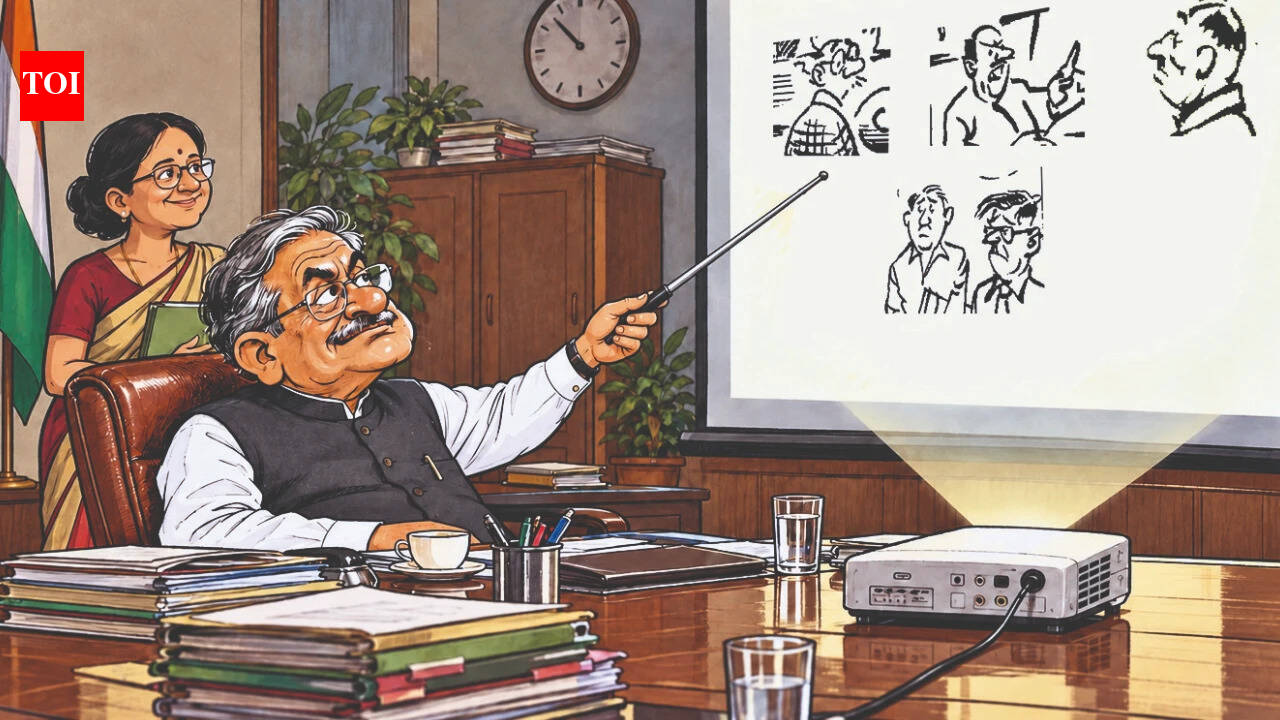
Cabinet Secretary T V Somanathan used a humorous presentation to categorize 12 types of bureaucrats during a performance review. The move highlights ongoing efforts to address administrative inefficiencies and appraisal challenges within the Indian civil service.
A Candid Assessment of Bureaucratic Culture
In an unexpected turn during a routine performance review meeting, Cabinet Secretary T V Somanathan delivered a pointed critique of the Indian bureaucratic apparatus. By classifying secretaries into 12 distinct archetypes—including 'file throwers,' 'file sitters,' and 'latecomers'—Somanathan utilized humor as a mechanism to address deep-seated systemic inefficiencies. This public articulation of internal administrative frustration signals a shift toward more transparent and accountable governance standards within the highest echelons of the civil service.
The Problem of Performance Appraisal
The presentation occurred against the backdrop of a broader struggle in evaluating civil servant performance. Somanathan noted that the prevalence of 'clustered near-10 scores' makes it increasingly difficult for the administration to distinguish top performers from the rest of the cohort. When performance metrics are skewed toward perfection, they fail to provide actionable data, rendering the appraisal process effectively toothless. This 'grade inflation' within government reviews creates a stagnant environment where exceptional talent is obscured by uniform, high-rating complacency.
Analyzing the Archetypes of Inefficiency
The specific labels—'file sitters' and 'file throwers'—refer to common bottlenecks in the bureaucratic workflow. A 'file sitter' represents the culture of inertia, where decision-making is delayed by endless review cycles, while 'file throwers' suggest a lack of accountability or a desire to offload responsibility onto other departments. By naming these behaviors, the Cabinet Secretary is attempting to shift the institutional culture from one of passive compliance to active problem-solving.
Historical Context and Administrative Reform
Historically, the Indian civil service has faced criticism for its rigid hierarchy and resistance to rapid change. The move by Somanathan is part of a larger, ongoing effort to modernize the bureaucracy. By injecting a sense of urgency into the appraisal process, the government aims to move away from the traditional 'service' mindset toward a 'performance-delivery' model. This initiative acknowledges that the effectiveness of state policy is entirely dependent on the efficiency of those responsible for its execution.
Future Implications for Governance
Moving forward, the Cabinet Secretary's focus on identifying 'stars' versus 'laggards' suggests that future performance reviews may become more rigorous. The administration is likely signaling that the era of uniform, high-score appraisals is coming to an end. By highlighting these 12 archetypes, the government is essentially setting a new benchmark for professional conduct, pressuring bureaucrats to move beyond these negative stereotypes to justify their positions and career progression.
Conclusion
While the presentation was delivered with humor, its implications are serious. The Cabinet Secretary’s intervention serves as a warning that the status quo of bureaucratic stagnation is no longer acceptable. As the government seeks to streamline its operations, the ability to accurately assess and reward merit—while weeding out performative or obstructive behavior—will be the defining factor in the success of future administrative reforms.