AI can strengthen parliamentary processes, citizen participation: Om Birla
Source Entity
India Latest News: Top National Headlines Today & Breaking News | The Hindu
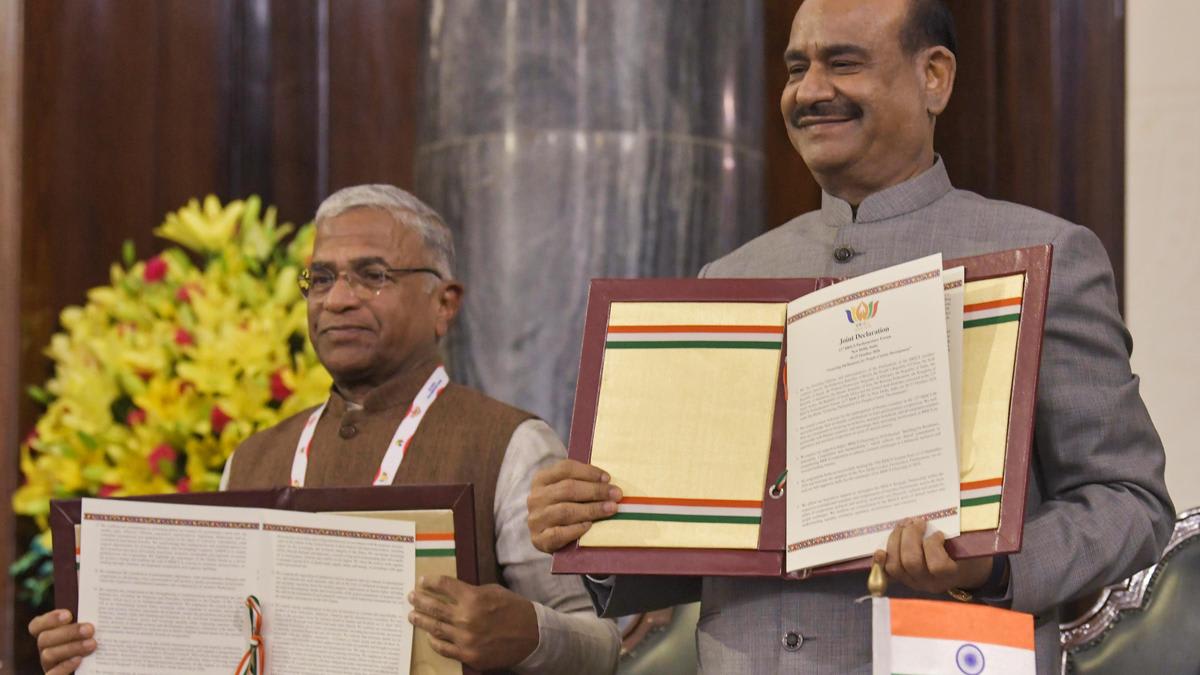
Lok Sabha Speaker Om Birla addressed the 12th BRICS Parliamentary Forum, emphasizing the integration of AI in governance and the necessity of prioritizing youth involvement. He stressed that global peace, security, and digital ethics are essential pillars for future parliamentary effectiveness.
Strengthening Democracy through Technology and Inclusion
Lok Sabha Speaker Om Birla recently addressed the 12th BRICS Parliamentary Forum, outlining a vision for the evolution of legislative bodies in the digital age. Central to his address was the role of Artificial Intelligence (AI) as a transformative tool that, when governed by principles of ethics, transparency, and accountability, can significantly optimize parliamentary workflows and enhance citizen participation. This perspective highlights the growing necessity for legislative institutions to transition into more data-driven, efficient, and transparent entities while ensuring that human values remain the guiding force behind technological adoption.
The Intersection of AI and Public Trust
Mr. Birla underscored that parliaments are not merely venues for legislation but are, fundamentally, centers of consensus, dialogue, and public trust. By integrating AI, legislatures can potentially bridge the gap between the state and the citizenry, allowing for more responsive governance. However, the Speaker cautioned that such technological integration must be managed with strict adherence to accountability. This approach suggests that for democratic institutions to maintain their legitimacy in an increasingly automated world, they must proactively address the ethical implications of the tools they employ.
Prioritizing Youth in Nation-Building
Beyond technological advancement, the forum served as a platform to discuss the imperative of intergenerational responsibility. Mr. Birla emphasized that parliaments have a distinct duty to listen to the voices of the younger generation. By harnessing the energy, creativity, and technological acumen of youth, nations can foster more innovative and resilient policies. This focus on youth participation is framed as a strategic necessity, as the younger demographic is increasingly equipped with the education and desire to contribute meaningfully to society.
Defining Global Peace and Security
Addressing the broader context of global stability, the Speaker defined peace not merely as the absence of conflict, but as the active assurance of security, dignity, and justice for all. He argued that the current generation holds a profound responsibility to lay a stable foundation for the future. This implies that international parliamentary cooperation must prioritize human-centric outcomes to ensure that the world inherited by future generations is marked by prosperity and safety.
Future Trends in Parliamentary Governance
Looking forward, the discourse at the BRICS Parliamentary Forum points toward a future where legislative effectiveness is measured by the ability to balance digital integration with traditional democratic values. As parliaments continue to evolve, the emphasis on transparency and youth inclusion will likely become standardized benchmarks for effective governance. The call for a more citizen-centric approach suggests that global legislative bodies are moving toward a model that values real-time engagement and ethical foresight as core components of their operational mandate.
Conclusion
In summary, the insights provided by Om Birla at the 12th BRICS Parliamentary Forum reflect a dual commitment to technological modernization and social responsibility. By advocating for an ethical approach to AI and a stronger focus on the aspirations of the youth, the Speaker has underscored the vital role of parliaments in ensuring that the structures of governance remain relevant, secure, and equitable in the face of rapid global change.
Multiple Citing Sources
Verification Required?