Roads turn death traps for gig workers in Kerala
Source Entity
India Latest News: Top National Headlines Today & Breaking News | The Hindu
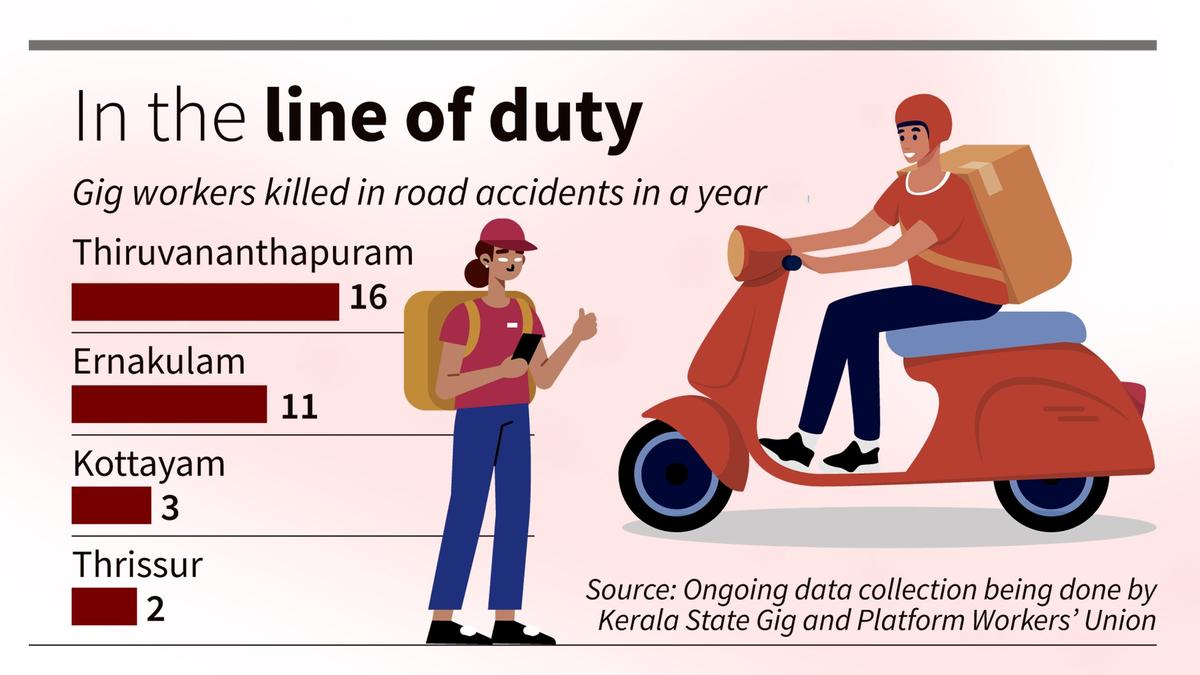
Over 30 gig workers, primarily food delivery personnel, have died in road accidents in Kerala over the past year. Data from the KSGPWU cites extreme time constraints and heavy traffic as the primary drivers of these fatalities.
The Human Cost of Convenience: Analyzing Gig Worker Fatalities in Kerala
The rapid expansion of the platform economy in Kerala has brought unprecedented convenience to consumers but has simultaneously exposed a harrowing vulnerability among the workforce. Recent data reveals a disturbing trend where the roads of Kerala are becoming "killing fields" for gig workers. According to the Kerala State Gig and Platform Workers Union (KSGPWU), affiliated with the Centre of Indian Trade Unions (CITU), over 30 delivery personnel have lost their lives in road accidents within a single year. This crisis highlights a systemic failure to protect a workforce that operates in a precarious legal and operational gray area.
Geographic Hotspots and Statistical Breakdown
An analysis of the fatalities shows a clear correlation between high-density urban centers and worker mortality. The data indicates that Thiruvananthapuram and Ernakulam are the most lethal zones, accounting for 16 and 11 deaths respectively. These two districts serve as the primary economic hubs of the state, characterized by intense commercial activity and a high volume of delivery orders. The remaining fatalities—three in Kottayam and two in Thrissur—further illustrate that while the risk is concentrated in metropolitan areas, it is a statewide phenomenon. The concentration of deaths in these cities suggests that the intersection of high demand and poor traffic management is a primary catalyst for these tragedies.
The Algorithmic Pressure Cooker
Central to this crisis is the concept of "time constraints," a direct result of the algorithmic management employed by delivery platforms. These platforms often impose strict delivery windows to ensure customer satisfaction and maximize efficiency. For the worker, these deadlines create an environment of extreme pressure, where the incentive to complete more deliveries in less time outweighs personal safety. When workers are forced to navigate Kerala's notoriously heavy traffic under the threat of poor ratings or financial penalties, they are more likely to engage in risky driving behaviors, such as speeding or ignoring traffic signals, effectively turning their vehicles into death traps.
Infrastructure and the Urban Conflict
Beyond the pressure of the clock, the physical reality of Kerala's road infrastructure plays a significant role. The state is known for its dense population and often narrow roads, which struggle to accommodate the surge in two-wheeler traffic brought about by the gig economy. The "heavy traffic" cited by union members is not merely a nuisance but a structural hazard. As delivery personnel weave through congested lanes to meet tight deadlines, the probability of collisions increases. The lack of dedicated lanes or safety protocols for high-frequency delivery riders exacerbates the danger, leaving workers exposed to the volatility of urban transit.
The Role of Labor Advocacy and Data Gaps
It is significant that this data was collected informally by the KSGPWU and CITU rather than through official government channels. This suggests a critical gap in how occupational hazards for gig workers are tracked and reported. Because gig workers are often classified as "partners" rather than "employees," their road accidents may not be categorized as workplace fatalities in official labor statistics. The initiative by the union to document these deaths is a crucial step toward visibility, forcing a conversation about the necessity of occupational safety standards and insurance coverage for those operating in the platform economy.
Conclusion and Future Outlook
The tragedy of over 30 lost lives in Kerala serves as a stark warning about the unsustainable nature of current gig economy models. To prevent further fatalities, there must be a fundamental shift in how delivery timelines are calculated, moving away from unrealistic algorithmic targets toward safety-first protocols. Furthermore, the state may need to consider stricter regulations on platform companies to ensure they take accountability for the safety of their fleet. Without systemic intervention and a move toward formalizing worker protections, the convenience of instant delivery will continue to come at an unacceptable human cost.
Verification Required?