Social media posts claim Jamia students detained; police say verification under way
Source Entity
India Latest News: Top National Headlines Today & Breaking News | The Hindu
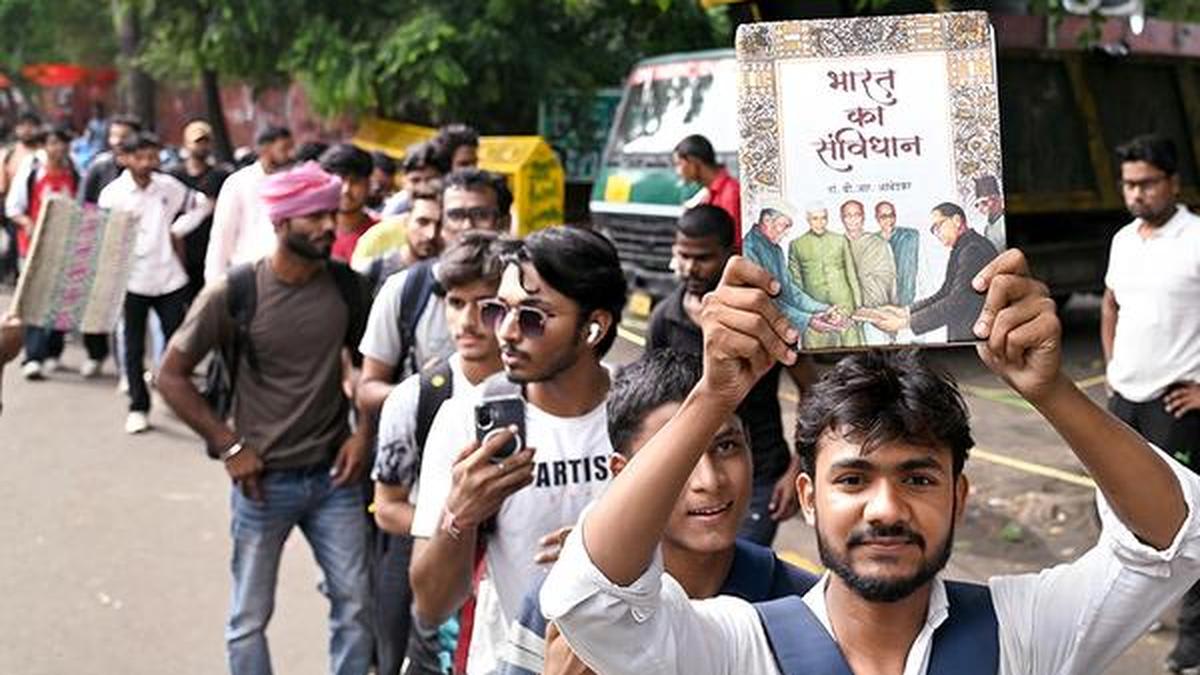
Violence erupted during student-led protests in Kolkata and Delhi demanding the resignation of Education Minister Dharmendra Pradhan over exam paper leaks. Authorities have registered multiple FIRs and initiated identity verification for those detained, while Chief Minister Suvendu Adhikari has denied student involvement in the Kolkata unrest.
Escalating Political Unrest: Student Protests and Institutional Accountability
On July 24, 2026, widespread protests erupted across major Indian cities as student organizations, including the Cockroach Janta Party (CJP) and various Left-affiliated wings, mobilized to demand the resignation of Union Education Minister Dharmendra Pradhan. The primary catalyst for this agitation is the ongoing controversy surrounding exam paper leaks, which has ignited significant public outcry regarding the integrity of the national education system. The protests, intended to express collective grievance, took a volatile turn in Kolkata, leading to significant civil disruption.
The Kolkata Incident: Violence and Official Response
The situation in Kolkata's Esplanade area deteriorated when a peaceful demonstration escalated into violent clashes. Reports confirm that seven First Information Reports (FIRs) have been registered by the Kolkata Police. Six of these FIRs specifically address the targeted attacks on media personnel, while the seventh is a suo motu case concerning the broader violence. West Bengal Chief Minister Suvendu Adhikari has condemned the unrest, noting that while the rally began peacefully, it was infiltrated by external elements.
Disputing the Perpetrators
A critical point of contention following the Kolkata violence is the identity of those responsible. Chief Minister Adhikari stated that authorities have identified approximately 70 miscreants involved in stone-pelting and attacking journalists. Importantly, the Chief Minister asserted that none of the identified individuals are affiliated with the CJP or recognized student organizations. This distinction suggests a deliberate strategy by the administration to separate legitimate student dissent from the actions of disruptive agitators, potentially to minimize the political legitimacy of the protest movement.
Tensions in Delhi: Detentions and Social Media Speculation
Concurrent with the events in Kolkata, the national capital faced its own wave of unrest. Following a CJP-led protest at Jantar Mantar, social media platforms were flooded with claims that students from Jamia Millia Islamia were being detained by the Delhi Police. This sparked a digital firestorm, with activists and student bodies demanding transparency regarding the status of the demonstrators.
Police Verification and Future Implications
In response to the allegations of arbitrary detention in Delhi, law enforcement sources clarified that approximately 150 individuals were taken into custody during security checks on the night of July 24. Officials emphasized that the process of verifying identities and backgrounds is ongoing, making it premature to confirm whether the detainees are indeed university students. As the government grapples with both the demand for ministerial accountability and the management of public order, the intersection of student activism and political agitation remains a volatile front. The outcome of these investigations will likely shape the narrative of the current administration’s handling of both the exam leak crisis and the fundamental right to protest.
Multiple Citing Sources
Verification Required?