As Zelensky begs for ‘more money, weapons,’ $10 Mn European tanks gather dust in Ukrainian forests?
Source Entity
Latest News: Todays Latest News Headlines from India & World | Hindustan Times | Hindustan Times
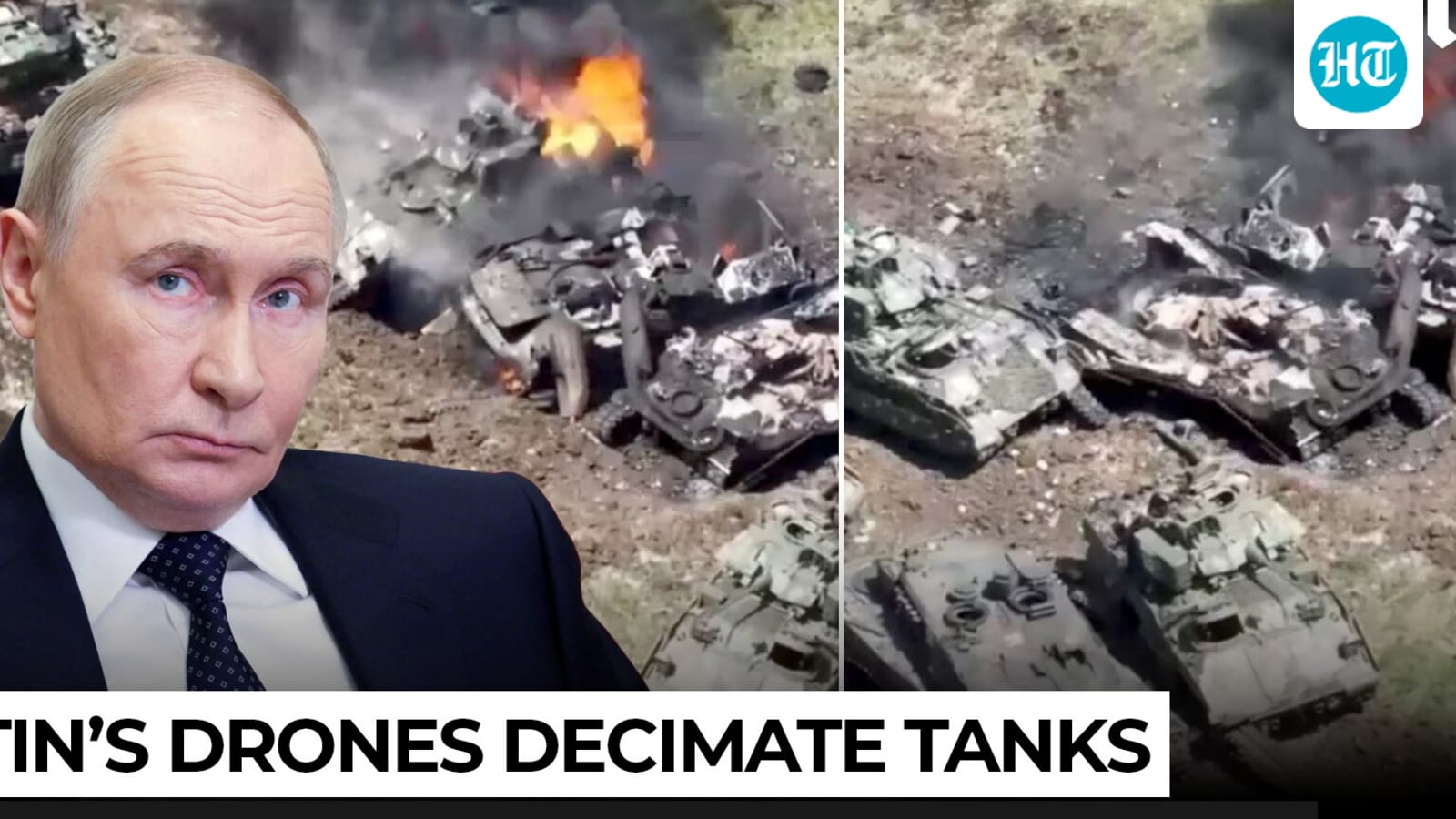
Western-supplied Leopard tanks are increasingly held in reserve due to the pervasive threat of drone warfare on the Ukrainian frontline. Kyiv is now prioritizing the retraining of armored crews to adapt to these shifts in modern tactical combat.
The Changing Face of Mechanized Warfare in Ukraine
The battlefield in Ukraine has undergone a profound transformation, shifting from traditional armored maneuvers to a reality dominated by persistent aerial surveillance and precision strike capabilities. Recent reports indicate that the highly touted Leopard tanks, valued at approximately $10 million each, are frequently being kept in deep concealment or reserve rather than spearheading frontline offensives. This strategic withdrawal is not a reflection of the tanks' mechanical failure, but rather a necessary reaction to the omnipresent threat posed by both Russian and Ukrainian drone swarms.
The Drone Dilemma and Armored Vulnerability
The integration of low-cost, First-Person View (FPV) drones has rendered heavy armor significantly more vulnerable than in previous conflicts. Where tanks were once the undisputed kings of the battlefield, capable of breaking through defensive lines with relative impunity, they are now subject to constant monitoring and precision-guided munitions that can strike their most vulnerable top-armor segments. This technological shift has forced military commanders to re-evaluate the utility of expensive Western hardware in high-threat zones.
Strategic Adaptation and Operational Constraints
Kyiv’s current approach represents a pragmatic pivot in its military doctrine. By keeping these assets in reserve, Ukraine aims to preserve its high-value capital equipment for specific, high-impact operations where air support or electronic warfare suppression is available. This 'wait-and-see' approach is a direct consequence of the lethal environment created by drones, which have stripped away the element of surprise typically afforded by rapid tank movements.
The Imperative of Retraining
Recognizing that traditional tank tactics are increasingly obsolete under current conditions, the Ukrainian military is shifting its focus toward comprehensive personnel retraining. Armored unit crews are now being instructed in anti-drone defensive measures, including the deployment of 'cope cages' and electronic countermeasure systems, as well as new concealment protocols. The goal is to integrate these tanks into a modern, multi-domain fighting force that can operate effectively despite the constant threat from the sky.
Broader Implications for Global Military Doctrine
The struggle to protect $10 million tanks from inexpensive drones serves as a bellwether for global military strategy. It signals the end of an era where armor superiority alone could dictate the outcome of a land war. As Ukraine continues to lobby for further financial and military aid, the focus of this support is shifting from the mere provision of hardware to the necessity of technological adaptation and the development of sophisticated tactical countermeasures against the drone revolution.
Conclusion
Ultimately, the presence of Leopard tanks in Ukrainian forests is not a sign of abandonment, but a calculated tactical pause. As the conflict evolves, the ability of Ukraine to integrate these heavy assets into a drone-centric battlefield will be a critical factor in the war's trajectory. The ongoing adaptation of these units reflects the broader, brutal reality of modern combat, where survival depends as much on digital and aerial awareness as it does on heavy steel plating.
Verification Required?