Mahasweta Devi at 100: Naveen Kishore remembers a life of writing as activism
Source Entity
India Latest News: Top National Headlines Today & Breaking News | The Hindu
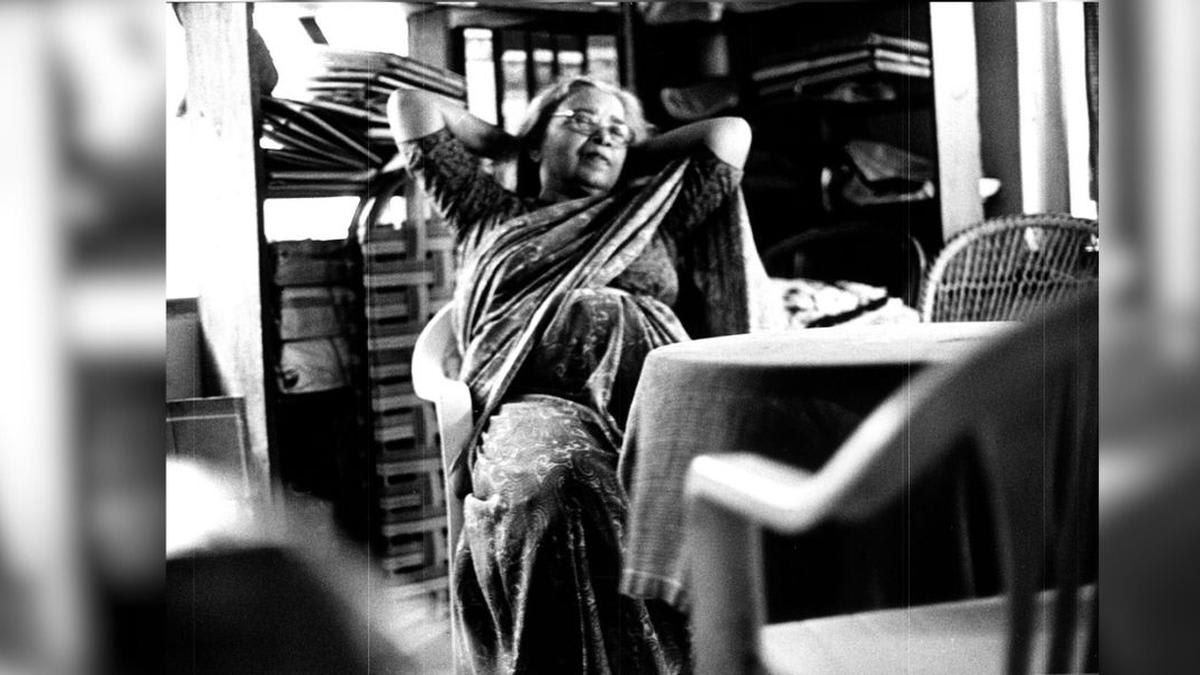
Naveen Kishore reflects on the legacy of Mahasweta Devi, highlighting her unique ability to merge literature with activism. He emphasizes her commitment to the autonomy of her characters and her use of writing as a tool for resistance.
Mahasweta Devi at 100: The Intersection of Literature and Resistance
The commemoration of Mahasweta Devi's centenary provides a profound opportunity to examine a life where the boundary between artistic creation and social activism was intentionally blurred. As reflected by Naveen Kishore, Devi did not view writing as a mere academic or aesthetic exercise, but as a visceral extension of her commitment to the marginalized. Her work represents a synthesis of lived experience and imaginative storytelling, creating a body of work that serves as both a mirror to societal failures and a blueprint for resistance.
The Synthesis of Fact and Fiction
Mahasweta Devi possessed a rare ability to combine the stark facts of her daily life with the narrative structures of fiction. This approach allowed her to translate the raw realities of oppression into a 'literature of resistance.' By anchoring her stories in the tangible struggles of the disenfranchised, she ensured that her fiction remained grounded in truth. This was not merely an extension of a 'fighter' persona, but the result of an evolving, concerned vision as a human being who sought to decipher the complex power dynamics of her environment and translate them into a language that demanded justice.
Writing as Spiritual Surrender and Activism
For Devi, the act of writing was characterized by an intense intimacy and a sense of 'surrender.' This surrender involved a total immersion in the language, where the writer's ego and personal personality were set aside to be 'possessed' by the spirit of literature. In this state of flow, writing became a form of activism. By removing the self from the center of the narrative, she allowed the voices of the oppressed to emerge with unfiltered authenticity, transforming the page into a site of political struggle and spiritual devotion.
The Philosophy of 'Mukti' and Character Autonomy
Central to Devi's literary philosophy was the concept of mukti, or liberation. She granted her characters an extraordinary level of freedom, believing that they possessed the inherent right to dream their own paths and choose their own fates. This autonomy was crucial; she did not treat her characters as puppets for a political message, but as agents of their own destiny, regardless of the consequences. This commitment to character independence often rendered the writer a 'clandestine presence,' allowing the reader to engage directly with the character's journey without the interference of the author's guiding hand.
The Real-World Stakes of Resistance
The activism described in Devi's work was not confined to the printed page; it mirrored the dangerous realities of street-level resistance. The context underscores a climate where writing a slogan on a wall could court a bullet from the police. This environment of risk informed the urgency and intensity of her writing. The bravery exhibited by those who faced state violence is mirrored in the bravery of her prose, which refused to shy away from the brutal consequences of choosing one's own path in the face of systemic oppression.
Conclusion: An Enduring Legacy of Empathy
Mahasweta Devi's legacy is defined by her refusal to separate the intellectual act of writing from the physical act of fighting for human rights. By treating language as a tool for liberation and her characters as autonomous beings capable of self-determination, she redefined the role of the writer in society. Her life's work stands as a testament to the power of literature to not only document the human condition but to actively participate in the struggle for a more just and free world.
Verification Required?