Show HN: Marelleo, an open-source story box I built for my kids using ESP32
Source Entity
Hacker News
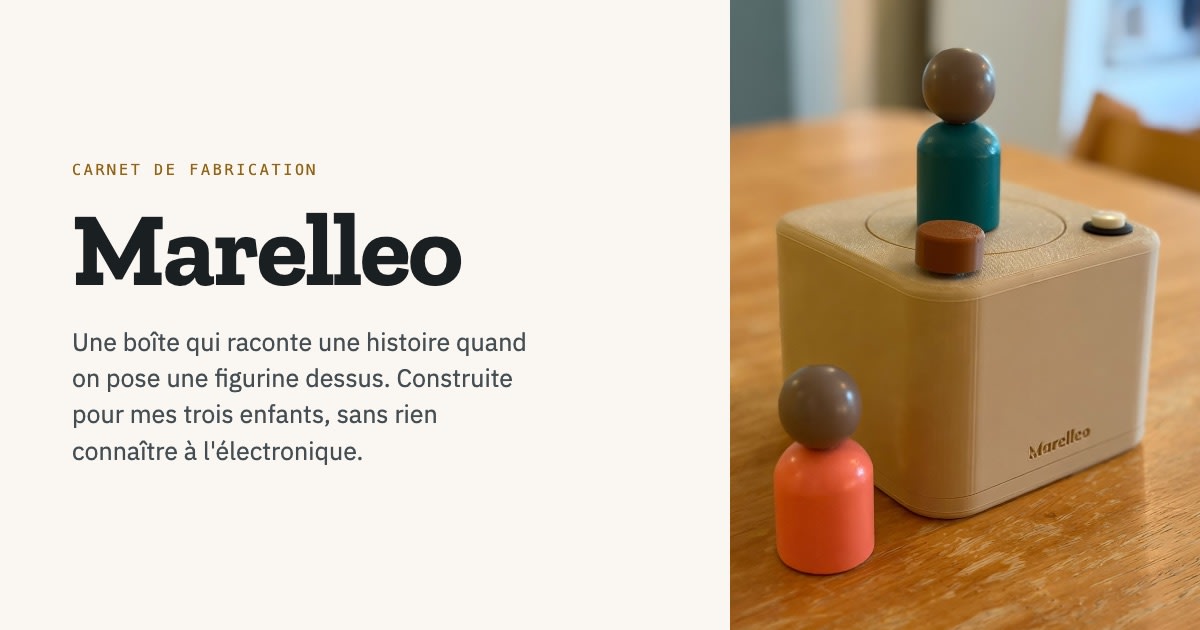
A developer has created Marelleo, an open-source, screen-free story player for children inspired by commercial alternatives like the Toniebox. By utilizing ESP32 hardware, the project offers a DIY, cost-effective, and transparent alternative to proprietary ecosystems.
The Rise of DIY EdTech: Analyzing Marelleo
In an era dominated by screens and subscription-based digital ecosystems, the emergence of 'Marelleo' represents a significant shift toward hardware transparency in parenting. Developed by a parent with no prior background in electronics, this project serves as an open-source alternative to proprietary audio players like the Toniebox. By leveraging the versatile ESP32 microcontroller, the creator has successfully democratized a high-usability interface that allows children to control their own entertainment through physical interaction rather than digital menus.
The Philosophy of Screen-Free Interaction
At its core, Marelleo addresses a common pain point: the over-reliance on complex, screen-heavy devices for children. The 'gesture-based' design—placing a figurine on a box to trigger audio—mimics the intuitive nature of physical toys. This design choice highlights a growing trend in educational technology that prioritizes tactile engagement. By removing the need for parental intervention or navigating menus, the device empowers toddlers, fostering autonomy and reducing the cognitive load often associated with modern digital media consumption.
Challenging the Proprietary Business Model
One of the most compelling aspects of this project is its critique of the 'razor-and-blade' business model prevalent in the children's audio market. Commercial alternatives often sell hardware at a lower margin, only to lock users into expensive, proprietary content ecosystems. Marelleo disrupts this by providing an open-source framework. By building his own box, the creator avoids the 'walled garden' approach, allowing for greater flexibility and freedom in how content is sourced and managed, effectively lowering the long-term cost for families.
Learning Through Hardware Failure
Technological development is rarely a linear path, and the creator’s admission that he learned the process by 'breaking things' underscores the value of maker-culture. The use of the ESP32—a low-cost, highly capable system-on-a-chip—serves as a testament to how accessible advanced electronics have become. This project serves as a blueprint for other parents and developers, proving that complex hardware development is not an exclusive domain of large corporations, but a skill that can be acquired through iterative, hands-on experimentation.
Future Trends and Implications
Looking forward, the success of projects like Marelleo suggests a future where parents may increasingly opt for DIY or modular systems over locked-in commercial products. As open-source hardware communities continue to grow, we can expect to see more 'smart' toys that prioritize user privacy, data ownership, and interoperability. By providing the source code and documentation for Marelleo, the creator is contributing to a broader movement that values transparency and sustainability in the consumer electronics space.
Conclusion
Marelleo is more than just a toy; it is a manifestation of how open-source innovation can provide practical solutions to everyday parenting challenges. By combining the simplicity of physical interaction with the power of modern microcontrollers, this project stands as a successful case study in DIY engineering. It encourages a shift away from restrictive digital ecosystems, proving that with enough curiosity and persistence, individuals can build high-quality, functional technology that serves their specific needs.