For migrant children, access to school is not enough
Source Entity
Kuldeepsingh Rajput
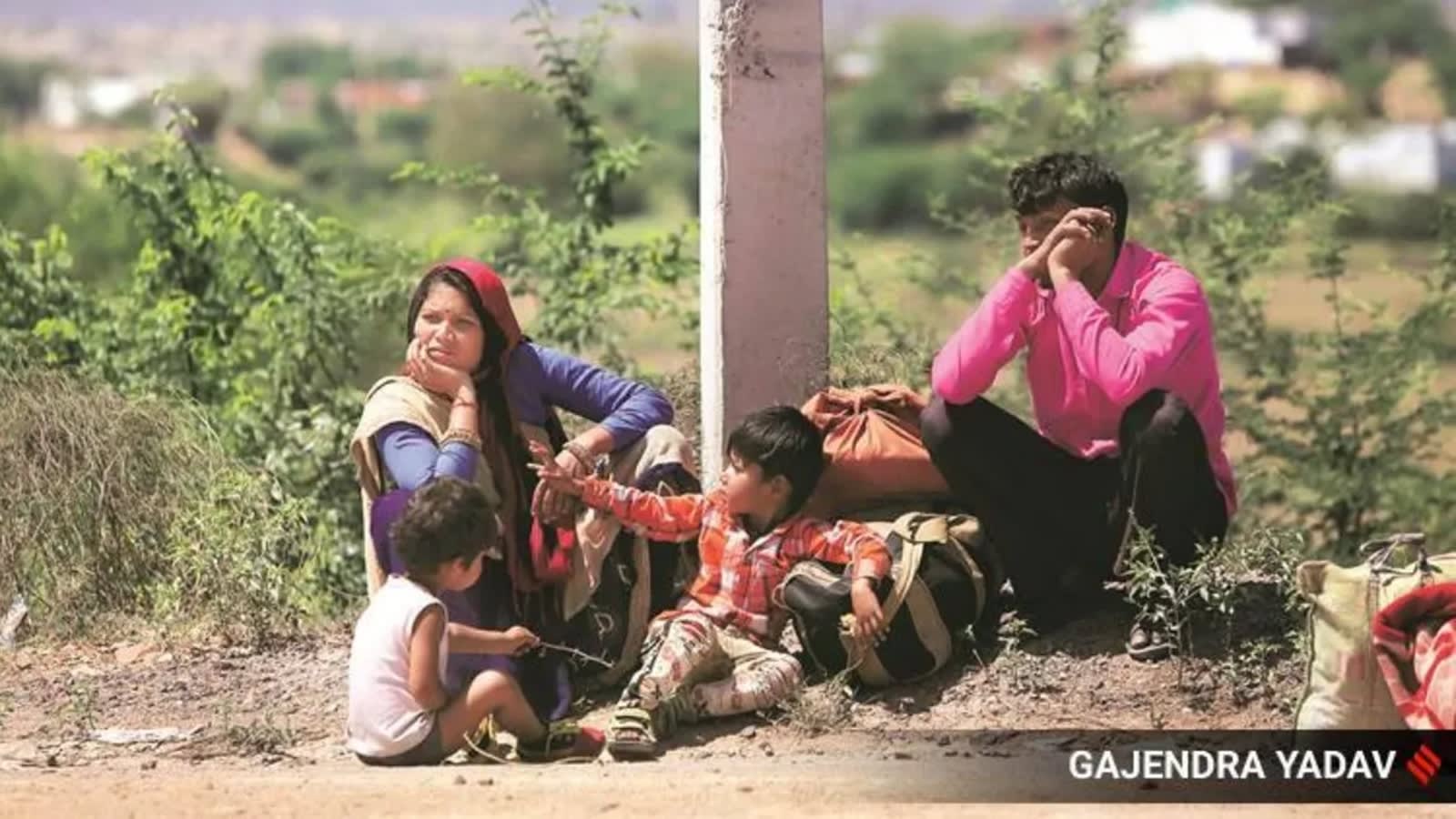
Seasonal migration in India is being intensified by drought, forcing families into precarious labor and leaving millions of children at risk of educational exclusion. Current policies focus on school access, but fail to address the systemic barriers that prevent migrant children from maintaining consistent learning.
The Silent Crisis: Climate-Induced Migration and Child Education
As the Kharif harvest concludes across India, the traditional rhythm of seasonal migration is undergoing a distressing transformation. While migration has long been a coping mechanism for rural households, the current escalation of intense drought conditions is fundamentally altering the demographics of the displaced. Families are no longer moving solely for economic opportunity; they are increasingly becoming 'climate migrants,' driven by drying fields and the absolute collapse of local livelihood options. This shift places them in a state of perpetual vulnerability as they transition toward low-wage sectors such as sugarcane harvesting, brick kilns, and urban construction sites.
The Invisible Victims of Displacement
Among the various impacts of this climate-driven displacement, the plight of children remains the most overlooked. When families migrate to sustain their basic survival, children are inevitably uprooted from their social and academic environments. This involuntary movement creates a cycle of interrupted schooling that is difficult to break. Unlike stable students, these children face a fractured educational experience characterized by frequent transfers, language barriers in new regions, and a lack of institutional support, all of which contribute to severe learning loss and, eventually, complete educational exclusion.
Statistical Gaps and Policy Limitations
The magnitude of this issue is immense, yet shrouded in data ambiguity. According to the last Census, India recorded 9.29 crore migrant children, yet there is currently no reliable, real-time estimate of how many of these children are entirely out of school. This statistical void is a major hurdle for policymakers. While reports like those from the NITI Aayog emphasize school access, the reality on the ground suggests that simply providing a seat in a classroom is insufficient for a child whose family moves every few months. The current framework fails to account for the mobility of these families, rendering stationary school-based programs ineffective.
Systemic Barriers to Continuity
For migrant children, the barrier is not just the lack of a school building, but the lack of educational continuity. Schools are often structured around rigid academic calendars and local language instruction, neither of which aligns with the transient lifestyle of seasonal migrant workers. Without policies that facilitate the portability of school records or provide bridge programs at worksites like brick kilns, these children are effectively pushed to the margins of the education system. The systemic failure to recognize 'climate migration' as a specific policy challenge prevents the implementation of flexible, mobile-friendly schooling solutions.
Future Outlook and Policy Imperatives
Looking ahead, as climate change continues to exacerbate droughts and water scarcity in rural India, the volume of seasonal migration is projected to rise. If the educational needs of these children are not integrated into a broader climate adaptation strategy, India risks losing a significant portion of a generation to child labor and illiteracy. Future interventions must move beyond the narrow mandate of school access and focus on creating a portable, inclusive educational ecosystem that travels with the child, ensuring that their right to learn is not forfeited to the exigencies of their parents' survival.