2-month probe, 3-month trial: Govt proposes sweeping changes to anti-cheating law
Source Entity
TOI NEWS DESK
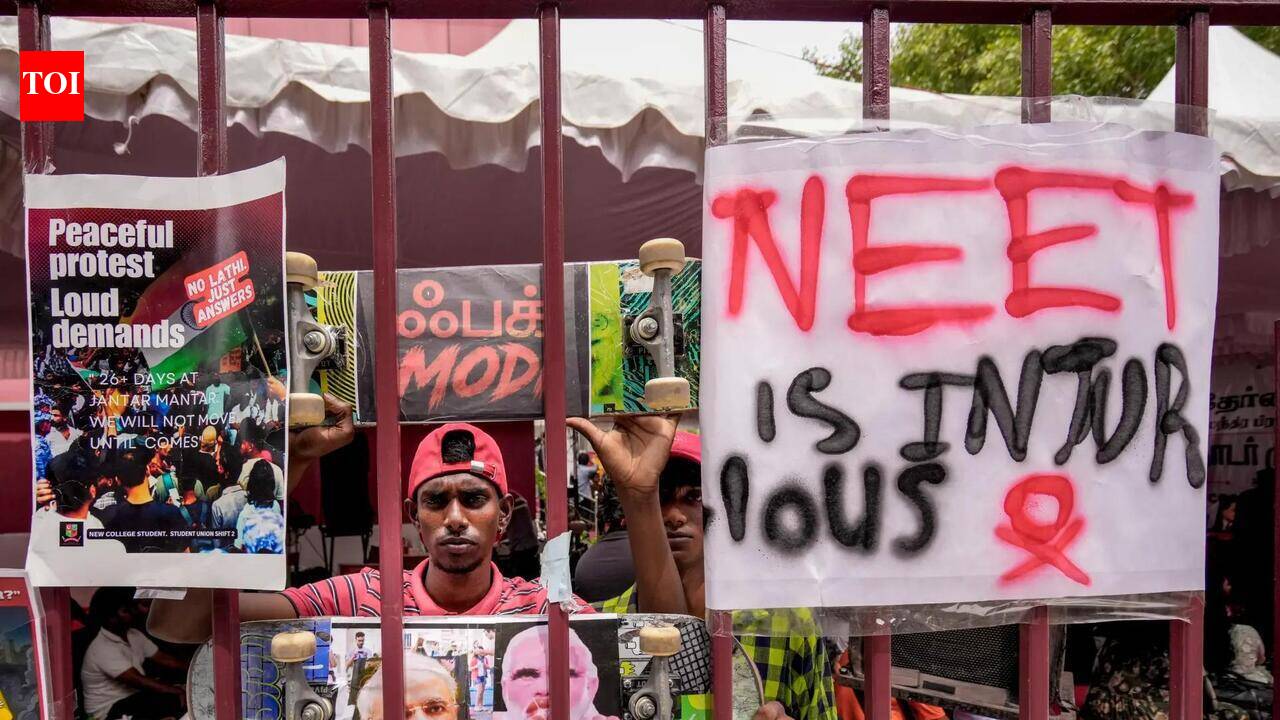
The Monsoon Session of Parliament saw immediate disruptions on its opening day due to massive protests over the NEET paper leak and Ram Temple donation theft. Security forces faced off against thousands of demonstrators in Delhi, while legislative business remained stalled except for a bill to expand the Supreme Court.
Parliamentary Standoff: Monsoon Session Begins in Chaos
The commencement of the Monsoon Session on July 20, 2026, was marked by intense legislative gridlock as the Opposition launched a coordinated protest against the government. The primary triggers for the disruptions in both the Lok Sabha and Rajya Sabha were the alleged NEET paper leak and reports of donation theft at the Ram Temple in Ayodhya. These issues have become flashpoints for political accountability, with the Opposition demanding immediate answers from the treasury benches.
The NEET Controversy and Public Unrest
At the heart of the protests lies the NEET paper leak, a scandal that has mobilized tens of thousands of students and activists. Protesters, largely led by the Cockroach Janta Party (CJP), attempted to march toward Parliament, resulting in significant clashes across Lutyens’s Delhi. The intensity of these demonstrations—with an estimated 50,000 participants—forced the deployment of heavy security measures, including the use of lathicharge, tear gas, and water cannons to maintain order near critical arterial roads like Ashoka Road and Janpath.
Legislative Gridlock and Adjournments
The parliamentary impact of this unrest was immediate. The Lok Sabha witnessed six separate adjournments before being suspended for the day at 3 p.m. The atmosphere inside the House was combative, with members from the Congress, SP, and Trinamool Congress entering the Well of the House to register their dissent. Meanwhile, the DMK focused on regional concerns, specifically the Mekedatu issue, highlighting the fragmented nature of the Opposition’s protest strategy.
Judicial Expansion Amidst the Turmoil
Despite the pervasive chaos, the government managed a singular legislative success. Union Law Minister Arjun Ram Meghwal introduced a crucial Bill in the Lok Sabha aimed at replacing an Ordinance that increases the strength of the Supreme Court from 34 to 38 judges, including the Chief Justice of India. This move signals the government's intent to push through key judicial reforms despite the hostile floor management environment.
Historical Context and Future Implications
The current session reflects a growing trend of using parliamentary platforms to amplify street-level agitation. The demand for the resignation of Education Minister Dharmendra Pradhan mirrors historical instances where high-profile exam irregularities have necessitated cabinet-level accountability. The government’s ability to navigate these protests will likely determine the productivity of the remainder of the Monsoon Session.
Conclusion: Assessing the Path Forward
As the session progresses, the ability of the government to address the NEET crisis while maintaining legislative momentum remains in question. The washout of the first day serves as a barometer for the political volatility expected in the coming weeks. With the Opposition emboldened by large-scale public support, the government faces a delicate balance: managing the optics of a protest-stricken capital while attempting to push through its legislative agenda.
Multiple Citing Sources