AAP sees ‘jugalbandi’ in Rahul Gandhi's protest near PM house: ‘Modi allowed it to weaken CJP’
Source Entity
Latest News: Today's Latest News Headlines from India & World | Hindustan Times | Hindustan Times
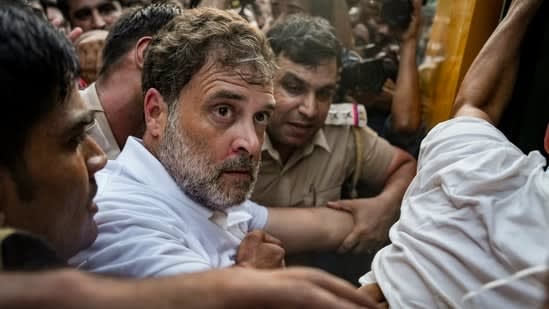
The Monsoon Session of Parliament faced immediate gridlock as Opposition parties protested the NEET paper leak and other issues. Tensions escalated further as Congress leaders were detained during a 'Chalo PM House' protest, sparking accusations of political collusion between major parties.
Parliamentary Gridlock: The Monsoon Session Begins in Turmoil
The Monsoon Session of Parliament commenced on a volatile note on July 20, 2026, as the Lok Sabha faced repeated adjournments. The legislative agenda was effectively sidelined by a unified Opposition movement centered on urgent national concerns, most notably the alleged NEET paper leak and reports of theft concerning Ram Temple donations. The intensity of these protests, characterized by members of the Congress, Samajwadi Party (SP), and Trinamool Congress entering the Well of the House, underscores a deepening rift between the government and the Opposition regarding executive accountability.
The NEET Controversy and Public Unrest
At the heart of the parliamentary disruption lies the NEET paper leak, a scandal that has mobilized not only political parties but also grassroots organizations. The Cockroach Janta Party (CJP) led significant protests attempting to breach barricades near Parliament, demanding the resignation of Union Education Minister Dharmendra Pradhan. These demonstrations reflect a growing public frustration over exam irregularities and perceived systemic failures within the educational assessment framework, creating a pressure cooker environment that inevitably spilled into the legislative chamber.
Strategic Allegations and Political 'Jugalbandi'
While the Opposition is ostensibly united against the government, internal fissures have emerged. AAP MP Sanjay Singh and Delhi Assembly Leader of Opposition Atishi have leveled serious allegations of a "jugalbandi" or collusive partnership between the BJP and the Congress. They argue that the government's swift engagement with Rahul Gandhi’s protest near the Prime Minister’s residence—contrasted with the long-standing stonewalling of CJP and Sonam Wangchuk’s agitations—serves as evidence of a strategic effort to marginalize smaller protest movements. This narrative of a "Congress-BJP unit" adds a layer of complexity to the Opposition's broader strategy.
Escalation at the Prime Minister's Residence
The situation deteriorated further on Tuesday when the 'Chalo PM House' protest led to dramatic scenes of detention. Video evidence released by the Congress depicted security personnel forcibly removing senior leaders, including Rahul Gandhi and Priyanka Gandhi Vadra, from the site. The imagery of Gandhi lying on the road and resisting detention, coupled with reports of injuries, has transformed the NEET issue from a policy debate into a high-stakes standoff between the state apparatus and the political leadership.
Legislative Stagnation and Future Implications
Despite the chaos, the government managed to introduce a Bill via Union Law Minister Arjun Ram Meghwal aimed at replacing an Ordinance that increases the number of Supreme Court judges. However, the inability to conduct substantive business suggests that the remainder of the session will likely be characterized by persistent friction. As the government attempts to push its legislative agenda while managing civil unrest, the political cost of the NEET controversy continues to climb, potentially altering the legislative landscape for the rest of the year.
Conclusion
The opening of the Monsoon Session serves as a microcosm of the current political polarization in India. From the procedural paralysis in the Lok Sabha to the physical confrontations on the streets of New Delhi, the convergence of educational grievances and strategic political maneuvering signals a challenging period for the ruling administration. Whether the government can restore order and address the substantive allegations regarding exam irregularities will define the efficacy of this parliamentary session.
Multiple Citing Sources
Verification Required?