Mumbai's slum redevelopment at record scale: Why more slums are being redeveloped now than ever | Explained
Source Entity
Latest News: Todays Latest News Headlines from India & World | Hindustan Times | Hindustan Times
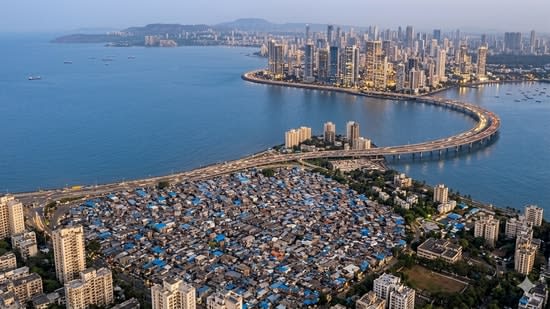
Mumbai has reached a record-breaking scale in slum redevelopment, with over 1,200 projects currently covering 2,156 acres. This initiative aims to transform the city's urban landscape by impacting the lives of 3.21 lakh families.
The Unprecedented Surge in Mumbai's Urban Renewal
Mumbai, a city historically defined by its stark contrast between high-rise luxury and expansive informal settlements, is witnessing a monumental shift in its urban planning trajectory. According to recent data from the Slum Rehabilitation Authority (SRA), the scale of redevelopment currently underway is unprecedented. With 1,202 active projects spanning 2,156 acres, the city is aggressively pursuing a transformation that surpasses the total achievements of the previous three decades combined since the SRA’s inception in 1995.
The Scale of Transformation
The sheer volume of land currently under redevelopment—2,156 acres—highlights a pivot in how the financial capital manages its limited land resources. This surge is not merely statistical; it represents a significant logistical undertaking involving 3.21 lakh families. By moving beyond the slow pace that characterized the SRA's early years, the current administration is signaling a shift toward high-density urban renewal intended to modernize the city's housing stock and improve living standards for a vast segment of its population.
Socio-Economic Implications
The impact of these 1,202 projects reaches deep into the socio-economic fabric of Mumbai. For the 3.21 lakh families residing in these designated zones, the transition from informal settlements to formal housing represents a major upgrade in infrastructure, sanitation, and legal security. However, the complexity of relocating and rehabilitating such a large number of people requires rigorous oversight to ensure that the transition is sustainable and equitable for the residents involved.
Future Trends in Real Estate
Beyond the current active projects, the pipeline remains robust, with an additional 607 slum projects currently in the proposal stage. This indicates that the trend of aggressive redevelopment is likely to continue in the coming years. As these projects move from planning to execution, Mumbai's real estate market will likely experience a shift in supply dynamics, potentially altering the city’s skyline and land-use efficiency in high-demand areas.
Challenges and Oversight
While the scale of this initiative is commendable, the historical context of the SRA suggests that the primary challenge lies in execution speed and quality control. The transition from "slum" to "redeveloped housing" involves navigating complex legal frameworks, land title verification, and infrastructure integration. As the city pushes toward these record-breaking targets, the ability of developers and authorities to maintain transparency and meet construction timelines will be the ultimate test of this policy's long-term success.
Conclusion
In summary, the current wave of slum redevelopment in Mumbai represents a historic effort to reshape the city’s urban density. By addressing 2,156 acres of land and impacting hundreds of thousands of families, the SRA is attempting to solve one of the city's most persistent development challenges. If successful, this movement will serve as a blueprint for other rapidly urbanizing cities, setting a new benchmark for how informal settlements can be integrated into the formal real estate ecosystem.
Verification Required?