‘Meaningless as a laptop screensaver’: reviewers slate Musk’s AI-made Odyssey film
Source Entity
Dan Milmo Global technology editor
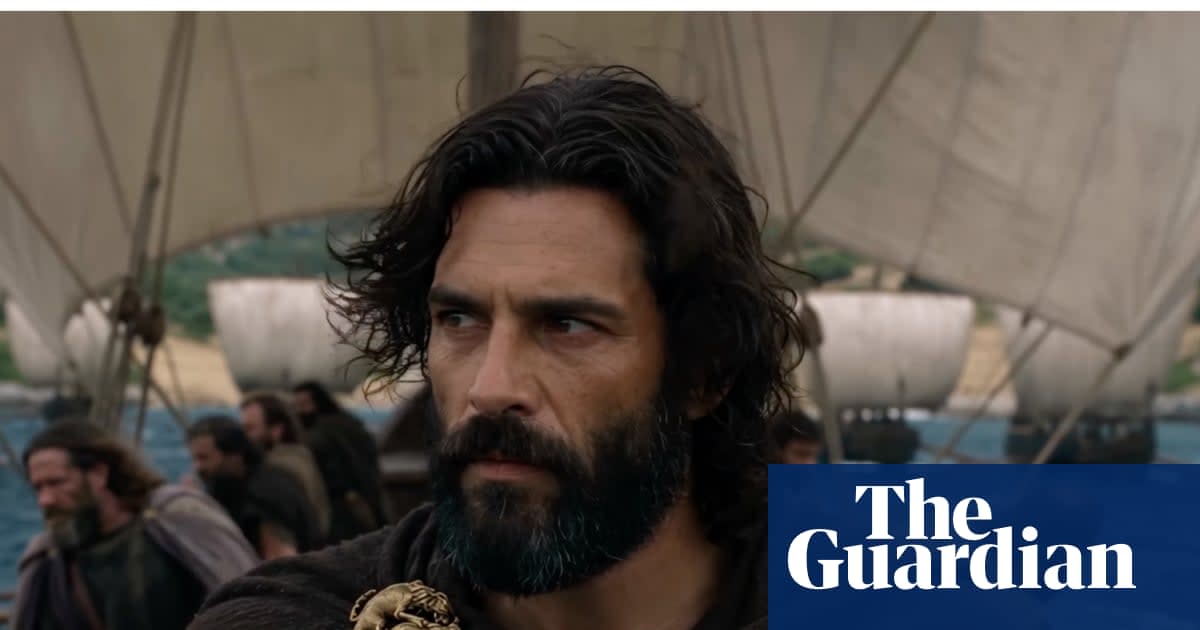
Elon Musk has released an AI-generated adaptation of The Odyssey via his Grok tool, aiming to challenge Christopher Nolan’s version. The project has faced harsh criticism from reviewers, who describe the visual output as lacking depth and artistic substance.
The Intersection of Generative AI and Classical Literature
Elon Musk’s recent foray into filmmaking with an AI-generated adaptation of Homer’s The Odyssey marks a controversial collision between generative technology and classical storytelling. By utilizing his Grok Imagine tool in partnership with the London-based startup Wonder Studios, Musk sought to create a version he deemed "true to the art of Homer." This project stems from a public dispute Musk initiated during the summer, where he openly criticized Christopher Nolan’s cinematic interpretations, specifically taking issue with casting decisions such as Lupita Nyong’o as Helen of Troy.
Ideological Underpinnings of the Project
Musk’s motivation for this project appears rooted as much in ideological critique as it is in artistic ambition. By labeling his version "historically accurate," Musk utilized the platform of filmmaking to voice his objections to modern diversity, equity, and inclusion (DEI) initiatives within the entertainment industry. The project serves as a clear demonstration of how generative AI is increasingly being leveraged not just for creative expression, but as a vehicle for cultural commentary and the promotion of specific, ideologically driven historical narratives.
The Technological Limitations of Current Generative Video
Despite the significant capital and technological resources behind the endeavor, the initial seven-minute episode has been met with severe critical backlash. Reviewers have compared the AI-generated imagery to a "laptop screensaver," suggesting that while the tools can generate high-resolution textures, they struggle to capture the nuance, emotional resonance, and narrative pacing required for a complex epic poem. This highlights a persistent gap in the current state of AI video generation: the inability to synthesize human-like dramatic tension or artistic intent.
Shift in Delivery: From Feature Film to Episodic Content
There is a notable discrepancy between Musk's initial promises and the current output. While the tycoon had publicly pledged a "full-length movie" adaptation to be released before the end of the year, the project has instead materialized as a series of shorter episodes. This shift may reflect the immense computational and human-editing effort required to sustain high-quality AI generation over a longer duration, pointing to the practical challenges of replacing traditional filmmaking workflows with automated systems.
Future Implications for AI in Media
The reception of Musk’s Odyssey serves as a cautionary tale for the rapid adoption of AI in creative fields. As tech moguls attempt to disrupt traditional media, the failure to resonate with audiences suggests that technical proficiency in image generation is not a substitute for the collaborative, human-centric craft of cinema. Moving forward, the industry will likely see a continued divide between "AI-native" content, which prioritizes speed and ideological alignment, and traditional media, which continues to rely on the depth of human performance and directorial vision.