'Never knew he was dangerous’: Rijiju reacts to Naseeruddin's 'deemagi naxal' post
Source Entity
PRIYANKA JAISWAL
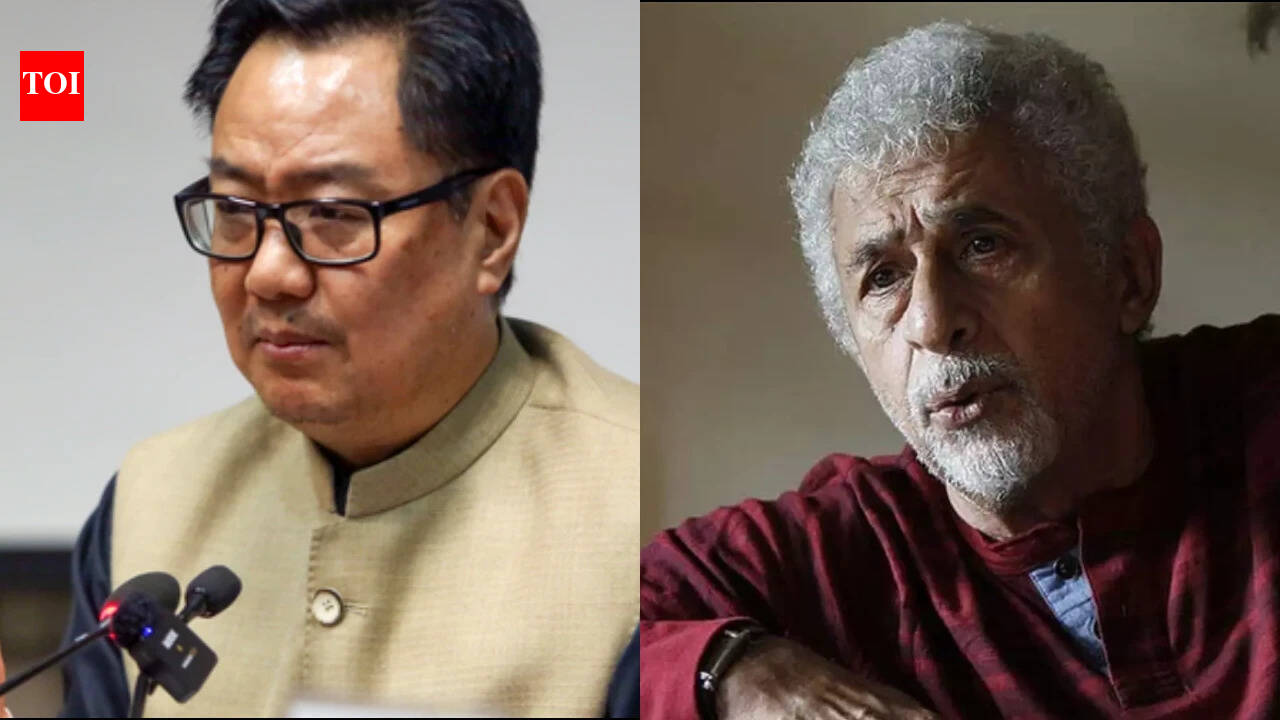
Actor Naseeruddin Shah sparked controversy by labeling himself a 'Dimagi Naxal' while criticizing the government's handling of student protests at Jamia Millia Islamia. Union Minister Kiren Rijiju responded by expressing surprise at the actor's rhetoric as campus demonstrations over the restoration of the student union entered their 17th day.
The Intersection of Celebrity Advocacy and Political Discourse
Renowned Indian actor Naseeruddin Shah has ignited a significant public debate following his public declaration as a 'proud Dimagi Naxal' (intellectual Naxal). This statement, made in response to the ongoing student protests at Jamia Millia Islamia, serves as a flashpoint for broader discussions regarding the role of public figures in political activism. By adopting a label often used in polarized political discourse to categorize dissenters, Shah has effectively challenged the current administration's stance on civil liberties and the state of democracy.
The Jamia Millia Islamia Context
The protests at Jamia Millia Islamia are fundamentally rooted in a long-standing demand for the restoration of an elected students' union, which has been absent since its dissolution in 2006. The students argue that the absence of a representative body stifles democratic participation on campus. As these demonstrations reached their 17th day, the situation escalated, with reports of violence and property damage circulating on social media, prompting immediate condemnation from the central government.
Government Response and the 'Hooliganism' Narrative
Education Minister Pralhad Joshi has taken a firm stance against the unrest, explicitly stating that 'hooliganism won’t be tolerated.' This rhetoric highlights the government's attempt to distinguish between legitimate peaceful protest and actions that result in the destruction of public property. The administration’s focus remains on maintaining campus order, viewing the disruption as a law-and-order issue rather than a purely academic or democratic grievance.
Kiren Rijiju’s Reaction and Political Polarization
Union Minister Kiren Rijiju’s reaction to Shah’s video reflects the widening chasm between the political establishment and cultural influencers who criticize government policies. By stating he 'never knew he was dangerous,' Rijiju highlights the intensity of the friction between state officials and those who use their platform to voice dissent. This exchange underscores how quickly artistic critique can be transformed into a political confrontation in India's current climate.
Broader Implications for Democracy
This incident highlights a recurring theme in modern Indian politics: the tension between the state's authority to maintain peace and the individual's right to express dissent. When prominent figures like Shah label themselves with politically charged terms, it forces a national conversation about the boundaries of free speech and the definition of 'intellectual' opposition. As these protests continue, the situation remains a barometer for the health of student activism and the government’s tolerance for public criticism.
Conclusion
The discourse surrounding Naseeruddin Shah’s comments and the Jamia protests illustrates the complex interplay between celebrity influence and governance. While the government maintains its commitment to preventing violence on campuses, the persistence of the student demands suggests that the underlying issues regarding democratic representation remain unresolved. Future developments will likely depend on whether the administration chooses to engage with the students' demands or continues to emphasize the containment of unrest.