Ice-rock avalanche likely triggered Bhotekoshi flood; quake link under probe
Source Entity
VISHANT AGARWALA
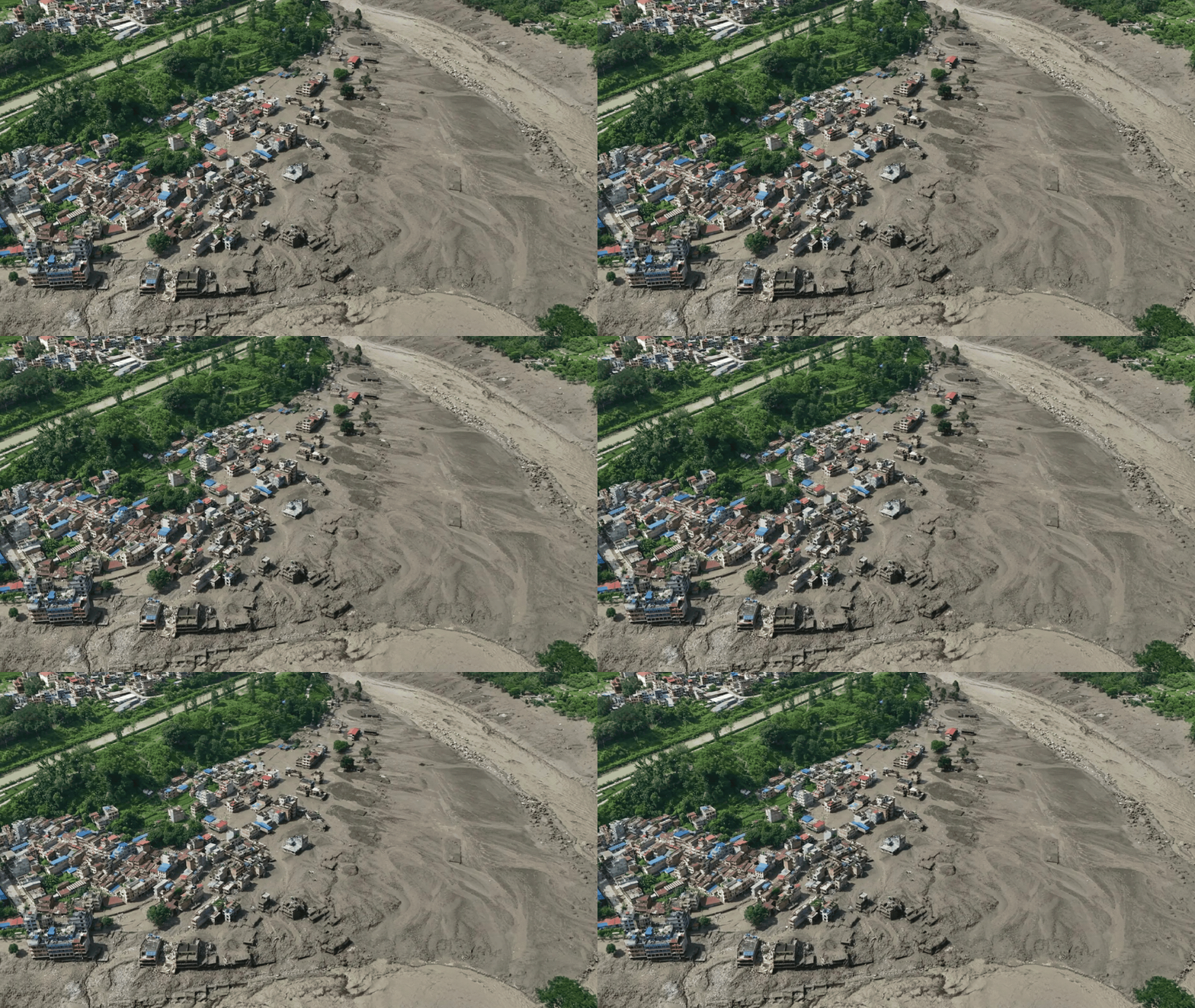
A massive flash flood triggered by a suspected ice-rock avalanche in Nepal has caused widespread destruction and prompted high alerts in neighboring India. Rescue operations are underway as authorities manage rising water levels in transboundary rivers.
The Nepal Flash Flood Crisis: A Multi-Nation Emergency
On Wednesday, August 26, 2026, a catastrophic flash flood tore through Nepal’s Rasuwa district, sending torrents of water, sediment, and massive boulders down the Bhote Koshi and Trishuli river systems. This event, which has left dozens dead and hundreds missing—including 105 Indian tourists—highlights the extreme geological volatility of the Hindu Kush Himalaya (HKH) region. The disaster serves as a sobering reminder of the interconnected risks faced by nations sharing the mountainous terrain of the Himalayas.
The Trigger: Geological Instability
Experts from the International Centre for Integrated Mountain Development (ICIMOD), in collaboration with institutions in Nepal and China, are currently investigating the specific cause of the surge. Preliminary findings suggest that the disaster may have been initiated by an ice-rock avalanche originating in a high-altitude area near the Nepal-Tibet border. In a landscape characterized by moving tectonic plates and receding glaciers, these sudden mass-wasting events represent a significant and unpredictable threat to downstream communities.
Transboundary Implications and River Dynamics
Because the Trishuli River acts as a major tributary that feeds into the Gandak river system, the disaster has immediate implications for Northern India. As water and debris flow southward, authorities in Uttar Pradesh, Bihar, and Uttarakhand have been placed on high alert. The volume of water, exacerbated by heavy rainfall and the potential opening of barrage gates to manage pressure, threatens to cause significant flooding in the Ghaghara, Rapti, and Kosi rivers, necessitating rapid disaster management responses across international borders.
The Vulnerability of the Himalayan Region
Nepal's geography makes it uniquely susceptible to these disasters. The combination of glacial lakes, steep mountain valleys, and constant tectonic movement creates a scenario where natural disasters can escalate rapidly. The event on August 26 underscores the critical need for enhanced early warning systems that can bridge the communication gap between high-altitude glacial monitoring and the densely populated floodplains of the Indo-Gangetic plain.
Human Impact and Ongoing Rescue Efforts
Beyond the environmental statistics, the human toll is profound. Rescue teams are actively deploying heavy earthmoving equipment to reach submerged houses in districts like Nuwakot, where the landscape has been transformed by mud and debris. With nearly 400 tourists still missing, the focus remains on search and rescue operations, while simultaneously preparing for the secondary threat of rising water levels downstream in India.
Future Trends and Mitigation
Looking ahead, this event signals a likely trend of increased flash flooding as climate-induced glacial instability becomes more frequent. International cooperation—exemplified by the work of ICIMOD—is essential for long-term resilience. Future mitigation must involve not only better infrastructure to handle sudden hydraulic surges but also a more robust, real-time data-sharing protocol between Nepal, China, and India to ensure that downstream populations have the time necessary to evacuate before the deluge arrives.
Multiple Citing Sources