What Scientists Know So Far About Nepal's Deadly Floods
Source Entity
NDTV News Search Records Found 1000
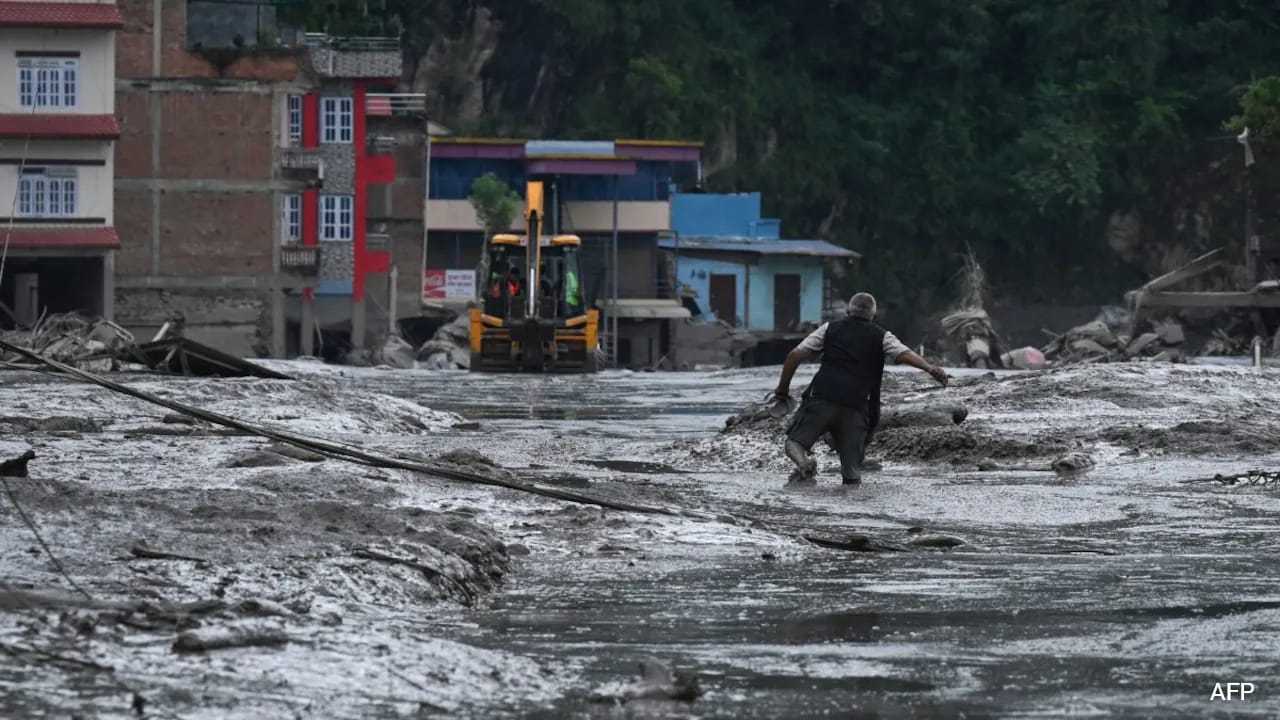
A catastrophic flash flood on the Nepal-Tibet border, likely triggered by an ice-rock avalanche, has resulted in at least 160 deaths and hundreds missing. International scientists are currently investigating the disaster's origins as rescue operations continue in the affected Rasuwa and Nuwakot districts.
The Catastrophic Flash Floods in the Himalayas
On the morning of Wednesday, August 26, 2026, a devastating natural disaster struck the northern regions of Nepal, specifically impacting the Rasuwa and Nuwakot districts. The event, characterized by massive flash floods and destructive mudslides, has claimed at least 160 lives, with hundreds of individuals still reported missing. As rescue teams utilize earthmovers to navigate submerged landscapes and reach trapped citizens, the scale of the humanitarian crisis continues to unfold.
The Role of Geological Instability
The disaster originated downstream of the Tibet border, sending a violent torrent of water, sediment, and boulders surging through the Bhote Koshi and Trishuli rivers. Scientists from the International Centre for Integrated Mountain Development (ICIMOD), collaborating with partner institutions in Nepal and China, have identified a potential trigger: a high-altitude ice-rock avalanche. This phenomenon occurs when unstable glacial ice and rocky debris collapse, creating a sudden, massive discharge of water and material into downstream river valleys.
Vulnerability of the Hindu Kush Himalaya
The Hindu Kush Himalaya (HKH) region is notoriously prone to such disasters due to its unique and volatile topography. ICIMOD, a Nepal-based intergovernmental body, has long emphasized the inherent risks posed by the region's constant geological movement and the increasing vulnerability of glacial lakes. The combination of steep terrain and the presence of high-altitude glaciers creates a precarious environment where even minor seismic or climatic shifts can lead to catastrophic downstream impacts.
Scientific Investigation and Regional Cooperation
This incident highlights the critical importance of cross-border scientific collaboration. Because the flood originated across the border in Tibet and swept into Nepal, the investigation led by ICIMOD represents a vital effort to understand the transboundary nature of Himalayan disasters. By pooling resources and data from both Nepal and China, experts hope to determine the exact sequence of events that transformed a high-altitude collapse into a deadly flash flood affecting multiple districts.
Implications for Future Disaster Management
The scale of the tragedy in Rasuwa and Nuwakot serves as a stark reminder of the limitations of current disaster mitigation strategies in high-mountain regions. As search and rescue operations persist, the international community is closely watching the recovery process. The event underscores an urgent need for enhanced early warning systems and more robust infrastructure capable of withstanding the unpredictable, high-energy events that are characteristic of the evolving Himalayan landscape.
Conclusion: Assessing the Path Forward
As the death toll rises and the search for the missing continues, the focus must remain on providing immediate relief to those affected. However, the long-term implications are equally significant. The scientific investigation into this ice-rock avalanche will likely influence future safety protocols for communities living along the Bhote Koshi and Trishuli rivers, emphasizing the necessity of adapting to a mountain range that is in a constant state of flux.
Multiple Citing Sources
Verification Required?